3 citations
,
December 1967 in “Australasian Journal of Dermatology” Becker's Melanosis and Hypertrichosis mainly affects young males, causing brown skin patches and extra hair on one side of the upper body.
11 citations
,
July 2019 in “Pediatric dermatology” Children with alopecia areata have different trichoscopic features than adults, including more empty follicular openings and pigtail hairs.
 2 citations
,
March 2023 in “Skin research and technology”
2 citations
,
March 2023 in “Skin research and technology” Temporal triangular alopecia in infants is mostly seen in males at birth, with unique features that help with diagnosis.
1 citations
,
January 2013 in “Journal of the Scientific Society” A painless cheek lump was misdiagnosed but later identified as a rare benign skin lesion called pilomatrixoma.
33 citations
,
December 1982 in “Developmental Medicine & Child Neurology” Hair-shaft abnormalities can indicate neurological disorders, some of which are treatable.
October 2015 in “CRC Press eBooks” Trichoscopy is a useful tool for examining and monitoring hair and scalp conditions.
4 citations
,
November 2024 in “BMC Ophthalmology” Surgical removal of eyelid mass showed it was non-cancerous, with no recurrence after one year.
 January 2025 in “International Journal of Dermatology”
 Consider TFI in facial hypopigmentation diagnoses and confirm with a biopsy.
April 2023 in “The Medical Journal of Australia” A five-year-old girl has a harmless, unchanging bald patch on her scalp.
January 2011 in “Yearbook of Dermatology and Dermatologic Surgery”  April 2016 in “Journal of The American Academy of Dermatology”
 The study found that Temporal Triangular Alopecia often starts in early childhood, mainly affects the left side of the scalp, and has no effective treatment except surgery.
3 citations
,
January 2017 in “Dermatology online journal” Dermoscopy helped diagnose a rare hair disorder in a 2-year-old boy.
 February 2026 in “Zenodo (CERN European Organization for Nuclear Research)”
 Trichoscopy is important for planning hair restoration in burn-related hair loss.
 April 2023 in “Our Dermatology Online”
 Trichoscopy is effective in diagnosing trichotillomania by showing specific hair patterns.
 May 2020 in “JOJ Dermatology & Cosmetics”
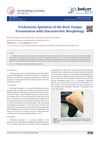
 A rare skin condition usually on the face was found on a man's heel.
18 citations
,
January 1992 in “Dermatology” A 4-year-old girl has a rare condition causing hairlessness and skin bumps, but normal teeth and sweating.
 November 2017 in “Pediatrics in Review”
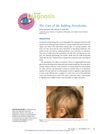
 A 4-year-old girl with hair loss was diagnosed with early-onset trichotillomania and improved with behavioral interventions.
42 citations
,
September 1985 in “British Journal of Dermatology” Trichothiodystrophy causes abnormal protein deposits and distortion in hair follicles.
19 citations
,
March 2016 in “British journal of dermatology/British journal of dermatology, Supplement” Trichodysplasia spinulosa is a rare skin disease in immunocompromised patients caused by a specific virus targeting hair follicle cells.
35 citations
,
September 2004 in “American Journal of Dermatopathology” A rare nail bed cancer was successfully treated with no recurrence after 4 years.
January 2017 in “Enlighten: Publications (The University of Glasgow)” Activating β-catenin and inactivating PTEN cause follicular tumors, not papillomas, similar to those in Cowden’s Disease.
 January 2022 in “Journal of Dermatology and Dermatologic Surgery”
 Trichoscopy is useful for quickly diagnosing different types of hair loss without needing biopsies.
 September 2024 in “Archiv Euromedica”
 Trichoscopy is a quick, accurate, and non-invasive method to diagnose and treat non-scarring hair loss.
1 citations
,
March 2023 in “Journal of the Turkish Academy of Dermatology” Temporal triangular alopecia may be linked to sebaceous nevus and shows a new pinkish background feature.
 January 1995 in “Skin Cancer”
 The outer root sheath in hair follicles changes during growth, with different keratinization processes in its layers.
 1 citations
,
March 2022 in “Berkala Ilmu Kesehatan Kulit dan Kelamin/Berkala ilmu kesehatan kulit dan kelamin (Periodical of dermatology and venerology)”
1 citations
,
March 2022 in “Berkala Ilmu Kesehatan Kulit dan Kelamin/Berkala ilmu kesehatan kulit dan kelamin (Periodical of dermatology and venerology)” Trichoscopy helps diagnose and monitor the treatment of fungal scalp infections in children.
 August 2018 in “Pediatric Dermatology”
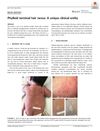
 A baby had a unique skin condition with a pale patch and surrounding dark hairs, not linked to other health issues.
80 citations
,
January 1979 in “Journal of Surgical Oncology” Keratoacanthoma is a common, usually non-dangerous skin tumor that looks like squamous cell carcinoma but rarely becomes severe.
73 citations
,
January 2004 in “Journal of the American Academy of Dermatology” Immunocompromised patients can develop skin and hair issues due to a virus.
September 2021 in “The journal of investigative dermatology/Journal of investigative dermatology” Three genes linked to the development of trichilemmal cysts were found.