January 2026 in “Skin Appendage Disorders” The trichogram is a practical, non-invasive, and cost-effective tool for diagnosing female androgenetic alopecia.
September 2021 in “The journal of investigative dermatology/Journal of investigative dermatology” Three genes linked to the development of trichilemmal cysts were found.
1 citations
,
January 2022 in “Clinical dermatology review” A young man's cheek papule was identified as a benign hair follicle tumor using a skin surface microscope.
11 citations
,
July 2019 in “Pediatric dermatology” Children with alopecia areata have different trichoscopic features than adults, including more empty follicular openings and pigtail hairs.
 6 citations
,
September 2020 in “Advanced Biology”
6 citations
,
September 2020 in “Advanced Biology” Blue-light activation of TrkA improves hair-follicle stem cells' ability to become neurons and glial cells.
 September 2022 in “TURKDERM”
 A rare benign skin nodule was found on the buttock, a unique location for this condition.
November 2013 in “Faculty Opinions – Post-Publication Peer Review of the Biomedical Literature” Keratin 79 cells help form and regenerate hair canals.
111 citations
,
April 2000 in “British journal of dermatology/British journal of dermatology, Supplement” Thyroid hormone receptor β1 is found in human hair follicles and helps them survive.
 January 2026 in “Indian Journal of Dermatopathology and Diagnostic Dermatology”
 Corkscrew hairs can help diagnose trichotillomania.
 44 citations
,
April 2017 in “Genes & development”
44 citations
,
April 2017 in “Genes & development” Scientists found cells in hair that are key for growth and color.
 September 2024 in “Archiv Euromedica”
 Trichoscopy is a quick, accurate, and non-invasive method to diagnose and treat non-scarring hair loss.
July 2025 in “INTERNATIONAL JOURNAL OF SCIENTIFIC RESEARCH” Trichoscopy is crucial for diagnosing alopecia areata by identifying specific hair features.
 96 citations
,
January 2013 in “International Journal of Trichology”
96 citations
,
January 2013 in “International Journal of Trichology” Trichoscopy is a useful, non-invasive way to diagnose different types of hair loss.
84 citations
,
June 1970 in “Journal of Investigative Dermatology” 25 citations
,
October 1962 in “Journal of Ultrastructure Research” The hair follicle structure is more complex than thought, with new findings on protein formation.
142 citations
,
June 2003 in “The journal of investigative dermatology. Symposium proceedings/The Journal of investigative dermatology symposium proceedings” Hair follicle stem cells can generate all hair cell types, skin, and sebaceous glands.
29 citations
,
April 1997 in “Developmental Dynamics” Trypsin slows hair growth and affects color by causing cell death in hair follicles.
6 citations
,
January 2017 in “JOURNAL OF CLINICAL AND DIAGNOSTIC RESEARCH” A rare hair follicle tumor was found on a woman's vulva.
 January 2019 in “The Egyptian Journal of Hospital Medicine”
 Trichoscopy helps effectively tell apart different types of patchy hair loss in Egyptian patients.
 October 2024 in “Dermatology Practical & Conceptual”
 Using dermoscopy improves diagnosis of scalp and hair disorders in children.
19 citations
,
July 1964 in “PubMed” Hair follicle cells become four types: medulla, cortex, cuticle, and inner root sheath.
2 citations
,
November 2006 in “Pump Industry Analyst” Pilomatricomas don't follow the usual hair follicle cell differentiation process.
3 citations
,
September 1973 in “Archives of dermatology” Applying a tretinoin cream can remove hair plugs and treat trichostasis spinulosa.
47 citations
,
August 2012 in “Cell Cycle” Stem cells in hair follicles can become neurons and other cells, especially in the upper part, useful for nerve repair.
 8 citations
,
November 2021 in “The Journal of Dermatology”
8 citations
,
November 2021 in “The Journal of Dermatology” The article simplifies trichoscopy terms and offers a new diagnostic flowchart.
 2 citations
,
January 2019 in “Dermatology Review”
2 citations
,
January 2019 in “Dermatology Review” Pigmented vellus and upright regrowing hairs predict hair regrowth in severe alopecia.
18 citations
,
September 1994 in “Clinical and Experimental Dermatology” Localized trichorrhexis nodosa is a hair condition where hair becomes fragile and breaks easily due to damage.
 February 2026 in “Dermatology Reports”
 Trichoscopy helps diagnose and treat dissecting cellulitis early, preventing scarring.
 8 citations
,
April 2010 in “JEADV. Journal of the European Academy of Dermatology and Venereology/Journal of the European Academy of Dermatology and Venereology”
8 citations
,
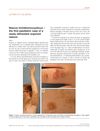
April 2010 in “JEADV. Journal of the European Academy of Dermatology and Venereology/Journal of the European Academy of Dermatology and Venereology” The first pediatric case of naevus trichilemmocysticus was documented.