July 2026 in “Cosmoderma” Trichoscopy can identify specific hair patterns in tinea capitis before and after treatment.
419 citations
,
March 2005 in “Proceedings of the National Academy of Sciences” Hair-follicle stem cells can become neurons.
 March 2021 in “CRC Press eBooks”
 The document concludes that different patterns of hair thickness and scalp changes can help diagnose types of non-scarring hair loss.
59 citations
,
November 2011 in “Development” Trps1 is essential for proper hair follicle development.
January 2017 in “대한미용학회지” The cuticle layer in hair follicles thickens during keratinization due to incomplete cytosol loss.
The trichohyalin gene is located at chromosomal region 1q21 with other skin-related protein genes.
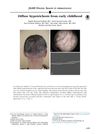 September 2016 in “Journal of The American Academy of Dermatology”
 The girl has a genetic hair condition causing thin hair since childhood.
 November 2023 in “Laser therapy”
 Trichoscopy is essential for diagnosing and managing alopecia areata in children.
 December 2024 in “IntechOpen eBooks”
 Trichoscopy helps diagnose and track alopecia areata by examining specific hair and scalp markers.
7 citations
,
June 2017 in “Journal of Cutaneous Pathology” Cystic panfolliculoma resembles hair follicle tumors due to specific cell interactions.
 15 citations
,
July 2004 in “Journal of morphology”
15 citations
,
July 2004 in “Journal of morphology” Monotreme hair structure and protein distribution are similar to other mammals, but their inner root sheath cornifies differently, suggesting a unique evolution from reptile skin.
 May 2026 in “World Journal of Advanced Research and Reviews”
 A rare foot cyst was successfully diagnosed and removed without cancer.
18 citations
,
January 2018 in “Advances in experimental medicine and biology” Hair keratins evolved from ancient proteins, diversifying through gene changes, crucial for forming claws and later hair in mammals.
January 2020 in “Revista Dermatológica Centro Uraga” Recognizing trichoscopic features is crucial for diagnosing various hair loss conditions.
 193 citations
,
February 2015 in “Nature Communications”
193 citations
,
February 2015 in “Nature Communications” Fungi-produced compounds can change plant root growth.
 41 citations
,
April 2016 in “Journal of experimental botany”
41 citations
,
April 2016 in “Journal of experimental botany” RACB in barley is crucial for cell polarity and nucleus positioning, aiding fungal infection.
 20 citations
,
January 2021 in “Plants”
20 citations
,
January 2021 in “Plants” High energy boosts root hair growth in plants, while low energy stops it.
 2 citations
,
June 2021 in “Notulae Botanicae Horti Agrobotanici Cluj-Napoca”
2 citations
,
June 2021 in “Notulae Botanicae Horti Agrobotanici Cluj-Napoca” More research is needed to understand how nutrients affect root hair growth.
 July 2026 in “bioRxiv (Cold Spring Harbor Laboratory)”
 ACA2 is crucial for root hair growth by controlling calcium levels in cells.
 October 2025 in “bioRxiv (Cold Spring Harbor Laboratory)”
 Root hair growth slows under force, confirming a model of cell wall mechanics.
 May 2024 in “Plant and Soil”
 Root hairs in maize grow mainly in air-filled pores, limiting their role in nutrient uptake and plant anchorage.
 May 2017 in “bioRxiv (Cold Spring Harbor Laboratory)”
 The peach gene pCTG134 helps control the interaction between auxin and ethylene hormones during fruit ripening.
 7 citations
,
January 2013 in “Dermatology Research and Practice”
7 citations
,
January 2013 in “Dermatology Research and Practice” Trichoscopy is a valuable tool for diagnosing and managing hair and scalp disorders.

A neck lesion misdiagnosed as benign was later treated successfully with Mohs Micrographic Surgery.
January 2024 in “Muller Journal of Medical Sciences and Research” Trichoscopy is a useful tool for diagnosing patchy hair loss, reducing the need for biopsies.
26 citations
,
May 2001 in “British Journal of Dermatology” Pilomatrixomas likely originate from the hair matrix due to changes in hair keratin expression.
29 citations
,
February 2019 in “Pediatric dermatology” Trichotillomania shows specific signs like black dots and uneven hair lengths but lacks certain features of alopecia areata.
Trichoscopic examination is crucial for diagnosing congenital triangular alopecia.
 24 citations
,
September 2014 in “Journal of the European Academy of Dermatology and Venereology”
24 citations
,
September 2014 in “Journal of the European Academy of Dermatology and Venereology” Trichoscopy is reliable for diagnosing Temporal Triangular Alopecia and can prevent unnecessary biopsies and wrong treatments.
 14 citations
,
June 2018 in “JAMA Dermatology”
14 citations
,
June 2018 in “JAMA Dermatology” Trichoscopy is useful for diagnosing and monitoring hair and scalp conditions over time.