Tricholemmoma is linked to Cowden syndrome and can be benign or malignant.
2 citations
,
September 2023 in “Journal of the European Academy of Dermatology and Venereology” Trichoscopy is a useful tool for diagnosing different types of female hair loss without needing a biopsy.
 January 2020 in “Medpulse International Journal of General Medicine”
 Trichoscopy helps diagnose and monitor hair loss, showing different signs at various stages of hair thinning.
July 2021 in “Anais brasileiros de dermatologia/Anais Brasileiros de Dermatologia” Monilethrix causes different levels of hair loss in family members.
 January 2022 in “Klinicheskaya dermatologiya i venerologiya”
 Trichoscopy can diagnose hair loss by looking for common signs like uneven hair thickness, "yellow dots," and more thin hairs, which are found in both men and women.
 1 citations
,
April 2020 in “International Journal of Research in Dermatology”
1 citations
,
April 2020 in “International Journal of Research in Dermatology” Trichoscopy is a reliable method for diagnosing different types of hair loss.
 April 2017 in “Journal of Investigative Dermatology”
 A virus protein can activate a pathway that may lead to abnormal hair follicle development.
September 2021 in “The journal of investigative dermatology/Journal of investigative dermatology” Three genes linked to the development of trichilemmal cysts were found.
8 citations
,
January 2014 in “Indian Dermatology Online Journal” Trichostasis spinulosa is a common but often unnoticed skin condition involving bundled vellus hairs, especially in people with darker skin or UV exposure.
 72 citations
,
October 2009 in “The FASEB journal”
72 citations
,
October 2009 in “The FASEB journal” TRH stimulates human hair growth and extends the hair growth phase.
1 citations
,
January 2016 in “Dermatology Online Journal” Triangular temporal alopecia can occur in adults and should be correctly identified to prevent misdiagnosis.
1 citations
,
March 2022 in “Anais brasileiros de dermatologia/Anais Brasileiros de Dermatologia” Trichoscopy helps tell apart hair loss due to alopecia areata from trichotillomania in eyebrows.
 4 citations
,
March 2015 in “Skin Research and Technology”
4 citations
,
March 2015 in “Skin Research and Technology” Trichotillometry is a reliable method to measure hair strength and assess hair loss treatments.
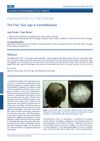
June 2011 in “European Journal of Pediatric Dermatology” An 11-year-old girl with hair thinning was diagnosed with monilethrix and early androgenetic alopecia.
 13 citations
,
June 2012 in “Journal of Dermatological Case Reports”
13 citations
,
June 2012 in “Journal of Dermatological Case Reports” An 8-year-old boy with hair-pulling disorder had a bald patch that was confirmed not to be a fungal infection and was treated with therapy.
8 citations
,
February 2023 in “Actas Dermo-Sifiliográficas” Dermatologists should learn trichoscopy to better diagnose hair loss conditions.
January 2026 in “Skin Appendage Disorders” The trichogram is a practical, non-invasive, and cost-effective tool for diagnosing female androgenetic alopecia.
April 2019 in “The journal of investigative dermatology/Journal of investigative dermatology” A specific mutation in the TRPV3 gene causes hair follicle cells to develop improperly, leading to hair loss.
 November 2023 in “Laser therapy”
 Trichoscopy is essential for diagnosing and managing alopecia areata in children.
Cross-section trichometry is an accurate method to measure hair loss and growth.
53 citations
,
August 2015 in “The Italian Journal of Pediatrics/Italian journal of pediatrics” Excessive body hair can signal complex health issues.
 205 citations
,
April 2005 in “Journal of Investigative Dermatology”
205 citations
,
April 2005 in “Journal of Investigative Dermatology” Scientists have found a way to create hair follicles from skin cells of newborn mice, which can grow and cycle naturally when injected into adult mouse skin.
 February 2026 in “Zenodo (CERN European Organization for Nuclear Research)”
 Trichoscopy is important for planning treatment of hair loss after burns.
 13 citations
,
January 2011 in “International Journal of Trichology”
13 citations
,
January 2011 in “International Journal of Trichology” CTA is often mistaken for AA but doesn't respond to steroids and may require hair transplantation.
 March 2014 in “Journal of The American Academy of Dermatology”
 Azathioprine may help with severe hair loss, a new topical treatment could counteract hair thinning, and trichoscopy can diagnose hair-pulling disorder effectively.
72 citations
,
July 1984 in “Journal of Investigative Dermatology”  January 2007 in “Revista del Centro Dermatológico Pascua”
 A 2-year-old boy was diagnosed with a rare genetic condition causing fragile hair, intellectual issues, and short stature.
14 citations
,
January 2010 in “Dermatology” Some people with congenital triangular alopecia have a central tuft of hair in the bald patch, but the cause is unknown.
 4 citations
,
February 1988 in “Journal of the American Academy of Dermatology”
4 citations
,
February 1988 in “Journal of the American Academy of Dermatology” Congenital triangular alopecia is more common than thought and some treatments can be beneficial for appearance concerns.
January 2022 in “The Pan African medical journal” Hypertrichosis causes excessive hair growth and needs psychological support due to its impact on self-esteem.