December 2025 in “Al-Azhar International Medical Journal /Al-Azhar International Medical Journal” Using both trichoscopy and folliscopy together improves hair loss diagnosis in men.
 May 2013 in “Faculty Opinions – Post-Publication Peer Review of the Biomedical Literature”
 Trichoscopy is better than trichogram for diagnosing early female hair loss.
Trichoscopy is a valuable tool for accurately diagnosing scalp conditions without invasive procedures.
July 2025 in “Dermatology Practical & Conceptual” Hair changes and a high occipital hairline may help diagnose Trichorhinophalangeal Syndrome.
3 citations
,
January 2021 in “Medicinski arhiv” Trichoscopy, a hair loss evaluation technique, found that people with Androgenetic Alopecia have more thin hairs, yellow dots, and perifollicular discoloration than healthy individuals.
 5 citations
,
January 2018 in “Skin Research and Technology”
5 citations
,
January 2018 in “Skin Research and Technology” TrichoScan needs optimization as it underestimated hair density by 38.9% compared to manual counting.
January 2015 in “프로그램북(구 초록집)” Trichoscopy effectively diagnoses and assesses hair loss severity in androgenetic alopecia and alopecia areata.
 3 citations
,
January 2020 in “Clinical dermatology review”
3 citations
,
January 2020 in “Clinical dermatology review” Trichoscopy is useful for diagnosing hair and scalp disorders in people with darker skin.
 December 2019 in “Дерматологія та венерологія”
 Trichoscopy is a useful tool for diagnosing hair and scalp disorders.
 6 citations
,
January 2015 in “Dermatology”
6 citations
,
January 2015 in “Dermatology” Trichoscopy helps diagnose hair and scalp problems but isn't always definitive and should be used with other methods.
 40 citations
,
April 2006 in “Journal of the European Academy of Dermatology and Venereology”
40 citations
,
April 2006 in “Journal of the European Academy of Dermatology and Venereology” The Trichoscan system was found to be inaccurate for measuring hair growth, needing better software to be useful.
 January 2016 in “Journal of Clinical Dermatology”
 Trichoscopy helps diagnose and assess the severity of two types of hair loss diseases, androgenetic alopecia and alopecia areata.
 September 2023 in “Zenodo (CERN European Organization for Nuclear Research)”
 Trichoscopy helps diagnose and track treatment for hair loss in men and women.
June 2022 in “Our Dermatology Online” Trichoscopy is essential for early detection and monitoring of female-pattern hair loss.
 January 2022 in “Klinicheskaya dermatologiya i venerologiya”
 Trichoscopy can diagnose hair loss by looking for common signs like uneven hair thickness, "yellow dots," and more thin hairs, which are found in both men and women.
 January 2019 in “The Egyptian Journal of Hospital Medicine”
 Trichoscopy helps effectively tell apart different types of patchy hair loss in Egyptian patients.
12 citations
,
December 2021 in “Dermatology” Trichoscopy can help diagnose and assess disease activity in connective tissue diseases by identifying specific hair and scalp signs.
29 citations
,
February 2019 in “Pediatric dermatology” Trichotillomania shows specific signs like black dots and uneven hair lengths but lacks certain features of alopecia areata.
 1 citations
,
January 2018 in “Indian journal of dermatopathology and diagnostic dermatology”
1 citations
,
January 2018 in “Indian journal of dermatopathology and diagnostic dermatology” Trichoscopy helps diagnose and monitor hair and scalp problems without needing many biopsies.
 7 citations
,
January 2013 in “Dermatology Research and Practice”
7 citations
,
January 2013 in “Dermatology Research and Practice” Trichoscopy is a valuable tool for diagnosing and managing hair and scalp disorders.
 46 citations
,
April 2009 in “Journal of Dermatological Case Reports”
46 citations
,
April 2009 in “Journal of Dermatological Case Reports” Researchers established normal hair and scalp characteristics for healthy women using trichoscopy.
 69 citations
,
January 2015 in “Current problems in dermatology”
69 citations
,
January 2015 in “Current problems in dermatology” Trichoscopy is a quick, noninvasive method to diagnose hair and scalp disorders, often reducing the need for biopsies.
 14 citations
,
June 2018 in “JAMA Dermatology”
14 citations
,
June 2018 in “JAMA Dermatology” Trichoscopy is useful for diagnosing and monitoring hair and scalp conditions over time.
 178 citations
,
December 2011 in “Journal of Dermatological Case Reports”
178 citations
,
December 2011 in “Journal of Dermatological Case Reports” Trichoscopy is a useful tool for diagnosing different hair and scalp diseases by their unique visual features.
 5 citations
,
December 2018 in “Journal of The American Academy of Dermatology”
5 citations
,
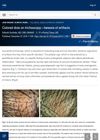
December 2018 in “Journal of The American Academy of Dermatology” Some hair products can create false signs on scalp examinations, leading to wrong diagnoses.
 32 citations
,
January 2014 in “Dermatology Research and Practice”
32 citations
,
January 2014 in “Dermatology Research and Practice” Trichoscopy can effectively tell apart tinea capitis and alopecia areata in children by looking for specific hair shapes.
January 2024 in “Muller Journal of Medical Sciences and Research” Trichoscopy is a useful tool for diagnosing patchy hair loss, reducing the need for biopsies.
 January 2015 in “Hair therapy & transplantation”
 New hair and scalp disease diagnosis methods are important for correct treatment.
 January 2022 in “Journal of Dermatology and Dermatologic Surgery”
 Trichoscopy is useful for quickly diagnosing different types of hair loss without needing biopsies.
 November 2023 in “Journal of Dermatological Science”
 A new computer tool quickly measures hair thickness differences in people with common types of hair loss.