January 2025 in “Molecules” Caffeine may help with hair loss, but more research is needed to confirm its effectiveness.
October 2024 in “Cosmetics” Electric stimulation at 448 kHz can promote hair growth by enhancing cell activity in hair follicles.
July 2024 in “International Journal of Molecular Sciences” RF-based therapies might help treat hair loss.
 March 2024 in “Journal of clinical medicine”
 Trichoscopy shows hair diameter variability, vellus hairs, and the peripilar sign are key indicators for diagnosing Androgenetic Alopecia.
 January 2023 in “Journal of surgery and research”
 New treatment effectively reverses hair thinning in most patients with mild side effects.
 January 2022 in “Indian journal of dermatopathology and diagnostic dermatology”
 Women with diffuse hair loss often have lower iron and vitamin D levels, but their thyroid function is typically normal.
July 2012 in “International Journal of Trichology” Understanding hair health and disorders is important for effective treatment.
October 2022 in “International Journal of Research in Dermatology” Hormonal imbalances contribute to female hair loss, and trichoscopy is a useful diagnostic tool.

The combination therapy improved hair growth and thickness in people with androgenetic alopecia.
5 citations
,
June 2025 in “Journal of Functional Biomaterials” 3D bioprinting offers new ways to treat head and neck defects with bioinks that mimic natural tissues.
2 citations
,
July 2023 in “Cosmetics” Surfactants in shampoos and conditioners remove some but not all lipids from hair, and more research is needed to understand their full impact.
June 2026 in “Virtual and Physical Prototyping” A new method creates precise, stable microscale structures with reduced friction and potential for complex designs.
 March 2026 in “Pharmaceutics”
 TheDES improve drug delivery through the skin but need more safety checks.
 July 2023 in “Journal of Cutaneous and Aesthetic Surgery”
 Combining platelet-rich plasma with other treatments may improve hair growth in people with hair loss, but more research is needed.
 39 citations
,
August 2021 in “JAAD International”
39 citations
,
August 2021 in “JAAD International” COVID-19 patients often experience hair loss and scalp pain, which may be related to the severity of their infection and treatment drugs.
September 2021 in “Medicina Estética Revista Científica de la Sociedad Española de Medicina Estética (SEME)” The treatment improved hair growth and thickness in most patients with minimal side effects.
 September 2021 in “Medicina estética”
 Sabal serrulata and biomimetic peptides with microneedling reduced hair loss and improved hair thickness in men with balding.
May 2026 in “Case Reports in Dermatology” Switching immunosuppressants can improve hair regrowth and well-being in transplant patients experiencing hair loss.

A coordinated approach combining medical, trichological, and visual support is needed to better manage hair loss.
 March 2026 in “International Journal of Advanced Biochemistry Research”
 German shepherd hair varies in color and pattern but is flat with a consistent internal structure.
 December 2025 in “Ekonomia/Acta Universitatis Wratislaviensis. Ekonomia”
 Elderly demand for hair care services is rapidly increasing.
December 2025 in “International Journal of Advanced Biochemistry Research” Malvi cattle hair varies in color and pattern across different body regions.
 December 2025 in “Aesthetic Cosmetology and Medicine”
 Personalized hair care is essential for healthy hair and scalp.

Most ingredients in hair loss shampoos lack strong evidence of effectiveness.
 January 2025 in “Advances in Dermatology and Allergology”
 Hair disorders in organ transplant patients are often underestimated and need more attention and research.
 January 2024 in “Estetologia Medyczna i Kosmetologia”
 Most hair loss shampoos have unproven active ingredients.
 June 2020 in “Journal of Dermatological Treatment”
 Use telemedicine and strict hygiene for safe hair and scalp treatments during COVID-19.
The product made from plant extracts was tested for treating hair loss caused by genetics.
 15 citations
,
March 2018 in “Journal of The American Academy of Dermatology”
15 citations
,
March 2018 in “Journal of The American Academy of Dermatology” PRP therapy improves hair density and thickness in AGA patients, even with other treatments.
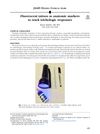 July 2018 in “Journal of The American Academy of Dermatology”
 Fluorescent tattoos are a good way to mark the scalp for hair treatments because they're accurate, invisible in normal light, and have low risk.