2 citations
,
July 2024 in “Indian Journal of Dermatology” Adults with alopecia areata often have empty follicular openings, while children show more honeycomb pigment patterns.
 2 citations
,
May 2022 in “Clinical, Cosmetic and Investigational Dermatology”
2 citations
,
May 2022 in “Clinical, Cosmetic and Investigational Dermatology” Trichoscopy and pathological examination both have unique benefits and cannot completely replace each other in evaluating hair.
 1 citations
,
July 2025 in “The Ewha Medical Journal”
1 citations
,
July 2025 in “The Ewha Medical Journal” The Ewha Medical Journal is now in PubMed, has an AI article editor, and offers Korean reporting guidelines.
1 citations
,
August 2023 in “Clinical Cosmetic and Investigational Dermatology” Exclamation mark hairs help distinguish syphilitic alopecia from alopecia areata.
 1 citations
,
July 2008 in “Expert Review of Dermatology”
1 citations
,
July 2008 in “Expert Review of Dermatology” Normal hair thickness varies by scalp area and a mix of hair thicknesses is typical in healthy individuals.
March 2026 in “Journal of Cosmetic Dermatology” Topical Stemoxydine improves hair density in androgenetic alopecia with few side effects.
 January 2026 in “Forum Dermatologicum”
 Hair loss can be caused by cancer, treatments, or skin conditions, and trichoscopy helps diagnose it.
Loose anagen hair syndrome in children may improve with age, but treatment results vary.
January 2026 in “Clinical Dermatology Review” Platelet-rich plasma therapy improves hair growth and health in androgenetic alopecia better than some FDA-approved treatments.
 September 2025 in “IP Indian Journal of Clinical and Experimental Dermatology”
 Minoxidil effectively treats patterned hair loss in both males and females.
May 2025 in “International Journal of Trichology” Trichoscopic evaluation is important for assessing hair loss in women.
 January 2025 in “International Journal of Trichology”
 Topical spironolactone and minoxidil both effectively treat female hair loss, but spironolactone has fewer side effects.
 April 2024 in “Clinical dermatology review (Print)”
 Trichoscopy is an effective, noninvasive method for early diagnosis of Female Pattern Hair Loss.
 November 2023 in “International Journal of Trichology”
 Trichoscopic features help diagnose and assess female pattern hair loss severity, with inflammation playing a key role.
 October 2023 in “Benha Journal of Applied Sciences”
 Methotrexate and vitamin D3 are potentially more effective and safer than triamcinolone for treating localized alopecia areata.
 June 2023 in “Italian journal of dermatology and venereology”
 Trichoscopy effectively diagnoses allergic scalp contact dermatitis.
 January 2022 in “Journal of Dermatology and Dermatologic Surgery”
 Trichoscopy is useful for quickly diagnosing different types of hair loss without needing biopsies.
 December 2021 in “International Journal of Research in Dermatology”
 The study concluded that female pattern hair loss is linked to psychological distress and is hard to diagnose and treat, with its causes still not fully understood.
 July 2021 in “Indian journal of dermatopathology and diagnostic dermatology”
 Trichoscopy is a reliable method for diagnosing hair and scalp disorders quickly and non-invasively.
 May 2017 in “InTech eBooks”
 Hair pulling disorder is treated with therapy and medication; hair loss from tension can be reversed if caught early.
October 2022 in “International Journal of Research in Dermatology” Hormonal imbalances contribute to female hair loss, and trichoscopy is a useful diagnostic tool.
 January 2025 in “Surgical & Cosmetic Dermatology”
 Histopathological confirmation is crucial to accurately diagnose alopecia triangular temporal and avoid unnecessary treatments.
 11 citations
,
December 2006 in “Expert Review of Dermatology”
11 citations
,
December 2006 in “Expert Review of Dermatology” Dermoscopy is becoming essential for diagnosing skin conditions and is expected to be a standard tool for dermatologists.
 June 2024 in “Skin Research and Technology”
 Botulinum toxin treatment improves hair follicle width and length in androgenetic alopecia.
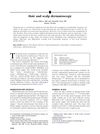 245 citations
,
March 2012 in “Journal of The American Academy of Dermatology”
245 citations
,
March 2012 in “Journal of The American Academy of Dermatology” Dermatoscopy is useful for identifying different hair and scalp conditions and can reduce the need for biopsies.
 4 citations
,
February 2021 in “International Journal of Women's Dermatology”
4 citations
,
February 2021 in “International Journal of Women's Dermatology” Trichoscopy is a quick and reliable way to diagnose hair loss in women.
 3 citations
,
January 2020 in “Clinical dermatology review”
3 citations
,
January 2020 in “Clinical dermatology review” Trichoscopy is useful for diagnosing hair and scalp disorders in people with darker skin.
 June 2026 in “IP Indian Journal of Clinical and Experimental Dermatology”
 Trichoscopy is useful for diagnosing and monitoring male pattern hair loss.
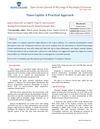 January 2019 in “Open access journal of mycology & mycological sciences”
 The article concludes that proper antifungal treatment is essential for treating scalp fungal infections in children, and trichoscopy is useful for diagnosis and monitoring.
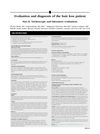 69 citations
,
August 2014 in “Journal of The American Academy of Dermatology”
69 citations
,
August 2014 in “Journal of The American Academy of Dermatology” Trichoscopy is a quick, cost-effective tool for diagnosing different hair loss conditions.