 January 2025 in “Expert Opinion on Drug Delivery”
 Nanocarriers could improve hair loss treatment but need more research for effectiveness and safety.
 January 2025 in “Lasers in Surgery and Medicine”
 Combining fractional CO2 laser with minoxidil is more effective for hair growth in alopecia areata than minoxidil alone.

Combining minoxidil with other treatments like finasteride or PRP improves hair growth and satisfaction more than using minoxidil alone.
 January 2025 in “Editora Acadêmica Periodicojs eBooks”
 Oral Minoxidil is a practical alternative to Topical Minoxidil for hair loss, but treatment should be personalized.
 December 2024 in “Journal of Clinical Medicine”
 Minoxidil shows promise for alopecia areata, but more research is needed before it can be recommended as a primary treatment.
 November 2024 in “JAMA Dermatology”
 Low-dose oral minoxidil may help with hair loss, but more research is needed.
 November 2024 in “Journal of Drugs in Dermatology”
 Injectable minoxidil is a promising, effective treatment for hair loss.
October 2024 in “Más dermatología” Few people stick with topical minoxidil due to side effects, so alternatives and strategies are needed.
 September 2024 in “Journal of the American Academy of Dermatology”
 Experts agree on guidelines for safely using low-dose oral minoxidil to treat hair loss.
 August 2024 in “Skin Research and Technology”
 Low-dose oral minoxidil can help increase hair growth in women with hair loss.

Low-dose oral minoxidil is effective and generally safe for treating hair loss in women.

Oral minoxidil works as well as topical minoxidil for male pattern baldness.
Minoxidil can slow hair loss and promote regrowth but won't fully restore hair.

Most dermatologists use and find oral minoxidil effective and tolerable for hair loss treatment.

Minoxidil may help with hair regrowth and disease stabilization in scarring alopecia, but side effects vary, needing more research for consistent safety and effectiveness.
 February 2024 in “Cosmoderma”
 Low-dose oral minoxidil can help treat male and female pattern hair loss, especially in those who can't use topical treatments or have heart health issues.
 January 2024 in “Expert Opinion on Pharmacotherapy”
 Low-dose oral minoxidil is effective and safe for treating hair loss in men and women.
 January 2024 in “SAGE Open Medical Case Reports”
 Minoxidil can help increase facial hair growth.
 December 2023 in “Farmateka”
 Minoxidil is an effective and safe treatment for common hair loss when applied to the skin, but more research is needed for optimal use.
 November 2023 in “Current Dermatology Reports”
 Oral minoxidil is effective for various hair loss types and may improve male sexual function, but aspirin can reduce its effectiveness.
 June 2023 in “Journal of Cosmetic Dermatology”
 Finasteride 5mg daily is the most effective for female pattern hair loss, with higher doses of treatments generally more effective.
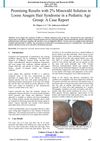 May 2023 in “International journal of science and research”
 2% minoxidil solution improved hair density and quality in children with Loose Anagen Hair Syndrome.
July 2022 in “European Journal of Dermatology” Topical minoxidil and oral finasteride are effective for managing hair loss.
 February 2022 in “Programa de Iniciação Científica - PIC/UniCEUB”
 Both Minoxidil and PRP are effective for male pattern baldness treatment.
January 2022 in “Indian journal of drugs in dermatology” Oral minoxidil helps with hair growth but needs more research to fully understand its effectiveness and safety.

Using Minoxidil for hair loss might cause eye problems, but it's not certain.
 December 2020 in “Dermatología argentina”
 Low-dose oral minoxidil effectively treats male pattern baldness.

Micro-needling with growth factors and minoxidil improved hair growth in a balding man.
Minoxidil can cause hair to turn yellow.
October 2019 in “UNESP Institutional Repository (São Paulo State University)” Oral minoxidil 1 mg is effective and safe for female hair loss, with less shedding but more hair growth on the body.