 May 2026 in “The EMBO Journal”
 Feather follicles form through specific cellular flows and mechanical changes in the skin.
April 2025 in “Asian Journal of Case Reports in Surgery” Trichilemmal carcinoma is a rare skin cancer that requires careful diagnosis and follow-up.
January 2013 in “Journal of Tissue Engineering and Reconstructive Surgery” Inserting hair follicle units improved the development of tissue-engineered skin.
 4 citations
,
October 2020 in “Journal of oral and maxillofacial surgery”
4 citations
,
October 2020 in “Journal of oral and maxillofacial surgery” Tisseel shows promise for bone graft stabilization but needs more clinical trials to confirm its effectiveness.
47 citations
,
April 1978 in “Journal of Cutaneous Pathology” Basal cell epithelioma resembles fetal hair follicles, not adult or fetal skin.
February 2025 in “Pediatric Dermatology” 10 citations
,
December 1990 in “Archives of Dermatological Research”  8 citations
,
February 2016 in “The American Journal of Dermatopathology”
8 citations
,
February 2016 in “The American Journal of Dermatopathology” Hair transplants can make hair follicles larger and hair shafts thicker.
 3 citations
,
April 2016 in “International Journal of Dermatology”
3 citations
,
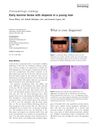
April 2016 in “International Journal of Dermatology” A young man was diagnosed with trichoepitheliomas, causing thick skin and hair loss.
 December 2023 in “Journal of ethnopharmacology”
 Tribuloside can increase skin pigmentation by enhancing melanin production and distribution.
25 citations
,
January 2013 in “Journal of Cell Science” Tenascin-C and tenascin-W help control stem cell movement and growth in whisker follicles.
 25 citations
,
June 2022 in “Developmental cell”
25 citations
,
June 2022 in “Developmental cell” Overactivating Hedgehog signaling makes hair follicle cells in mice grow hair faster and create more follicles.
 January 2025 in “Termometer Jurnal Ilmiah Ilmu Kesehatan dan Kedokteran”
 Tea leaf extract tonic promotes hair growth better than controls but has stability issues.
28 citations
,
December 2005 in “Oncogene”  28 citations
,
July 2007 in “Development”
28 citations
,
July 2007 in “Development” TAF4 is important for skin cell growth and helps prevent skin cancer in mice.
13 citations
,
January 2021 in “Journal of Cellular and Molecular Medicine” Thymosin β4 may boost hair growth by aiding stem cell movement and blood vessel formation.
62 citations
,
June 1993 in “Archives of Dermatological Research” July 2025 in “Journal of Investigative Dermatology” Collagen scaffolds in cell therapy can transform skin to be more resilient and pressure-responsive.
 April 2018 in “Journal of Investigative Dermatology”
 The conclusion is that a new method combining magnetic tweezers and traction force microscopy may help understand skin cell interactions and diseases.
4 citations
,
February 2018 in “Annales de Dermatologie et de Vénéréologie” Onychomatricome is a benign nail tumor with specific dermoscopic features that help distinguish it from cancer.
20 citations
,
April 2009 in “Cell Biology International” Hair follicle stem cells can become corneal-like cells with the help of pax6.
3 citations
,
December 2024 in “Stem Cell Reports” Low fucosylation boosts stem cell growth in the eye.
August 1993 in “Journal of Dermatological Science” 1 citations
,
January 1986 in “PubMed” The boy's symptoms suggest a possible new medical condition.
163 citations
,
October 2001 in “EMBO journal” Overexpressing follistatin in mice delays wound healing and reduces scar size.
March 2025 in “Laboratory Investigation” Mesothelioma of the tunica vaginalis testis is rare, often high-grade, and has a median survival of about 24 months.
January 2025 in “Indian Journal of Dermatopathology and Diagnostic Dermatology” Nevus sebaceous is identified by unique skin changes, including thickened skin, fewer hair follicles, and many sebaceous glands.
34 citations
,
January 1983 in “Journal of Investigative Dermatology” December 2023 in “Medicine” Platelet-rich gel is a simpler, cheaper, and painless option for scalp defects, but tissue expansion offers better hair growth despite more pain.
51 citations
,
May 1984 in “Journal of the American Academy of Dermatology” Benign follicular mucinosis involves immune cells attacking hair follicles.