Search
for
Sort by
Research
330-360 / 1000+ resultsresearch Sustaining treatment response in alopecia areata through tofacitinib dose tapering: A single-center retrospective study

research Comparison of the Treatment Outcome of Oral Tofacitinib with Other Conventional Therapies in Refractory Alopecia Totalis and Universalis: A Retrospective Study
Tofacitinib works better and is more tolerable for severe alopecia than conventional treatments and DPCP immunotherapy.
research INNOVATIVE THERAPIES IN REGENERATIVE MEDICINE AND TRANSPLANTATION
DEC cells show promise as a safe and effective treatment for Duchenne muscular dystrophy.
research 004 Cell-based therapy may be effective in alopecia areata: Preclinical evidence that autologous, peripheral regulatory γdT cells are preventive in human ex vivo and therapeutic in human in vivo models
Cell-based therapy using specific immune cells may help treat alopecia areata by promoting hair regrowth.
research Trichodysplasia spinulosa: a polyomavirus infection specifically targeting follicular keratinocytes in immunocompromised patients
Trichodysplasia spinulosa is a rare skin disease in immunocompromised patients caused by a specific virus targeting hair follicle cells.

research 1379 Cyclosporin A suppresses TGF-β2 expression via calcineurin/NFAT pathway in human dermal papilla cells
Cyclosporin A, a drug, reduces TGF-β2 expression in skin cells, potentially causing excessive hair growth through a process involving the calcineurin/NFAT pathway.
research Reprofiling synthetic glucocorticoid-induced leucine zipper fusion peptide as a novel and effective hair growth promoter
TAT-GILZ peptide promotes hair growth by boosting stem cell activity.
research Analysis of Methyltestosterone and Testosterone Propionate in Dried Blood Spots After Transdermal Application
The method effectively detects MeT and TP in dried blood spots after cream application.

research USE OF TOFACITINIB IN DIFFICULT TO TREAT CLINICALLY AMYOPATHIC DERMATOMYOSITIS
Tofacitinib may effectively treat skin symptoms in difficult cases of dermatomyositis.
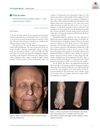
research Rothmund‐Thomson syndrome type 2 – a rare cause of chronic wounds
Rothmund-Thomson syndrome type 2 can cause chronic, poorly healing wounds.
research Discoid lupus erythematosus exacerbated by contact dermatitis caused by use of squaric acid dibutylester for topical immunotherapy in a patient with alopecia areata
Topical squaric acid dibutylester worsened discoid lupus erythematosus in a patient.
research Refractory dermatomyositis–systemic lupus erythematosus overlap syndrome and response to tofacitinib
Tofacitinib successfully treated a woman's severe symptoms from a rare autoimmune condition.
research SDRIFE Induced by Tofacitinib
Tofacitinib can cause a rare rash called SDRIFE, which resolves after stopping the drug.
research High-sulfur protein deficient human hair: clinical aspects and biochemical study of two unreported cases of a variant type of trichothiodystrophy
Two patients had a unique form of trichothiodystrophy with reduced high-sulfur proteins in their hair.

research DNA dioxygenases Tet2/3 regulate gene promoter accessibility and chromatin topology in lineage-specific loci to control epithelial differentiation
The enzymes Tet2 and Tet3 are important for skin cell development and hair growth.
research 708 SIG-1451: A topical anti-inflammatory new chemical entity for atopic dermatitis (AD)
SIG-1451 could be a promising new treatment for atopic dermatitis.
research 41701 Efficacy of the Oral JAK1/JAK2 Inhibitor CTP-543 (Deuruxolitinib) in Adult Patients with Moderate to Severe Alopecia Areata: Results from the Multinational Double-Blind, Placebo-Controlled THRIVE-AA1 Phase 3 Trial
CTP-543 effectively promotes hair regrowth in adults with moderate to severe alopecia areata.
research A Case of Hidradenitis Suppurativa Responsive to Testosterone Replacement Therapy
Testosterone therapy significantly improved Hidradenitis Suppurativa symptoms.

research 51794 Compounded Solution to Personalize Alopecia Management
The compounded topical solution is safe, stable, and effective for personalized alopecia treatment.
research A different blend of T: γδTregs offer new insight into alopecia areata
research Polyomavirus Associated Trichodysplasia Spinulosa in a Pediatric Kidney Transplant Recipient
A rare skin infection in a 10-year-old kidney transplant patient was successfully managed by adjusting medication.
research 5 Alpha - Reductase and Metabolic Syndrome in PCOS Patients
A higher testosterone/dihydrotestosterone ratio in PCOS patients may indicate worse metabolic health.
research DEMODICOSIS WITH TICKS INFESTATION AND BABESIOSIS IN A MIXED DOG
The dog's condition improved after 21 days of treatment.
research Dermatologic care of patients with differences of sex development
Dermatologists are crucial in providing personalized care for patients with sex development differences.
research Compounded Testosterone Troches TO OPTIMIZE HEALTH AND THE TESTOSTERONE CONTROVERSY.
Properly administered testosterone therapy is safe and effective but often not covered by insurance.

research Accessibility of direct-to-consumer teledermatology to underserved populations
Direct-to-consumer teledermatology is not effectively reaching underserved populations due to language, technology, and insurance barriers.
research The dual-action monophenolic antioxidant TS-13 accelerates hair coat restoration in a mouse model of chemotherapy-induced alopecia
TS-13 speeds up hair regrowth after chemotherapy.
research Longitudinal clinical course in patients with 5α-reductase type 2 deficiency treated with testosterone and dihydrotestosterone during infancy and puberty
Testosterone and dihydrotestosterone treatments can help with penile growth in males with 5α-reductase type 2 deficiency, with dihydrotestosterone being more effective in infancy.
research Inhibition of 5α-Reductase Activity in SZ95 Sebocytes and HaCaT Keratinocytes In Vitro
The substance MK386 effectively blocked testosterone conversion and reduced cell growth in certain skin cells, but inhibiting 5α-reductase alone may not greatly improve acne.