 36 citations
,
October 2022 in “ULTRASONOGRAPHY”
36 citations
,
October 2022 in “ULTRASONOGRAPHY” Ultrasonography in dermatology improves diagnosis and treatment of skin conditions.
January 1997 in “Elsevier eBooks” Cosmetics improve skin and hair health, protect from UV damage, and boost mood and confidence.
2 citations
,
October 2000 in “Journal of Investigative Dermatology” AUC and APL are distinct conditions needing careful clinical assessment.
September 2023 in “Zenodo (CERN European Organization for Nuclear Research)” 64 citations
,
October 2020 in “Journal of lasers in medical sciences” Low-level laser therapy shows promise but needs more research for improvement.
January 2022 in “Investigative News in Education (Universidad de Costa Rica)” No consensus was reached on diagnosing and treating lichen planopilaris and frontal fibrosing alopecia.
 September 1994 in “Otolaryngology-Head and Neck Surgery”
 Several doctors received research grants, new workshops and conferences were announced, and new officers were elected.
June 2026 in “Zenodo (CERN European Organization for Nuclear Research)” June 2026 in “Zenodo (CERN European Organization for Nuclear Research)” 2 citations
,
October 2023 in “PubMed” Scientists created a cell model to study and find treatments for a skin disease called RDEB.
1 citations
,
November 2004 in “The journal of investigative dermatology/Journal of investigative dermatology” Preserving and accessing historical research is crucial for ongoing scientific progress.
 16 citations
,
October 2014 in “Journal of the American Academy of Dermatology”
16 citations
,
October 2014 in “Journal of the American Academy of Dermatology” Oral retinoids may help some patients with hard-to-treat lichen planopilaris, but more research is needed.
33 citations
,
January 1996 in “CRC Press eBooks” Various techniques help study skin conditions and test drug effects.
August 2021 in “Journal of advances in medicine and medical research” Excimer light therapy is more effective than low level laser therapy for treating alopecia areata.
47 citations
,
October 2015 in “Dermatologic surgery” The 308-nm excimer laser is effective for skin conditions but needs more research on long-term effects.
 April 2023 in “Journal of Investigative Dermatology”
 The document's conclusion cannot be provided because the content is not accessible.
18 citations
,
July 2016 in “British Journal of Dermatology” Cutaneous lupus erythematosus greatly reduces patients' quality of life.
 April 2023 in “Journal of Investigative Dermatology”
 Scientists created a 3D skin model that shows typical signs of aging, which can help in aging research.
March 2025 in “Journal of Investigative Dermatology” The program increased awareness of traction alopecia but didn't significantly change hairstyling habits.
 September 2025 in “Institutional Repositories DataBase (IRDB)”
 Lactic acid bacteria fermentation can turn waste into valuable skincare ingredients.
 1 citations
,
May 2022 in “bioRxiv (Cold Spring Harbor Laboratory)”
1 citations
,
May 2022 in “bioRxiv (Cold Spring Harbor Laboratory)” Ulcerative colitis involves immune activation, chronic inflammation, and metabolic issues, some of which persist even during remission.
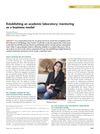 1 citations
,
October 2014 in “Molecular Biology of the Cell”
1 citations
,
October 2014 in “Molecular Biology of the Cell” Valentina Greco emphasizes the importance of combining business management with mentoring to run a successful academic lab.
 February 1996 in “International Journal of Dermatology”
 The Seoul International Dermatology Symposium was a successful event that highlighted new dermatology treatments and fostered international relations.
 4 citations
,
March 2013 in “InTech eBooks”
4 citations
,
March 2013 in “InTech eBooks” Confocal Laser Scanning Microscopy (CLSM) is a useful tool for studying how drugs interact with skin and diagnosing skin disorders, despite some limitations.
35 citations
,
November 2021 in “Environmental Health” Environmental health research must address racism to improve health outcomes for BIPOC communities.
 November 1966 in “British Journal of Dermatology”
 The meeting discussed various skin conditions, treatments, and unusual cases, highlighting the effectiveness of tetracycline in treating rosacea.
 February 2026 in “International Journal of Molecular Sciences”
 PDLLA filler can improve hair thickness and shine by reducing age-related hair decline.
2 citations
,
July 2004 in “Cell Biology International” uPA helps hair follicle cells grow.
June 2023 in “Zenodo (CERN European Organization for Nuclear Research)” July 2025 in “Journal of Investigative Dermatology” TRIV-509 quickly improves skin barrier and cell health in atopic dermatitis.