 September 2025 in “Australasian Journal of Dermatology”
 New medications could improve treatment for severe alopecia areata in Australia.
July 2024 in “Journal of Investigative Dermatology” 5 citations
,
May 2017 in “Journal of dermatological science” The combined treatment effectively managed severe skin issues in Olmsted syndrome.
 September 2023 in “Acta dermato-venereologica”
 Tofacitinib is a safe and effective treatment for hair loss in children with Alopecia Areata.
July 2025 in “Journal of Investigative Dermatology” Baricitinib stops hair loss and promotes regrowth in alopecia areata.
November 2025 in “Journal of Investigative Dermatology” Chronic refractory alopecia areata has more skin-resident memory T cells, and JAK inhibitors may help reduce them.
 February 2025 in “PubMed”
 Switching JAK inhibitors can lead to significant hair regrowth in severe alopecia cases.
June 2021 in “DOAJ (DOAJ: Directory of Open Access Journals)” JAK inhibitors show promise for treating alopecia areata but their effectiveness and safety are still debated.
 November 2025 in “Mendeley Data”
 Unorthodox dosing of tofacitinib and baricitinib is safe but less effective than standard dosing for treating alopecia areata in kids.
 9 citations
,
July 2016 in “The Journal of Dermatology”
9 citations
,
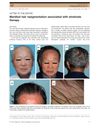
July 2016 in “The Journal of Dermatology” An 82-year-old man's white hair regained color after taking etretinate for psoriasis.
22 citations
,
August 2011 in “Journal of the American Academy of Dermatology” Topical tacrolimus can effectively treat erosive pustular dermatosis and related hair loss.
April 2016 in “The journal of investigative dermatology/Journal of investigative dermatology” The ALADIN score can predict how well patients with alopecia areata will respond to JAK inhibitor treatments.
 1 citations
,
May 2025 in “Natural Products and Bioprospecting”
1 citations
,
May 2025 in “Natural Products and Bioprospecting” PEVIII is a promising treatment for Pseudomonas aeruginosa keratitis.
2 citations
,
January 2025 in “Journal of Oncology Pharmacy Practice” Pembrolizumab can cause unusual eyelash growth, but it may still be worth continuing if cancer treatment is effective.
 1 citations
,
March 2019 in “Journal of Interdisciplinary Medicine”
1 citations
,
March 2019 in “Journal of Interdisciplinary Medicine” A patient with multiple sclerosis developed skin reactions after Daclizumab treatment, requiring more data on the drug's effects.
 2 citations
,
August 2013 in “The Lancet. Diabetes & endocrinology”
2 citations
,
August 2013 in “The Lancet. Diabetes & endocrinology” The FDA rejected a testosterone drug again due to safety concerns.
 January 2026 in “Forum Dermatologicum”
 JAK inhibitors and combination therapies show promise for treating severe alopecia areata.
July 2025 in “Journal of Investigative Dermatology” 19 citations
,
September 2006 in “Journal of Pediatric Gastroenterology and Nutrition” Early use of infliximab in severe pediatric Crohn's disease can lead to significant improvement and remission.
Tofacitinib significantly regrows hair in severe alopecia without major side effects.
January 2024 in “Updates in clinical dermatology” JAK inhibitors, PRP, and exosomes show promise for hair regrowth in Alopecia Areata.
April 2019 in “The journal of investigative dermatology/Journal of investigative dermatology” Blocking JAK1 or JAK3 helps reverse hair loss in a mouse model of alopecia areata.
September 2024 in “Вопросы современной педиатрии” Dupilumab helped an 11-year-old boy regrow hair and reduce skin rashes.
June 2025 in “Medical alphabet” JAK inhibitors may help treat alopecia areata in children, but their safety needs careful evaluation.
8 citations
,
June 2021 in “Frontiers in Medicine” The combination of the excimer lamp and liquor carbonis detergens is more effective for scalp psoriasis than the lamp alone.
May 2024 in “Indian Journal of Pharmacology” Tofacitinib effectively regrew scalp hair in an 11-year-old girl with alopecia areata.
 2 citations
,
January 2023 in “Prague Medical Report”
2 citations
,
January 2023 in “Prague Medical Report” JAK inhibitors, like baricitinib, are effective and safe for treating alopecia areata.
 11 citations
,
October 2018 in “Pediatric dermatology”
11 citations
,
October 2018 in “Pediatric dermatology” Leflunomide and anthralin may effectively treat severe alopecia areata.
Combining baricitinib with golimumab helped regrow hair in a patient with ankylosing spondylitis and alopecia areata.
September 2025 in “Journal of the American Academy of Dermatology” Some JAK inhibitors are effective for significant hair regrowth in alopecia areata.