 January 2025 in “Pakistan Veterinary Journal”
 A cat had a rare, aggressive pancreatic cancer that spread quickly and led to its death.
27 citations
,
January 2011 in “Dermatology Research and Practice” Nonsegmental vitiligo is caused by the immune system attacking skin cells, often linked to other autoimmune diseases.
 September 2006 in “Dermatologic Surgery”
 Some aggressive scalp cancers are hard to treat and can be deadly, even when removed with specialized surgery.
June 2020 in “bioRxiv (Cold Spring Harbor Laboratory)” Stem and progenitor cells in the eye have different division rates and locations, affecting how they respond to injury.
January 2018 in “Investigative Ophthalmology & Visual Science”  1 citations
,
May 2022 in “Голова и шея.”
1 citations
,
May 2022 in “Голова и шея.” Malignant eye tumors produce more silver nanoparticles than benign ones.
1 citations
,
October 2023 in “European Journal of Dermatology” Combining hair transplantation with PRP is more effective for treating hair loss than hair transplantation alone.
November 2025 in “Journal of Investigative Dermatology” TEC kinases may help cause inflammation in vitiligo and could be targeted for treatment.
 60 citations
,
April 2006 in “International Journal of Dermatology”
60 citations
,
April 2006 in “International Journal of Dermatology” Surgical methods like suction blister grafting and split-thickness skin grafting are highly successful for vitiligo repigmentation, but choosing the right patients is crucial for success.
 February 2021 in “Reactions Weekly”
 Finasteride and dutasteride may cause macular abnormalities.
 December 2023 in “Clinical, cosmetic and investigational dermatology”
 The new method combining dermoscopy and Reflectance Confocal Microscopy is more effective for evaluating vitiligo.
18 citations
,
October 2022 in “Biomedicines” Regenerative treatments for vitiligo show promise but need more research for long-term safety and effectiveness.
April 2019 in “Journal of the Endocrine Society” Rapid virilization should be checked for possible ovarian or adrenal cancer.
 October 2020 in “Our Dermatology Online”
 Skin changes and high vitamin B12 levels can be early signs of cancer.

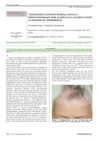
Eyelid pilomatrixomas are rare, benign tumors that need accurate diagnosis for proper treatment.
 2 citations
,
July 2014 in “Our Dermatology Online”
2 citations
,
July 2014 in “Our Dermatology Online” Contact immunotherapy can cause vitiligo in patients with autoimmune conditions.
 9 citations
,
August 2017 in “Journal of comparative pathology”
9 citations
,
August 2017 in “Journal of comparative pathology” Trichoblastomas in rabbits are linked to uncontrolled embryonic hair growth and have distinct histological features.
72 citations
,
November 1997 in “Clinics in dermatology” Vitiligo is a skin condition causing white patches, likely due to an autoimmune issue.
99 citations
,
March 2013 in “Journal of Investigative Dermatology” Mutations in the ABCB6 gene cause Dyschromatosis Universalis Hereditaria.
 November 2017 in “Journal of Surgical Academia”
 Visual field defects in lupus nephritis can be caused by hypertensive retinopathy, not glaucoma or medication toxicity.
May 2024 in “Anais Brasileiros de Dermatologia” January 2015 in “Journal of the turkish academy of dermatology” Phototherapy is effective in treating vitiligo.
3 citations
,
December 1967 in “Australasian Journal of Dermatology” Becker's Melanosis and Hypertrichosis mainly affects young males, causing brown skin patches and extra hair on one side of the upper body.
 1 citations
,
March 2015 in “Journal of Cutaneous Medicine and Surgery”
1 citations
,
March 2015 in “Journal of Cutaneous Medicine and Surgery” Eyebrow hair transplants can regrow after high-dose radiation therapy.

New treatments for vitiligo may focus on protecting melanocyte stem cells from stress and targeting specific pathways involved in the condition.
2 citations
,
October 2016 in “Nutrition in clinical practice” Vitamin B12 deficiency can cause facial dark spots that go away with treatment.
June 2021 in “The Journal of Family Practice” A 69-year-old woman has a fast-growing hand lesion that didn't improve with salicylic acid.
15 citations
,
November 2020 in “Development” Stem cells in the eye have different roles and behaviors, helping maintain and repair the eye's surface.
June 2025 in “Academic Medical Journal” Vitiligo treatments are improving but relapses are common.
1 citations
,
June 2025 in “Pigment Cell & Melanoma Research” SASH1 gene mutations are linked to various inherited skin pigmentation disorders.