
The mesenchymal stem cell secretome may effectively treat various diseases as an alternative to traditional stem cell therapies.
 January 2024 in “Wiadomości Lekarskie”
 AI is transforming healthcare by improving diagnostics and therapy, despite challenges with data and trust.
 January 2024 in “Wiadomości Lekarskie”
 Sweden's forensic medicine is expanding the use of CT and aims to integrate 3D photogrammetry for injury documentation.
 12 citations
,
July 2014 in “Journal of Investigative Dermatology”
12 citations
,
July 2014 in “Journal of Investigative Dermatology” Chemotherapy causes complex changes in hair follicle cells that can lead to hair loss.
 44 citations
,
January 2019 in “Journal of Translational Medicine”
44 citations
,
January 2019 in “Journal of Translational Medicine” Macrophages are essential for successful skin growth in reconstructive surgery.
 15 citations
,
July 2013 in “Cell Reports”
15 citations
,
July 2013 in “Cell Reports” Indian Hedgehog helps control skin cell growth and protects against aggressive skin cancer.
 January 2026 in “Cirugía Plástica .”
 Topical glutamic acid may help hair regrow after burns, but more human testing is needed.
 May 2026 in “Organoid Research”
 Hydrogel-based methods improve skin organoid development for medical and research applications.
 109 citations
,
December 1998 in “The Journal of Dermatology”
109 citations
,
December 1998 in “The Journal of Dermatology” Manipulating the catagen and telogen phases of hair growth could lead to treatments for hair disorders.
 85 citations
,
December 2017 in “Developmental Biology”
85 citations
,
December 2017 in “Developmental Biology” Mammals might fail to regenerate not because they lack the right cells, but because of how cells respond to their surroundings, and changing this environment could enhance regeneration.
 66 citations
,
July 2015 in “Journal of Molecular Biology”
66 citations
,
July 2015 in “Journal of Molecular Biology” The document concludes that for hair and feather growth, it's better to target the environment around stem cells than the cells themselves.
 45 citations
,
March 2020 in “ACS Applied Materials & Interfaces”
45 citations
,
March 2020 in “ACS Applied Materials & Interfaces” The new biomaterial inspired by ancient Chinese medicine effectively promotes hair growth and heals wounds in burned skin.
 36 citations
,
August 2021 in “Nature Cell Biology”
36 citations
,
August 2021 in “Nature Cell Biology” Organoids can help study COVID-19 and develop treatments, but face challenges like instability and limited renewal.
 33 citations
,
September 2016 in “British journal of dermatology/British journal of dermatology, Supplement”
33 citations
,
September 2016 in “British journal of dermatology/British journal of dermatology, Supplement” Human hair follicle dermal cells can effectively replace other cells in engineered skin.
 10 citations
,
July 2011 in “Wound Repair and Regeneration”
10 citations
,
July 2011 in “Wound Repair and Regeneration” New antiscarring strategies show promise, including drugs, stem cells, and improved surgical techniques.
 9 citations
,
December 2024 in “Nano Research”
9 citations
,
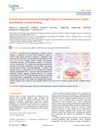
December 2024 in “Nano Research” A protein-based hydrogel helps heal diabetic wounds and repair nerves.
 9 citations
,
December 2020 in “International Journal of Medical Sciences”
9 citations
,
December 2020 in “International Journal of Medical Sciences” iPSCs help understand and treat neurodevelopmental disorders.
 1 citations
,
July 2005 in “Informa Healthcare eBooks”
1 citations
,
July 2005 in “Informa Healthcare eBooks” Hair follicles could be used for targeted drug delivery, with liposomal systems showing promise for this method.
 1 citations
,
November 2002 in “Neurosurgery Clinics of North America”
1 citations
,
November 2002 in “Neurosurgery Clinics of North America” The article concludes that cranial reconstruction should aim for the best aesthetic result, using various techniques tailored to individual needs and conditions.
 June 2026 in “Cell Regeneration”
 The olfactory epithelium can regenerate throughout life, aided by specific cells, genes, and new research methods.

Exosomes from fat-derived stem cells help repair large bone defects by attracting and enhancing bone marrow stem cells.

Stem cells can improve skin grafts by enhancing blood flow and hair growth.

Removing SIX1 in fat cells reduces skin fibrosis.
 January 2024 in “Wiadomości Lekarskie”
 AI in heart scans improves diagnosis and treatment but has risks like misdiagnosis and high costs.
 January 2024 in “Wiadomości Lekarskie”
 Chronic critical illness often leads to long ICU stays and ongoing health issues after surviving the initial critical phase.
 January 2024 in “Wiadomości Lekarskie”
 Grzegorz Ziembicki significantly advanced surgical education and practice, innovating techniques and advocating for the medical profession.
 January 2022 in “bioRxiv (Cold Spring Harbor Laboratory)”
 Skin lesions in Carney complex are likely caused by a specific group of skin cells that promote pigment production due to a genetic mutation.
 April 2017 in “Plastic and reconstructive surgery. Global open”
 Fetal scalp cells have more regenerative genes than adult cells, and decellularized muscle matrix is better for muscle repair than commercial alternatives.
 January 2015 in “Durham e-Theses (Durham University)”
 Adipose tissue changes in obesity can trigger stress in fat cells.
 218 citations
,
January 2013 in “The Lancet Oncology”
218 citations
,
January 2013 in “The Lancet Oncology” Chemotherapy causes hair loss by damaging hair follicles and stem cells, with more research needed for prevention and treatment.