 April 2025 in “Journal of Skin and Stem Cell”
 PDRN from trout sperm helps skin and hair regeneration but is costly and complex to produce.
 3 citations
,
January 2023 in “American journal of physiology. Cell physiology”
3 citations
,
January 2023 in “American journal of physiology. Cell physiology” Inward rectifier potassium channels are important in many body functions and diseases, and could be potential drug targets.
1 citations
,
September 2020 in “bioRxiv (Cold Spring Harbor Laboratory)” γδ T cells are crucial for early wound healing after a skin virus infection.

CaBP1 and CaBP2 are important for continuous hearing by preventing inactivation of calcium currents in ear cells, with CaBP2 also able to restore hearing when reintroduced.
Dual TCR Treg cells are common in various mouse tissues and show diverse characteristics.
 68 citations
,
November 2012 in “Journal of Investigative Dermatology”
68 citations
,
November 2012 in “Journal of Investigative Dermatology” Prostaglandin D2 blocks new hair growth after skin injury through the Gpr44 receptor.
3 citations
,
October 1994 in “Medical Molecular Morphology” The lower part of rat vibrissa hair gets more blood and is well-protected for growth.
164 citations
,
December 1984 in “Proceedings of the National Academy of Sciences” TCDD reduces EGF receptor activity and causes various developmental changes in animals.
124 citations
,
December 1983 in “Developmental Biology” EGF receptors are crucial for skin cell growth and decrease with age.
 2 citations
,
February 2023 in “Transgenic Research”
2 citations
,
February 2023 in “Transgenic Research” The E2 protein affects gene activity in hair follicles of mice.
10 citations
,
November 2017 in “Letters in drug design & discovery” Researchers identified promising inhibitors for the BRD4 protein, including finasteride and amentoflavone.
July 2024 in “Journal of Investigative Dermatology” Versican in dermal papilla cells is crucial for healthy hair growth.
 10 citations
,
November 2015 in “Experimental Dermatology”
10 citations
,
November 2015 in “Experimental Dermatology” Skin RAGE levels are linked to inflammation and cell death.
9 citations
,
July 2022 in “British Journal of Pharmacology” Blocking the mineralocorticoid receptor improves wound healing by reducing inflammation and promoting blood vessel growth.
9 citations
,
December 1991 in “Annals of the New York Academy of Sciences” 4 citations
,
August 2023 in “Biomedicine & Pharmacotherapy” Ivacaftor can protect against noise-induced hearing loss by reducing oxidative stress.
December 2004 in “Neuropsychopharmacology” Long-term alcohol exposure alters brain receptor function differently in various brain regions.
2 citations
,
November 2004 in “Blood” RXRa is crucial for Th2 immune cell development and may link nutrition to immune health.
43 citations
,
May 1999 in “Journal of Biological Chemistry” Agouti protein affects melanocortin receptors through competitive antagonism and receptor down-regulation.
4 citations
,
May 2022 in “Genes & Diseases”  5 citations
,
January 2005 in “Journal of Enzyme Inhibition and Medicinal Chemistry”
5 citations
,
January 2005 in “Journal of Enzyme Inhibition and Medicinal Chemistry” New steroids were effective in blocking male hormone receptors in hamster prostates.
May 2020 in “Authorea (Authorea)” Olfactory receptors found outside the nose may offer new treatments for diseases like cancer and help in wound healing and hair growth.
 January 2025 in “Nature Communications”
 Large-scale reconstructions enhance understanding of vibrissal sensory mapping in the brain.
1 citations
,
July 2006 in “Journal of Investigative Dermatology” A 4kb fragment of the desmocollin 3 promoter targets gene expression to specific skin and hair follicle areas.
62 citations
,
December 2007 in “Journal of Cellular and Molecular Medicine” Kremen is crucial for proper development and preventing tumors by regulating Wnt signaling.
 May 2024 in “Scientific Reports”
 Androgen receptors in the mouse brain may explain cognitive and mood changes in prostate cancer treatment.
September 2017 in “Journal of Investigative Dermatology” LRIG1 protein affects hair growth by regulating skin receptors, leading to hair loss when overexpressed.
 April 2025 in “Journal of Digestive Cancer Research”
 Milk-derived vesicles are promising for delivering drugs orally and treating various conditions.
 18 citations
,
April 2001 in “Bioorganic & Medicinal Chemistry Letters”
18 citations
,
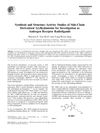
April 2001 in “Bioorganic & Medicinal Chemistry Letters” The nature of the side chain in RU 58841 derivatives greatly affects its AR affinity, with the N-(iodopropenyl) derivative 13 showing the highest AR binding affinity, suggesting its potential for developing high-affinity radioiodinated AR radioligands.
 222 citations
,
October 2014 in “Annual Review of Pharmacology and Toxicology”
222 citations
,
October 2014 in “Annual Review of Pharmacology and Toxicology” Eph receptors and ephrins may be promising targets for treating diseases, but more understanding is needed for effective and safe therapies.