 November 2023 in “Open Repository of the University of Porto (University of Porto)”
 Pharmacists play a crucial role in patient care and education.
46 citations
,
May 2021 in “Stem Cell Research & Therapy” Strontium ranelate helps cartilage growth by blocking a specific cell pathway.
April 2024 in “Veterinary Science and Medicine Journal” Proper treatment and sanitation can cure and prevent scabiosis in domestic cats.
July 2017 in “DOAJ (DOAJ: Directory of Open Access Journals)” SVF-enhanced fat injections may effectively treat baldness by promoting hair growth.
 January 2025 in “American Journal of Stem Cells”
 Melanocyte stem cells hold promise for skin regeneration and treating pigmentation issues.
 August 2022 in “Frontiers in genetics”
 A new genetic change in the DSC3 gene is linked to a rare condition causing hair loss and skin blisters in a child.
Sintilimab with chemotherapy improves survival and response in advanced lung cancer but increases some side effects.
 November 2022 in “Van Sağlık Bilimleri Dergisi”
 Turkish Van cats' genotypes don't affect traits like eye color or hair length.
 December 2024 in “Media Dermato Venereologica Indonesiana”
 Acne vulgaris was the most common skin disorder overall.
 May 2015 in “Journal of The American Academy of Dermatology”
 A heart transplant patient developed a skin condition called epidermodysplasia verruciformis after taking immune-suppressing drugs.
10 citations
,
October 2014 in “Journal of the European Academy of Dermatology and Venereology” Pemphigus vegetans can appear on the scalp and is rare.
IVL-DrugFluidic® can mass-produce high-quality, long-acting injectable drug microspheres, improving patient compliance and reducing side effects.
7 citations
,
June 2024 in “Skin Research and Technology” Combining treatments significantly reduces dark circles and wrinkles better than nanofat alone.
July 2025 in “Journal of Investigative Dermatology” Collagen scaffolds in cell therapy can transform skin to be more resilient and pressure-responsive.
 April 2018 in “Journal of Investigative Dermatology”
 Fetuin A, Anigozanthos Flavidus extract, and Ovol2 affect wound healing and skin regeneration.
April 2019 in “Journal of the Endocrine Society” Care for gender-dysphoric Veterans can be improved with a consistent, team-based approach.
 5 citations
,
January 2022 in “Asian Pacific Journal of Cancer Prevention”
5 citations
,
January 2022 in “Asian Pacific Journal of Cancer Prevention” Certain VDR gene changes can affect melanoma risk.
September 2023 in “Journal of the American Academy of Dermatology” Risankizumab effectively treats and maintains skin clearance in moderate-to-severe psoriasis.
October 2025 in “Saúde (Santa Maria)” Spironolactone is an effective and safe treatment for acne in adult women.
1 citations
,
November 2023 in “Life” Hyaluronic acid injections can improve mouth opening and quality of life in scleroderma patients.
3 citations
,
October 2021 in “bioRxiv (Cold Spring Harbor Laboratory)” scINSIGHT helps understand single-cell gene expression better than current methods.
 June 2026 in “International Journal of Molecular Sciences”
 Extracellular vesicles show promise in regenerative and cosmetic medicine but need more research and regulation for safe use.
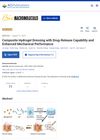 August 2025 in “Biomacromolecules”
 The hydrogel dressing improves wound healing, offers long-lasting antibacterial effects, and enhances patient comfort.
May 2026 in “Pharmacy Reports” Green formulations are promising in efficacy and safety but lack proven stability for widespread use.
 July 2025 in “Journal of Dermatology Research and Therapy”
 Verteporfin may improve hair regrowth and reduce scarring after hair transplants.
 2 citations
,
August 2021 in “The Journal of Urology”
2 citations
,
August 2021 in “The Journal of Urology” The procedure involving seminal vesiculoscopy, TURED, and balloon dilation effectively treated a man's hematospermia and improved his dysorgasmia.
 2 citations
,
January 2022 in “Journal of Cutaneous and Aesthetic Surgery”
2 citations
,
January 2022 in “Journal of Cutaneous and Aesthetic Surgery” Injecting any solution helps acne scars, and ultrasound is useful for checking treatment results.

A person with a new mutation in the SCN1A gene developed brain inflammation after COVID-19.
1 citations
,
April 2024 in “Animal Genetics” A genetic defect in an Appenzeller Mountain Dog caused skin issues, improved with ketoconazole, showing the importance of advanced genetic testing.