 3 citations
,
January 2011
3 citations
,
January 2011 The method measures finasteride accurately and cheaply using UV light.
 12 citations
,
October 2012 in “Dermatologic Clinics”
12 citations
,
October 2012 in “Dermatologic Clinics” Low-Level Laser Therapy and other light treatments for hair growth lack strong evidence and need more research.
 1 citations
,
March 2024 in “Brain Imaging and Stimulation”
1 citations
,
March 2024 in “Brain Imaging and Stimulation” A low-cost, 3D-printed light therapy device is safe and effective but needs more testing before use on people.
 28 citations
,
August 2015 in “Journal of Drug Targeting”
28 citations
,
August 2015 in “Journal of Drug Targeting” The new CoQ10 gel protects mouse skin better against aging from UV light than the old gel.
 10 citations
,
January 2021 in “Journal of Ginseng Research”
10 citations
,
January 2021 in “Journal of Ginseng Research” Red ginseng oil may help grow hair and protect skin from UVC light.
 2 citations
,
June 2012 in “Journal of Cosmetic Dermatology”
2 citations
,
June 2012 in “Journal of Cosmetic Dermatology” Hair transplant using beard hair made acne scars on cheeks less visible with minimal scarring in the donor area.
 May 2026 in “Clinical Cosmetic and Investigational Dermatology”
 White hair can make the scalp look more visible, which may be mistaken for hair loss.
 3 citations
,
July 2020 in “Frontiers in Cell and Developmental Biology”
3 citations
,
July 2020 in “Frontiers in Cell and Developmental Biology” Vitexin Compound 1 may help reduce skin aging caused by UVA light.
 6 citations
,
April 2021 in “Scientific Reports”
6 citations
,
April 2021 in “Scientific Reports” Phytochrome A is crucial for normal metabolism and development in tomato seedlings under far-red light.
 234 citations
,
February 2001 in “British Journal of Dermatology”
234 citations
,
February 2001 in “British Journal of Dermatology” FPHL affects hair density and diameter, causing visible hair loss in older women.
 28 citations
,
May 2017 in “Molecular ecology”
28 citations
,
May 2017 in “Molecular ecology” Researchers found genes that control hair color and growth change before the visible coat color changes in snowshoe hares.
 7 citations
,
November 2011 in “Skin Research and Technology”
7 citations
,
November 2011 in “Skin Research and Technology” The study found a specific pattern of uneven melanin distribution on balding scalps that could help understand skin diseases caused by light exposure.
 1 citations
,
June 2019 in “Food Research”
1 citations
,
June 2019 in “Food Research” Tempeh oil rich in linoleic acid may protect against skin aging caused by UV light.
 July 2024 in “Dermatology and Therapy”
 Darker hair colors may increase the risk of alopecia areata, while lighter hair colors may decrease it.
 October 2016 in “Elsevier eBooks”
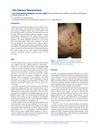
 Common noncancerous skin diseases have various treatments, including topical applications, light therapy, surgery, and medications, with psychological support being important.
 27 citations
,
June 2015 in “Journal of photochemistry and photobiology. B, Biology”
27 citations
,
June 2015 in “Journal of photochemistry and photobiology. B, Biology” The new lab-grown skin model is good for testing sunscreen's protection against DNA damage from UV light.
 11 citations
,
July 2008 in “Facial Plastic Surgery Clinics of North America”
11 citations
,
July 2008 in “Facial Plastic Surgery Clinics of North America” Hair restoration surgery redistributes existing hair to achieve a natural look, with visible regrowth in 3-4 months and rare complications, mostly aesthetic.
 2 citations
,
February 2025 in “Dermatology and Therapy”
2 citations
,
February 2025 in “Dermatology and Therapy” UVF-dermoscopy is a useful tool for accurately diagnosing types of alopecia, especially in people with lighter skin.
 26 citations
,
December 1981 in “British journal of dermatology/British journal of dermatology, Supplement”
26 citations
,
December 1981 in “British journal of dermatology/British journal of dermatology, Supplement” Cyproterone acetate reduced hair growth in most hirsute females and made hair softer, thinner, and lighter.
 April 2021 in “Advances in Cosmetic Surgery”
 Hair restoration can be achieved through non-surgical treatments like minoxidil, antiandrogens, phototherapy, and PRP procedures, or through surgical methods like hair transplantation. Continued treatment is needed to maintain results, and full results are visible after 12-18 months.
 2 citations
,
February 2022 in “Biology”
2 citations
,
February 2022 in “Biology” Blue laser light reduces energy in mouse skin cells and creates harmful oxygen compounds, possibly harming the cells.
November 2025 in “Photochemistry and Photobiology” Standardizing light therapy methods could improve spinal cord injury treatment.
6 citations
,
November 2018 in “American journal of transplantation” UV light helped human hair transplants survive in mice without broad immunosuppression.
1 citations
,
November 2021 in “IntechOpen eBooks” Red light therapy may help prevent memory loss as we age.
 June 2026 in “Lahore Garrison University Journal of Life Sciences”
 The combination showed limited antifungal effects against dandruff-causing fungus.
18 citations
,
May 2022 in “Stem Cell Research & Therapy” Green OLED light improves stem cell effectiveness for better wound healing.
7 citations
,
February 2024 in “ACS Applied Materials & Interfaces” A new light-activated treatment speeds up healing of infected wounds without antibiotics.
May 2025 in “Journal of Photochemistry and Photobiology B Biology” Blue LED light improves hair treatments for Caucasian and Asian hair but not for African hair.
 April 2025 in “Health Science Reports”
 Smoking and lighter hair color increase alopecia risk, especially in women and those over 25.
February 2024 in “Neurophotonics” Light therapy on the brain shows promise for treating brain diseases and improving brain function.