1 citations
,
May 2013 in “PubMed” Glycylglycine makes hair softer by improving alignment and changing hair's internal properties.
 May 2024 in “Ultramicroscopy”
 Atomic Force Microscopy is a more accurate way to assess hair damage and the effect of cosmetic treatments.
July 2026 in “arXiv (Cornell University)” Recent research reveals that hair is not a uniform fiber but a functionally graded composite, with significant variations in mechanical properties and structure along its length. In domestic cats, three hierarchical structures—layered keratin walls, melanosome-like granules, and calcium enrichment—vary along body hairs and whiskers. These variations correlate with local mechanical properties, challenging the assumption of uniformity in hair. Prolonged chemical treatments can alter these structures, affecting hair integrity. This study highlights the complexity of hair's structure-function relationship, similar to observations in human hair.
November 2024 in “International Journal of Cosmetic Science” Hair absorbs moisture differently based on its structure and treatment, with changes occurring at 30% humidity.
18 citations
,
January 2015 in “Journal of medical genetics” New genes linked to woolly hair have been found, which could help treat it and change hair texture.
 October 2023 in “International journal of research in dermatology”
 Mintop shampoo improved hair smoothness, shine, and strength after ten washes.
 January 2012 in “International Journal of Trichology”
 Two siblings have a rare genetic condition causing curly, coarse hair.
2 citations
,
July 2012 in “PubMed” Ceramide-rich liposomes can effectively repair and strengthen damaged hair.
 1 citations
,
December 1972 in “Journal of Colloid and Interface Science”
1 citations
,
December 1972 in “Journal of Colloid and Interface Science” Ethanol spreads well on hair at low humidity but less so at higher humidity due to water condensation.
 April 2006 in “Dermatologic Clinics”
 White wax and its policosanol boost hair growth better than finasteride.
February 2026 in “Colloids and Surfaces B Biointerfaces” The composite dressing improved wound healing and hair growth in mice.
December 2025 in “Biopolymers” Heat worsens damage in chemically treated hair, especially bleached and straightened hair.
 April 2024 in “JCT research”
  April 2025 in “International Journal of Cosmetic Science”
 A new hair perming method avoids damage and lasts longer than traditional methods.
April 2023 in “CRC Press eBooks” Hair care products mainly work on the hair's surface and need professional guidance for use.
 2 citations
,
January 2020 in “Skin appendage disorders”
2 citations
,
January 2020 in “Skin appendage disorders” Long hair can cause hair loss due to constant pulling.
 December 2025 in “The American Journal of Medical Sciences and Pharmaceutical Research”
 Combining barber scalp care with medical treatment improves scalp health and well-being in early-stage alopecia.
 January 2026 in “Indian Journal of Dermatopathology and Diagnostic Dermatology”
 Corkscrew hairs can help diagnose trichotillomania.
2 citations
,
October 2007 in “PubMed” Topical scalp treatments could potentially reduce hair extraction.
 January 2015 in “Hair therapy & transplantation”
 New hair and scalp disease diagnosis methods are important for correct treatment.
October 2015 in “Cosmetic Dermatology” Hair is complex, varies in type, and plays a big role in attractiveness and culture.
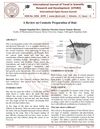 June 2018 in “International journal of trend in scientific research and development”
 The review explains how hair products work and the science of different hair types to help improve hair care research.
13 citations
,
March 2017 in “Skin Research and Technology” Formaldehyde damages curly hair more than glyoxylic acid.
 2 citations
,
September 2020 in “Hair transplant forum international”
2 citations
,
September 2020 in “Hair transplant forum international” A new tool makes hair transplant surgeries faster by creating multiple cuts in one go.
 April 2026 in “Zenodo (CERN European Organization for Nuclear Research)”
 The kidney bean conditioner is safe, effective, eco-friendly, and makes hair soft and shiny.
 April 2026 in “Zenodo (CERN European Organization for Nuclear Research)”
 The kidney bean conditioner is safe, effective, eco-friendly, and makes hair soft and shiny.
1 citations
,
May 1967 in “Pediatric Research”  44 citations
,
August 2008 in “Archives of Dermatology”
44 citations
,
August 2008 in “Archives of Dermatology” Trichoscopy is a non-invasive way to diagnose hair and scalp problems without needing hair samples.
 June 2025 in “Rapid Communications in Mass Spectrometry”
 The new method improves protein extraction and analysis in hair, aiding biomedical and forensic work.

Taking care of your hair and managing hair loss requires a combined approach.