 April 2021 in “Journal of Investigative Dermatology”
 Bacteria can help skin regenerate through a process called IL-1β signaling.
 July 2020 in “bioRxiv (Cold Spring Harbor Laboratory)”
 Neutrophil extracellular traps slow down hair follicle healing after injury.
 June 2020 in “Journal of Investigative Dermatology”
 Certain bacteria can enhance skin regeneration.
 January 2020 in “Social Science Research Network”
 Skin bacteria help in skin regeneration and wound healing, with a specific signal called IL-1β playing a crucial role.
IL-36α helps in growing new hair follicles when healing wounds, potentially aiding in hair growth.
 April 2018 in “Journal of Investigative Dermatology”
 DPP4 is important for scarring and skin regeneration, and managing its activity could improve skin healing treatments.
April 2018 in “Journal of Investigative Dermatology” African spiny mice can regenerate skin and hair after wounds due to specific tissue mechanics.
April 2017 in “The journal of investigative dermatology/Journal of investigative dermatology” Double stranded RNA helps skin wounds heal by coordinating specific proteins and signaling pathways.
 April 2016 in “The journal of investigative dermatology/Journal of investigative dermatology”
 M2 macrophages help hair regrowth in wounds by making growth factors.
 April 2015 in “Plastic and Reconstructive Surgery”
 Activating TLR3 helps improve skin and hair follicle regeneration after wounds.
 April 2015 in “Plastic and Reconstructive Surgery”
 TLR3 activation helps improve skin and hair follicle healing in mice.
 October 2013 in “Faculty Opinions – Post-Publication Peer Review of the Biomedical Literature”
 FGF9 from certain T cells helps create new hair follicles during wound healing, which could potentially be used for hair loss treatments.
 June 2013 in “Faculty Opinions – Post-Publication Peer Review of the Biomedical Literature”
 A substance called FGF9 from certain immune cells can trigger new hair growth during wound healing in mice, but humans may not have the same response due to fewer of these cells.
 June 2013 in “Faculty Opinions – Post-Publication Peer Review of the Biomedical Literature”
 FGF9 from certain cells can trigger new hair growth during wound healing, but humans have fewer of these cells, which may limit hair regrowth.
 April 2023 in “Journal of Investigative Dermatology”
 Covering a wound can stop hair growth by promoting scarring, but boosting a process called Wnt signaling can help hair grow back even when the wound is covered.
July 2022 in “Journal of Investigative Dermatology” Skin bacteria help hair regrow by boosting cell metabolism.
January 2022 in “Stem cell biology and regenerative medicine” New hair can grow at wound sites, which could help improve treatments for hair loss and wound healing.

Wound-induced hair follicle creation is a complex process in adult mammals that involves various cells and immune responses, and understanding it better could help improve skin healing strategies.
 28 citations
,
October 2019 in “Seminars in Cell & Developmental Biology”
28 citations
,
October 2019 in “Seminars in Cell & Developmental Biology” Hair can regrow in large wounds through a process similar to how hair forms in embryos, and understanding this could lead to new treatments for hair loss or scarring.
Understanding wound healing and signaling pathways could lead to new alopecia treatments.
June 2026 in “Experimental Dermatology” Large wounds have more infundibular basal keratinocytes, aiding hair follicle regeneration.
July 2025 in “Journal of Investigative Dermatology” Wnt signaling helps regenerate hair follicles in wounds by reducing skin cell sensitivity to mechanical stress.
 7 citations
,
November 2020 in “Experimental Dermatology”
7 citations
,
November 2020 in “Experimental Dermatology” Different cell types work together to repair skin, and targeting them may improve healing and reduce scarring.
 4 citations
,
January 2026 in “Cell Discovery”
4 citations
,
January 2026 in “Cell Discovery” Understanding wound healing involves coordinating different phases and areas to improve treatment strategies.
April 2023 in “Journal of Investigative Dermatology” RNase L suppresses regeneration in mammals.
 128 citations
,
August 2015 in “Cell Stem Cell”
128 citations
,
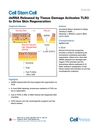
August 2015 in “Cell Stem Cell” Damage to skin releases dsRNA, which activates TLR3 and helps in skin and hair follicle regeneration.
 68 citations
,
November 2012 in “Journal of Investigative Dermatology”
68 citations
,
November 2012 in “Journal of Investigative Dermatology” Prostaglandin D2 blocks new hair growth after skin injury through the Gpr44 receptor.
 22 citations
,
May 2021 in “Nature Communications”
22 citations
,
May 2021 in “Nature Communications” Tissue stiffness affects hair follicle regeneration, and Twist1 is a key regulator.
 211 citations
,
November 2018 in “Nature Cell Biology”
211 citations
,
November 2018 in “Nature Cell Biology” Stem cells help heal skin wounds by moving and changing roles, working with other cells, and needing more research on their activation and behavior.
 170 citations
,
July 2012 in “Journal of Investigative Dermatology”
170 citations
,
July 2012 in “Journal of Investigative Dermatology” Wnt ligands are crucial for hair growth and repair.