49 citations
,
April 2010 in “International Journal of Cosmetic Science” Hair ages as the cuticle wears down, especially beyond 1 meter from the root, affecting its strength and shine.
July 2025 in “Journal of Investigative Dermatology” AI-09 is safe, effective, and reduces wrinkles for up to 6 months.
19 citations
,
July 2004 in “Australasian Journal of Dermatology” Her hair grew back normally after she stopped rubbing it.
24 citations
,
September 2024 in “Journal of Investigative Dermatology” 37 citations
,
October 2015 in “PeerJ” Perming significantly changes hair's molecular structure, while shampoo and conditioner do not.
 November 2023 in “The journal of investigative dermatology/Journal of investigative dermatology”
 Combining stem cell exosomes with microneedling improves facial skin aging effectively and safely.
 49 citations
,
August 2016 in “Aesthetic Surgery Journal”
49 citations
,
August 2016 in “Aesthetic Surgery Journal” Micro-needling effectively improves wrinkles, scars, and hair growth, but proper technique and safety are important.

Moisture makes hair flexible for reshaping during blowouts.
2 citations
,
June 2024 in “Regenerative Therapy” Oxygen-rich PRP injections can effectively rejuvenate the face.
11 citations
,
April 2021 in “Journal of Clinical Medicine” The LED device safely improves neck skin appearance without affecting thyroid function.
55 citations
,
November 2010 in “Development” Hair follicles in mutant mice self-organize into ordered patterns within a week.
35 citations
,
January 2011 in “Facial Plastic Surgery” Forehead lifting can restore a youthful look and improve brow aesthetics using various surgical and nonsurgical methods.
85 citations
,
October 2007 in “International Journal of Dermatology” Curly hair shape is due to uneven growth patterns in the hair follicle.
1 citations
,
August 2018 in “Anais Brasileiros de Dermatologia” Facial threading reduces skin roughness and improves appearance but doesn't affect hydration or melanin.
 19 citations
,
May 2016 in “Aging Cell”
19 citations
,
May 2016 in “Aging Cell” Older people's sweat glands are less effective at helping skin wounds heal due to weaker cell connections.
12 citations
,
January 1995 in “British Journal of Plastic Surgery”  April 2023 in “Journal of Investigative Dermatology”
 The new recombinant human collagen can help slow skin aging and repair skin, while also controlling inflammation.
 34 citations
,
October 1982 in “Journal of applied polymer science”
34 citations
,
October 1982 in “Journal of applied polymer science” Moisture content significantly affects how human hair breaks.
The method effectively measures hair elasticity and could be useful in forensics.
1 citations
,
July 1935 in “Nature” Animal hair can curl tightly on its own, especially in foxes, due to changes in keratin.
44 citations
,
February 2023 in “Cell” Fingerprints form uniquely before birth due to specific genetic pathways and local signals.
 2 citations
,
October 2022 in “Journal of structural biology”
2 citations
,
October 2022 in “Journal of structural biology” Older thin hair is not just thinner but also has different shape, structure, and stiffness.
December 2025 in “Animals” TGFBR1 slows down cell growth in fine-wool sheep hair follicles.
November 2025 in “Plant Science Today” Natural anti-aging products from plants may help improve skin health.
July 2021 in “Plastic and reconstructive surgery. Global open” Verteporfin treatment in mice led to complete skin healing without scarring.
8 citations
,
November 2020 in “Skin Research and Technology” Enlarged facial pores are denser, more contrasted, and linked to changes in skin structure and hair follicles.
 1 citations
,
January 2018 in “Acta dermato-venereologica”
1 citations
,
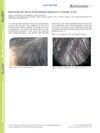
January 2018 in “Acta dermato-venereologica” A teenager's hair with alternating white and dark bands, known as Pili annulati, is a genetic condition that is usually harmless and often considered attractive.
7 citations
,
June 2024 in “Skin Research and Technology” Combining treatments significantly reduces dark circles and wrinkles better than nanofat alone.
13 citations
,
January 2001 in “Pediatric dermatology” A dark-haired Chinese girl had hair that looked banded under certain light but was normal under a microscope.
21 citations
,
July 2001 in “Clinics in dermatology” Nutraceuticals are increasingly used and recommended by dermatologists to improve skin appearance and combat aging.