 June 2026 in “Dermatology and Therapy”
 Combining multiple ingredients is the most effective treatment for hyperpigmentation.

Mechanical surface cues can control macrophage behavior for better immunotherapy and tissue healing.
 April 2026 in “Journal of Cancer”
 Cepharanthine shows promise as a natural anticancer treatment.
 November 2025 in “Frontiers in Cell and Developmental Biology”
 The study maps goat hair follicle cells, revealing key genes and pathways involved in hair growth and cell death.
 October 2025 in “HAL (Le Centre pour la Communication Scientifique Directe)”
 Variegated coat color in cats is linked to the Silver locus.
 August 2025 in “Animal Bioscience”
 m6A methylation affects the thickness of Alpine Merino wool fibers.
Doxycycline or flucloxacillin can cause a rare, severe skin reaction that can be fatal, especially in the elderly.
Four genes are linked to alopecia areata, with two increasing risk and two offering protection.
 March 2024 in “GSC Advanced Research and Reviews”
 Different light affects cell functions and can help treat skin conditions.
 October 2023 in “Frontiers in endocrinology”
 Androgens and androgen receptors are important for metabolic health, affecting how the body uses glucose and fats through mitochondrial function.
 September 2023 in “HAL (Le Centre pour la Communication Scientifique Directe)”
 Peptide nanoparticles can effectively deliver CRISPR-Cas9 to target KRAS mutations in cancer.
 March 2022 in “Marmara University Open Access System”
 Digital games are part of new media but need a deeper look at their complex nature and cultural roots.
 January 2021 in “Journal of clinical and cosmetic dermatology”
 Human skin responds to light with protective mechanisms, but more research is needed to understand these processes and their implications for health and therapy.
 August 2020 in “Revista de chimie”
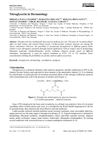
 Nitroglycerin ointment is now used to treat several skin conditions with fewer side effects.
 January 2020 in “bioRxiv (Cold Spring Harbor Laboratory)”
 Semecarpus anacardium leaf extracts may offer safe, effective cancer treatment alternatives.

L-PGDS has specific binding sites for its functions and could help in drug delivery system design.
 April 2016 in “Journal of Investigative Dermatology”
 Tumor cell adhesion is linked to higher risk of SLN metastasis and melanoma recurrence, and a model including these factors predicts these outcomes better than one with just clinical data.
 April 2016 in “Journal of Investigative Dermatology”
 Male pattern baldness is linked to a higher risk of certain skin cancers, especially on the scalp.
 April 2016 in “Journal of Investigative Dermatology”
 SOX4 is crucial for the development of melanoma.

Higher cholesterol levels increase aggressive prostate cancer risk.
 June 2012 in “Nature digest”
 A substance called prostaglandin D2 is linked to stopping hair growth in men with common baldness.
 January 2006 in “Carl von Ossiezky University of Oldenburg”
 Unpigmented keratinocytes absorb substances faster, while melanocytes bind more strongly to melanin.
 August 1994 in “Molecular Endocrinology”
 Changing protein kinase levels in pituitary cells affects calcium flow and beta-endorphin release.

Hair follicle-derived sheets can effectively treat vitiligo by repigmenting skin.
 March 2026 in “Aging Research”
 Personalized anti-aging strategies are important, considering genetics and lifestyle.
 February 2026 in “American Journal of Clinical Dermatology”
 Radiotherapy can cause skin fibrosis, which is often overlooked and needs better treatment and evaluation.
 February 2026 in “Journal of Integrative Neuroscience”
 NGF-modified hair follicle stem cells may help treat Alzheimer's by improving brain function and reducing harmful proteins.
 February 2026 in “International Journal of Recent Surgical and Medical Sciences”
 Human exosomes are effective for targeted treatments but face scalability issues, while plant exosomes are cost-effective for cosmetics.
 February 2026 in “Chinese Medicine”
 Natural products might help treat hair greying.

Ca²⁺-mediated protein citrullination controls cell growth in the CNS and may help treat brain tumors.