 10 citations
,
February 2008 in “International Journal of Andrology”
10 citations
,
February 2008 in “International Journal of Andrology” A combination of nanomilled oral testosterone and dutasteride normalized testosterone levels in men with low testosterone and is safe for short-term use.
5 citations
,
October 2018 in “Journal of Cosmetic Dermatology” Oral pulse steroids reduce TNF-α levels, improving alopecia areata.
 November 2023 in “Materials Today Bio”
 Light therapy might help treat hereditary hair loss by improving hair follicle growth in lab cultures.
January 2024 in “Defence life science journal” Light therapy can help heal soft tissue injuries and reduce pain and inflammation.
 March 2026 in “Journal of Clinical and Basic Psychosomatics”
 Tianmeng oral liquid may help with insomnia, anxiety, and depression.
30 citations
,
November 2013 in “SLEEP” Blocking testosterone action may improve breathing during NREM sleep in healthy men.
 12 citations
,
December 2018 in “Clinical Ophthalmology”
12 citations
,
December 2018 in “Clinical Ophthalmology” Latanoprostene bunod effectively lowers eye pressure and is better tolerated than other glaucoma medications.
64 citations
,
March 2004 in “Journal of Clinical Investigation” Targeting ornithine decarboxylase can help prevent skin cancer.
March 2025 in “International Journal of Trichology” Vigorous rubbing of herbal powder on the scalp caused hair damage and loss.
 4 citations
,
April 2021 in “Frontiers in Immunology”
4 citations
,
April 2021 in “Frontiers in Immunology” Different types of RNAs are found in varying amounts in patients with Polycystic Ovary Syndrome, suggesting they could be important in the disease's development and potentially used as disease markers.

The research created new azasteroids and pseudoazulenyl nitrones, which could be useful in medicine.
8 citations
,
January 1977 in “Acta Haematologica” The treatment was effective for advanced non-Hodgkin's lymphomas.
1 citations
,
May 2025 in “Cell Reports Medicine” RSPO1 could help create new diabetes treatments by increasing pancreatic β cells.
May 2021 in “Journal of the Endocrine Society” Adolescents with PCOS have higher levels of certain androgens, which are linked to hair growth but don't help diagnose PCOS better than testosterone levels.
4 citations
,
May 2024 in “Cytotechnology” 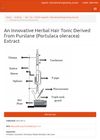
Portulaca-based hair tonics are promising eco-friendly and effective cosmetic alternatives.
65 citations
,
March 2004 in “Journal of Clinical Investigation” Inhibiting ornithine decarboxylase may help prevent certain skin cancers.
January 2026 in “ACS Applied Bio Materials” A new treatment using nanoliposomes can improve hair regrowth in androgenetic alopecia.
7 citations
,
January 2024 in “Cancer Research Communications” TAp63 and NRF2 work together to manage oxidative stress, preventing premature aging and aiding skin functions.
December 2014 in “대한미용학회지” 3% peppermint oil promotes hair growth and has strong antibacterial properties.
 8 citations
,
September 2022 in “Human genomics”
8 citations
,
September 2022 in “Human genomics” Key genes and pathways involved in thyroid eye disease were identified, aiding potential treatment and diagnosis.
 April 2016 in “Journal of Urology and Nephrology Open Access”
 Thermobalancing Therapy can treat enlarged prostate and improve men's quality of life.
 January 2012 in “Modern Plastic Surgery”
 Toe Tourniquet Syndrome is often misdiagnosed.
 January 2011 in “International Journal of Trichology”
 The document concludes that doctors should recognize congenital triangular alopecia to avoid unnecessary treatments, as it does not respond to steroids like alopecia areata does.
January 2002 in “Linchuang pifuke zazhi” A young woman had a rare scalp tumor usually found in older women.
 March 2012 in “Journal of The American Academy of Dermatology”
 Higher levels of certain nerve-related proteins are linked to hair loss in women with scalp pain.
 July 2022 in “World Journal of Advanced Research and Reviews”
 Piptadeniastrum africanum and Cordia plathytyrsa can increase testosterone without major metabolic changes, but may affect triglycerides and creatinine.
 3 citations
,
April 2012 in “Bioinformation”
3 citations
,
April 2012 in “Bioinformation” Two specific SNPs in the TRPS1 gene cause excessive hair growth by altering the protein's structure.
 January 2021 in “Nasza Dermatologia Online”
 Plica polonica is a rare condition where hair becomes irreversibly tangled, and the treatment is to cut the matted hair.
 8 citations
,
February 2005 in “British Journal of Haematology”
8 citations
,
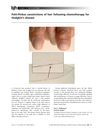
February 2005 in “British Journal of Haematology” Chemotherapy caused the patient's hair to have alternating thick and thin segments.