 9 citations
,
July 2017 in “Journal of Drug Delivery Science and Technology”
9 citations
,
July 2017 in “Journal of Drug Delivery Science and Technology” Scientists developed a new method to deliver alopecia treatment directly to hair follicles, which could be a promising treatment for hair loss and other hair diseases.
 8 citations
,
April 2017 in “International Journal of Dermatology”
8 citations
,
April 2017 in “International Journal of Dermatology” Applying 5% minoxidil to fingernails can significantly increase their growth rate.
 6 citations
,
January 2016 in “Journal of Clinical and Diagnostic Research”
6 citations
,
January 2016 in “Journal of Clinical and Diagnostic Research” Topical minoxidil might potentially cause vision problems, but more research is needed.
 1 citations
,
July 2017 in “Pediatric emergency care”
1 citations
,
July 2017 in “Pediatric emergency care” Pediatric minoxidil exposures are usually not serious and can often be managed at home.

The new minoxidil gel may improve hair loss treatment by staying on the scalp longer and penetrating better.
 May 2021 in “Lasers in Surgery and Medicine”
 Minoxidil and photobiomodulation together improve hair growth better than minoxidil alone.
 51 citations
,
October 1980 in “The New England Journal of Medicine”
51 citations
,
October 1980 in “The New England Journal of Medicine” Minoxidil lowers blood pressure effectively but may cause unwanted hair growth and other side effects.
 25 citations
,
December 1974 in “Clinical Pharmacology & Therapeutics”
25 citations
,
December 1974 in “Clinical Pharmacology & Therapeutics” Propranolol affects heart rate and renin levels in minoxidil-treated patients.
 11 citations
,
July 1988 in “International Journal of Dermatology”
11 citations
,
July 1988 in “International Journal of Dermatology” The study found that using 2% minoxidil solution can help grow hair and is safe.
 34 citations
,
January 1977 in “American Journal of Cardiology”
34 citations
,
January 1977 in “American Journal of Cardiology”  8 citations
,
May 1987 in “Journal of The American Academy of Dermatology”
8 citations
,
May 1987 in “Journal of The American Academy of Dermatology” UV light does not significantly affect minoxidil's ability to treat male pattern baldness.
 57 citations
,
July 1987 in “Journal of The American Academy of Dermatology”
57 citations
,
July 1987 in “Journal of The American Academy of Dermatology” Stopping minoxidil treatment resumes balding; continuous use needed for results.
 55 citations
,
February 1985 in “Archives of Dermatology”
55 citations
,
February 1985 in “Archives of Dermatology” Using minoxidil on the scalp can help grow hair for people with hereditary baldness.
 45 citations
,
January 1981 in “Annals of Internal Medicine”
45 citations
,
January 1981 in “Annals of Internal Medicine” Minoxidil controls blood pressure effectively, but may cause side effects like hypertrichosis.
 44 citations
,
March 1987 in “Journal of The American Academy of Dermatology”
44 citations
,
March 1987 in “Journal of The American Academy of Dermatology” Using minoxidil on balding scalps can stimulate hair regrowth and increase blood flow. It's an effective treatment for early hair loss.
 43 citations
,
July 2018 in “Journal of The European Academy of Dermatology and Venereology”
43 citations
,
July 2018 in “Journal of The European Academy of Dermatology and Venereology” Finasteride and minoxidil mix works better for hair growth than minoxidil alone, with similar safety.
 39 citations
,
January 2015 in “Journal of Electroanalytical Chemistry”
39 citations
,
January 2015 in “Journal of Electroanalytical Chemistry” New sensor detects minoxidil accurately and effectively.
 39 citations
,
April 2010 in “International Journal of Pharmaceutics”
39 citations
,
April 2010 in “International Journal of Pharmaceutics” Nanoparticles improve minoxidil skin permeation, but more research needed for effective hair growth.
 34 citations
,
April 2009 in “Skin Pharmacology and Physiology”
34 citations
,
April 2009 in “Skin Pharmacology and Physiology” Minoxidil affects cell growth in two ways: low doses increase growth, while high doses slow it down and can be toxic.
 34 citations
,
January 1987 in “Dermatology”
34 citations
,
January 1987 in “Dermatology” Topical minoxidil effectively and safely treats extensive alopecia areata but doesn't change its course.
 31 citations
,
August 1975 in “Journal of Pharmaceutical Sciences”
31 citations
,
August 1975 in “Journal of Pharmaceutical Sciences” Minoxidil metabolizes similarly in monkeys and humans, but differently in dogs and rats.
 28 citations
,
January 1989 in “Toxicologic Pathology”
28 citations
,
January 1989 in “Toxicologic Pathology” Minoxidil may cause heart changes; use caution and monitor patients with heart conditions.
 25 citations
,
May 1986 in “The American Journal of the Medical Sciences”
25 citations
,
May 1986 in “The American Journal of the Medical Sciences” Minoxidil helps hair growth and boosts self-esteem in balding men.
 23 citations
,
September 2019 in “Journal of The American Academy of Dermatology”
23 citations
,
September 2019 in “Journal of The American Academy of Dermatology” Tofacitinib and oral minoxidil together effectively regrow hair in severe alopecia areata patients.
 19 citations
,
October 2017 in “European Journal of Pharmaceutics and Biopharmaceutics”
19 citations
,
October 2017 in “European Journal of Pharmaceutics and Biopharmaceutics” The gel made of minoxidil and hydroxypropyl-β-cyclodextrin improves hair growth and is good for long-term use.
 14 citations
,
August 2019 in “Journal of Dermatological Treatment”
14 citations
,
August 2019 in “Journal of Dermatological Treatment” 10% minoxidil solution better promotes hair growth and reduces hair loss without significant side effects.
 1 citations
,
December 2022 in “Biomolecules & therapeutics”
1 citations
,
December 2022 in “Biomolecules & therapeutics” Minoxidil may help reduce aging effects in brain cells.
 April 2019 in “Journal of Investigative Dermatology”
 The research found that certain characteristics like age, sex, race, marital status, and education level can influence whether alopecia patients stick to their hair loss treatment with topical minoxidil.
 20 citations
,
March 1994 in “Clinical and Experimental Dermatology”
20 citations
,
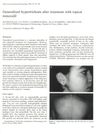
March 1994 in “Clinical and Experimental Dermatology” Too much topical minoxidil can cause excessive hair growth, but stopping treatment reverses it.
 90 citations
,
May 1972 in “Clinical Pharmacology & Therapeutics”
90 citations
,
May 1972 in “Clinical Pharmacology & Therapeutics” Minoxidil quickly leaves blood, turns into urine metabolites, and has lasting blood pressure-lowering effects.