 August 2025 in “Frontiers in Pharmacology”
 [6]-Gingerdiol 3-monoacetate shows promise for treating T. whipplei infections.
 April 2025 in “International Journal of Ayurvedic Medicine”
 Semecarpus anacardium Linn. may have health benefits, but more research is needed to confirm its safety and effectiveness.
 January 2025 in “Scripta Medica”
 Natural hydrolates may improve burn healing and fight antibiotic resistance.
 January 2025 in “Universidad de Córdoba Insitutional Repository (Universidad de Córdoba)”
 An imbalanced scalp microbiome may worsen alopecia areata severity and inflammation, but treatment can partially restore balance.
 August 2024 in “Bionatura journal :”
 The hydromethanolic extract of Carthamus caeruleus L. rhizome is a strong antioxidant and can kill cancer cells.
 April 2024 in “Frontiers in cellular and infection microbiology”
 Blue light might help treat skin conditions by affecting the skin's bacteria.
 March 2024 in “Revista Agraria Academica”
 The Mediterranean dwarf palm has medicinal, nutritional, and craft uses, but more research is needed.
 January 2024 in “Scientific reports”
 Egyptian Mint effectively kills mosquito larvae and inhibits certain bacteria.
 December 2023 in “Frontiers in microbiology”
 Mannan oligosaccharides improve raccoon dogs' fur quality and overall health.
 November 2023 in “Frontiers in cell and developmental biology”
 Hair aging is caused by stress, hormones, inflammation, and DNA damage affecting hair growth and color.

Bee pollen, green tea, essential oils, and various plant extracts improve skin and hair health.
 September 2023 in “Mağallaẗ baġdād li-l-ʿulūm”
 Microbial communities in Duku plant roots vary between wet and dry habitats, affecting plant health.
 September 2023 in “Clinical, cosmetic and investigational dermatology”
 SLFC can improve scalp health and reduce sensitive scalp symptoms.
 May 2023 in “Current Applied Science and Technology”
 Higher power CO2 laser causes more severe skin burns and damage.
 January 2020 in “Journal of The European Academy of Dermatology and Venereology”
 In 2019, dermatology and venereology improved skin cancer imaging, advanced in treating skin conditions like psoriasis, and explored the skin microbiome's role in diseases.
Changes in skin bacteria can affect hair loss and new treatments targeting these bacteria may prevent balding without sexual side effects.
 September 2018 in “Asian journal of pharmacy and pharmacology”
 Honey has many health benefits and is good for you.
 May 2018 in “White Rose eTheses Online (University of Leeds, The University of Sheffield, University of York)”
 Alopecia areata may be treated by using EGCG to balance immune cells and reduce inflammation.
 April 2015 in “Andrology”
 HNG may help prevent the negative effects of chemotherapy on sperm production and white blood cell counts.
 July 1996 in “Annals of Internal Medicine”
 Long-term high-dose fluconazole can cause reversible hair loss.
 July 1996 in “Annals of Internal Medicine”
 In 1995, international medical graduates did better than U.S. graduates on a medical exam.
 July 1996 in “Annals of Internal Medicine”
 International medical graduates scored higher than U.S. graduates on a medical exam.
 4 citations
,
October 2022 in “Microbial Cell Factories”
4 citations
,
October 2022 in “Microbial Cell Factories” Certain bacteria from the Citrullus colocynthis plant may be a new source of antibiotics to fight drug-resistant diseases.
 May 2024 in “Physiologia Plantarum”
 Bacillus subtilis helps plants get more phosphorus and grow better roots.
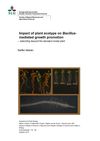 September 2018 in “Epsilon Archive for Student Projects (University of Southampton)”
 Bacillus amyloliquefaciens can boost root hair growth in some Arabidopsis plants, potentially improving agriculture.
 January 2024 in “Journal of Microorganism Control”
 The antibacterial toner can effectively kill acne-causing bacteria by penetrating skin plugs.
Some bacteria use arsenic compounds as antibiotics, and others have evolved resistance; a particular arsenic-based compound shows potential as a new antimalarial treatment.
 January 2019 in “Advances in Environmental Biology”
 Propionibacterium acnes contributes to acne and antibiotic resistance, needing new treatments.
 February 2026 in “Journal of Microbiology and Biotechnology”
 Abietic acid from pine rosin can effectively fight and reduce harmful skin microbes.
 June 2023 in “Benha Journal of Applied Sciences”
 Acne is caused by multiple types of bacteria.