 6 citations
,
November 2022 in “Forensic Science Medicine and Pathology”
6 citations
,
November 2022 in “Forensic Science Medicine and Pathology” Genetic markers can help predict ear shapes for forensic use.
 7 citations
,
April 2007 in “PubMed”
7 citations
,
April 2007 in “PubMed” Finasteride, a hair loss drug, caused a skin rash that went away when the drug was stopped and returned when used again.
7 citations
,
October 2024 in “Acta Dermato Venereologica” Higher inflammation markers are linked to more severe alopecia areata.
 July 2023 in “Nasza Dermatologia Online”
 More research is needed on CCCA in children, especially Black and Asian adolescents.
November 2020 in “Research Square (Research Square)” Chronic scarring alopecia is common in SLE patients and needs early detection and management.
7 citations
,
February 2023 in “Journal of Dermatological Treatment” The Scalp Photographic Index (SPI) is a reliable tool for assessing scalp conditions.
August 2026 in “Acta Dermato Venereologica” CCCA patients often have high rates of dyslipidemia, uterine leiomyomas, and anxiety disorders.
March 2026 in “Journal of the European Academy of Dermatology and Venereology” VESALT improves alopecia areata assessment by including non-scalp areas and is reliable and user-friendly.
 January 2017 in “International journal of biomedical engineering and clinical science”
 Cri-du-chat syndrome can cause skin and oral lesions affecting nutrition and quality of life.
 8 citations
,
February 2010 in “Journal für Kardiologie (Krause & Pachernegg GmbH)”
8 citations
,
February 2010 in “Journal für Kardiologie (Krause & Pachernegg GmbH)” A new system helps better diagnose and treat female androgenization conditions like PCOS.
2 citations
,
July 2018 in “Chinese Journal of Dermatology” Sebaceous nevus changes with age, and dermoscopy and RCM are effective for diagnosis.
23 citations
,
August 1983 in “PubMed” Clq deficiency is linked to systemic lupus erythematosus symptoms.
 September 2025 in “Clinical Cosmetic and Investigational Dermatology”
 Kūlaris improved quality of life for acne sufferers without side effects.
1 citations
,
January 2009 in “Kidney International” The woman was diagnosed with systemic lupus erythematosus (SLE) after initial misdiagnosis and improved with proper treatment.
13 citations
,
August 2000 in “Blood” Measuring minimal residual disease on day 15 helps identify high-risk leukemia patients.
June 2026 in “British Journal of Dermatology” Regional prescribing of ritlecitinib mostly follows national guidance, but psychological assessments and consistent scoring need improvement.
2 citations
,
October 1974 in “Archives of Dermatology” The woman's skin condition persisted for 20 years despite treatments.
July 2024 in “Journal of Pakistan Association of Dermatologists” Alopecia areata mainly affects young people, and dermoscopy helps diagnose and assess its severity.
 7 citations
,
January 2023 in “Frontiers in cell and developmental biology”
7 citations
,
January 2023 in “Frontiers in cell and developmental biology” Celsr1 is crucial for skin cell alignment, while Celsr2 has little effect on this process.
1 citations
,
April 2024 in “Journal of Clinical Medicine” Alopecia areata patients have eye issues and need regular eye exams.
 8 citations
,
August 2021 in “Computational and Mathematical Methods in Medicine”
8 citations
,
August 2021 in “Computational and Mathematical Methods in Medicine” Machine learning can accurately identify Alopecia Areata, aiding in early detection and treatment of this hair loss condition.
56 citations
,
June 2010 in “Clinical and experimental dermatology” Coudability hairs are useful markers for alopecia areata activity.
 September 2024 in “PubMed”
 Certain RNAs may help diagnose alopecia areata by affecting keratin genes.
 1 citations
,
February 2024 in “Medicine”
1 citations
,
February 2024 in “Medicine” Eosinophilic cystitis is often misdiagnosed, but accurate diagnosis and treatment improve outcomes.
 March 2024 in “Poster presentations”
 A woman with lupus and Kikuchi-Fujimoto disease improved with treatment.
July 2026 in “Pharmaciana” Fresh, mature ulin seeds are best for oil, and adulteration can be detected using specific wavenumbers.
September 2019 in “The journal of investigative dermatology/Journal of investigative dermatology” New RIPK4 gene mutations were found to cause a type of skin and limb birth defect.
 April 2018 in “Journal of Investigative Dermatology”
 The new protocol using Cellutome™ and RCM safely assesses wound healing in detail.
 9 citations
,
July 2017 in “Dermatologic Therapy”
9 citations
,
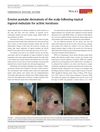
July 2017 in “Dermatologic Therapy” Two elderly men developed scalp inflammation after using a gel for skin lesions, which healed with treatment except for some permanent hair loss.
 August 2025 in “BMC Pregnancy and Childbirth”
 A new EDA gene variant causes X-linked hypohidrotic ectodermal dysplasia in a Chinese family.