 11 citations
,
June 2008 in “Dermatologic Surgery”
11 citations
,
June 2008 in “Dermatologic Surgery” Transplanting chest hair into scalp scars may effectively treat wide donor scars in hair restoration.
August 2018 in “Analysis of the application of various variants of bone plasty in victims with intraarticular fractures (Transplantology)” Follicular microautotransplantation effectively improves scalp scars and enhances quality of life.
 10 citations
,
December 1999 in “Journal of The American Academy of Dermatology”
10 citations
,
December 1999 in “Journal of The American Academy of Dermatology” The technique of using a skin and hair graft from behind the ear successfully reconstructed a large eyebrow defect with good cosmetic results.
November 2010 in “PubMed” Human hair keratin can help repair fat tissue.
 July 2021 in “Aesthetic Surgery Journal”
 Using lasers and fat grafting before hair transplant improves hair growth on scarred skin.
55 citations
,
July 2020 in “International Wound Journal” Fat grafting and PRP are safe for diabetic foot ulcers, but no significant healing differences were found.
11 citations
,
March 2023 in “Stem Cell Research & Therapy” Epidermal stem cells improve skin graft survival by promoting early blood vessel formation.
August 2001 in “Dermatologic Surgery” Elliptografting gives better hair appearance and satisfaction than other methods.
 26 citations
,
February 2011 in “Journal of Plastic Reconstructive and Aesthetic Surgery”
26 citations
,
February 2011 in “Journal of Plastic Reconstructive and Aesthetic Surgery” Technique effectively treats deformities, achieves re-pigmentation, and releases scar contractures.
17 citations
,
August 2020 in “Stem Cell Research & Therapy” A 3D cell model can rejuvenate stem cells to improve wound healing.
 20 citations
,
June 2020 in “Stem Cell Research & Therapy”
20 citations
,
June 2020 in “Stem Cell Research & Therapy” Using stem cells from fat tissue can significantly improve wound healing in dogs.
 January 2025 in “Open Medicine”
 High-concentration cell-free adipose extract reduces scar formation and improves scar appearance.
 June 2021 in “Research Square (Research Square)”
 Using fat-derived cells to treat hair loss increased hair density and thickness without side effects.
 3 citations
,
June 2020 in “Dermatologic Surgery”
3 citations
,
June 2020 in “Dermatologic Surgery” Dense-packing follicular unit extraction is a safe and effective way to treat extensive scarring alopecia.
5 citations
,
September 2017 in “PubMed” A new type of amniotic tissue graft improves wound healing better than other grafts.
 7 citations
,
March 2002 in “Aesthetic Surgery Journal”
7 citations
,
March 2002 in “Aesthetic Surgery Journal” In 2002, hair restoration improved by using a different area for grafts and absorbable sutures, leading to less discomfort and better results.
January 2024 in “The Egyptian Journal of Plastic and Reconstructive Surgery” Fat injection is more effective than PRP for improving post-burn facial scars.
July 2020 in “Research Square (Research Square)” A 3D co-culture model improved stem cell function and wound healing.
 8 citations
,
July 1984 in “The Journal of Dermatologic Surgery and Oncology”
8 citations
,
July 1984 in “The Journal of Dermatologic Surgery and Oncology” A new suturing technique for hair transplant donor sites leads to better scarring and allows more grafts to be taken.
2 citations
,
July 2022 in “The Kaohsiung Journal of Medical Sciences” FTY720 helps transplanted fat survive better by reducing immune rejection and improving blood vessel growth.
 June 1997 in “The American Journal of Cosmetic Surgery”
 Reharvesting hair from donor sites using punch and strip methods can provide more hair for transplants and improve scar appearance.
May 2025 in “The Open Biomedical Engineering Journal” Adipose tissue and PRP together improve healing and surgery outcomes but need more research for consistent use.
 16 citations
,
October 2021 in “Techniques in Coloproctology”
16 citations
,
October 2021 in “Techniques in Coloproctology” Using SVF enriched with PRP in surgery for certain fistulas is effective and safe.
2 citations
,
September 2023 in “Journal of clinical medicine” Scalp skin grafts effectively cover lower limb defects with high success and minimal complications.
A high fat lard diet may protect against skin fibrosis and affect hair growth.
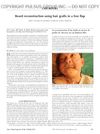 5 citations
,
December 2011 in “Canadian Journal of Plastic Surgery”
5 citations
,
December 2011 in “Canadian Journal of Plastic Surgery” Hair grafts can successfully reconstruct a beard on reconstructed jaw skin, improving appearance and patient satisfaction.
January 2018 in “Belarusian State Pedagogical University repository (Belarusian State Pedagogical University)” Adipose-derived stem cells can be used to create cells that help grow new hair.
 23 citations
,
September 2018 in “Journal of Investigative Dermatology”
23 citations
,
September 2018 in “Journal of Investigative Dermatology” A hydrogel made from pig fat helps wounds heal faster by regenerating skin fat cells.
 18 citations
,
June 2018 in “Journal of The American Academy of Dermatology”
18 citations
,
June 2018 in “Journal of The American Academy of Dermatology” Fat tissue treatments may help with wound healing and hair growth, but more research with larger groups is needed to be sure.
 37 citations
,
May 2016 in “Scientific Reports”
37 citations
,
May 2016 in “Scientific Reports” Combining skin cells with fat-derived stem cells can improve hair growth.