23 citations
,
July 2003 in “Journal of Investigative Dermatology” Genetic testing for hairless gene mutations is crucial to correctly diagnose and treat atrichia with papular lesions.
 February 2024 in “Plant Cell Reports”
 AtVPS29 is essential for proper plant growth by regulating gibberellin signaling.
 February 2024 in “Planta”
 TRM21 helps control flavonoid production and root hair growth in Arabidopsis thaliana.
July 2025 in “Clinical Case Reports” A new genetic mutation in the TRPS1 gene causes Trichorhinophalangeal Syndrome, leading to specific hair, dental, and bone issues.
![Discovery of (2S)-N-(6-Cyano-5-(Trifluoromethyl)Pyridin-3-Yl)-3-(6-(4-Cyanophenyl)-3,6-Diazabicyclo[3.1.1]Heptan-3-Yl)-2-Hydroxy-2-Methylpropanamide as a Highly Potent and Selective Topical Androgen Receptor Antagonist for Androgenetic Alopecia Treatment](/images/assets/693e7bf6-2325-4ddc-a20f-3470db9f4516/small/25627.jpg) December 2023 in “Journal of Medicinal Chemistry”
December 2023 in “Journal of Medicinal Chemistry” A new topical treatment for hair loss shows strong hair growth effects with low toxicity.
December 2010 in “TSpace” Activating androgen receptors in muscle can increase muscle mass and reduce fat.
 May 2017 in “bioRxiv (Cold Spring Harbor Laboratory)”
 The peach gene pCTG134 helps control the interaction between auxin and ethylene hormones during fruit ripening.
 April 2026 in “Human Genome Variation”
 The MBTPS2 gene variant c.970+5G>A is a common mutation causing IFAP syndrome.
44 citations
,
May 1998 in “PubMed” The retinoid receptor antagonist effectively disrupts vitamin A-related development in embryos.
February 2023 in “Materials today bio” The treatment effectively promotes hair regrowth in androgenetic alopecia without causing skin irritation.
October 2023 in “University of Zadar Institutional Repository” Androgenetic alopecia is a common genetic and hormonal hair loss affecting many men and women.
 14 citations
,
January 2017 in “Pharmacological Reports”
14 citations
,
January 2017 in “Pharmacological Reports” TP0427736 may help treat hair loss by blocking a specific protein and promoting hair growth.
 57 citations
,
May 2014 in “Molecular Phylogenetics and Evolution”
57 citations
,
May 2014 in “Molecular Phylogenetics and Evolution” The research found how GPCR Class A Rhodopsin receptors are related and suggested possible substances they interact with.
 6 citations
,
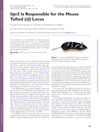
October 2012 in “Journal of Heredity”
6 citations
,
October 2012 in “Journal of Heredity” The Itpr3 gene causes a specific hair pattern in mice.
8 citations
,
November 1976 in “Journal of Investigative Dermatology”  March 2009 in “International Journal of Dermatology”
 The androgen receptor gene doesn't help identify women likely to have female pattern hair loss.
January 2008 in “Memorial University Research Repository (Memorial University)” Pygopus 2 helps ovarian cancer cells grow by aiding ribosomal RNA production, independent of Wnt signaling.
Blocking GPR91 can help prevent and reverse hair loss in androgenetic alopecia.
153 citations
,
June 2015 in “GenomeBiology.com” The environment around the time of conception can change the VTRNA2-1 gene in a way that lasts for years and may affect disease risk.
 12 citations
,
May 2016 in “British Journal of Dermatology”
12 citations
,
May 2016 in “British Journal of Dermatology” AGA progression involves increased lipid synthesis, electron transport, and hair follicle miniaturization.
 December 2025 in “Naunyn-Schmiedeberg s Archives of Pharmacology”
 Agomelatine may help reduce benign prostatic hyperplasia by blocking certain inflammatory pathways.
 1 citations
,
November 2024 in “Diabetes Metabolic Syndrome and Obesity”
1 citations
,
November 2024 in “Diabetes Metabolic Syndrome and Obesity” A specific gene variant is linked to severe insulin resistance and hormone imbalance in a teenage girl.
26 citations
,
October 2002 in “Journal of Investigative Dermatology” A specific gene mutation causes congenital hair loss.
January 2006 in “Chinese Journal of Dermatology” Shorter GGC triplet repeats in the androgen receptor gene are linked to less hair loss in Han men.
10 citations
,
August 1998 in “Journal of Investigative Dermatology” 51 citations
,
December 2006 in “Mammalian Genome” 76 citations
,
January 1998 in “Mammalian Genome”  January 2016 in “Faculty Opinions – Post-Publication Peer Review of the Biomedical Literature”
 A substance called prostaglandin D2 is found more in bald scalps and it stops hair from growing. Blocking its receptor could potentially treat hair loss.
May 2026 in “Journal of Medicinal Chemistry” dAR-6–1 is a promising new treatment for hair loss that works better than minoxidil.
 6 citations
,
May 1997 in “Journal of Dermatological Science”
6 citations
,
May 1997 in “Journal of Dermatological Science” Researchers found a gene in hamsters that responds to male hormones and may be indirectly controlled by them.