1 citations
,
June 2011 in “대한구강악안면외과학회지” A woman had a cyst in her salivary gland, likely from Botox, which was removed and confirmed as an epidermoid cyst.
 13 citations
,
January 2022 in “Advances in Dermatology and Allergology”
13 citations
,
January 2022 in “Advances in Dermatology and Allergology” Alopecia areata may be linked to imbalanced gut bacteria.
January 2025 in “Dermatology Research and Practice” Restoring skin microbial balance may help treat acne.
68 citations
,
December 1983 in “British Journal of Dermatology” Major histocompatibility antigens are found in specific skin cells and structures, but not in sweat glands.
15 citations
,
September 2002 in “Journal of Biological Chemistry” Abnormal keratin expression in mice causes severe oral issues, affecting feeding.
June 2018 in “Dermatologic Surgery” September 2025 in “Meditsinskiy sovet = Medical Council” Demodex mites may contribute to acne and rosacea by disrupting skin balance.
 December 2024 in “Medicine”
 Gut bacteria may affect hair loss risk.

Certain gut bacteria may protect against or increase the risk of hair loss.
4 citations
,
October 2023 in “Case Reports in Dermatology” Majocchi’s granuloma should be considered when rashes don't improve with typical treatments.
 May 2024 in “Indian Dermatology Online Journal”
 A rare bacterial infection of pubic hair can cause strong genital odor, but trimming hair and using clindamycin can quickly fix it.
7 citations
,
March 2021 in “Journal of Investigative Dermatology” Lipases, especially gehB, are crucial for Staphylococcus aureus to enter and colonize hair follicles.
December 2018 in “Bioscience Journal” Leporacarus gibbus mite was found in a domestic rabbit in Espírito Santo, Brazil, for the first time.
September 2025 in “e-space (Manchester Metropolitan University)” Blocking androgen receptors helps immune cells better fight certain bacteria.
 63 citations
,
November 2009 in “British journal of dermatology/British journal of dermatology, Supplement”
63 citations
,
November 2009 in “British journal of dermatology/British journal of dermatology, Supplement” Sub3 is essential for fungus adherence but not for skin invasion.
365 citations
,
November 2018 in “Journal of Allergy and Clinical Immunology” People with atopic dermatitis have different skin bacteria, and targeting these bacteria might help treat the condition.
 17 citations
,
January 2014 in “Annals of Dermatology”
17 citations
,
January 2014 in “Annals of Dermatology” Malassezia folliculitis mainly affects the trunk in males and is better detected with d-PAS staining.
 134 citations
,
January 2019 in “American journal of clinical dermatology”
134 citations
,
January 2019 in “American journal of clinical dermatology” Antibiotics can reduce acne but may lead to resistant bacteria, and understanding the skin's bacteria is important for treatment.
 May 2015 in “Journal of The American Academy of Dermatology”
 There's a growing resistance to the antibiotic mupirocin in children's skin infections caused by MRSA in New York.
 September 2023 in “Current opinion in microbiology”
 Certain fungi protect skin health, but changes can allow harmful fungi to cause serious infections, needing more research for treatment and control.
 8 citations
,
June 2016 in “Journal of Cosmetic Dermatology”
8 citations
,
June 2016 in “Journal of Cosmetic Dermatology” Women with persistent acne and high levels of antimullerian hormone are more likely to have polycystic ovarian syndrome.
 April 2026 in “Frontiers in Cell and Developmental Biology”
 Hair follicles in mice help detect and respond to germs.
1 citations
,
January 2014 in “Indian journal of dermatology, venereology, and leprology” Papular mucinosis can cause eyebrow hair loss, but treatment can lead to regrowth.
8 citations
,
June 2017 in “The Journal of Infection in Developing Countries” 20 citations
,
October 2005 in “Archives of Dermatological Research” 48 citations
,
July 1993 in “Archives of Dermatological Research” Merkel cells are abundant in facial vellus hair follicles, especially during the anagen phase.
6 citations
,
October 2001 in “British Journal of Ophthalmology” Intralesional cidofovir may be a viable treatment for conjunctival lesions in Melkersson-Rosenthal syndrome without systemic toxicity.
September 2020 in “Oral surgery, oral medicine, oral pathology and oral radiology” The report shows that a rare benign tumor was successfully removed from inside the mouth to avoid scarring on the face.
 8 citations
,
November 1990 in “Archives of Dermatology”
8 citations
,
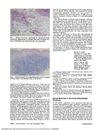
November 1990 in “Archives of Dermatology” A woman with EMS showed unusual skin mucinosis without the typical hard skin syndrome, suggesting EMS can cause skin mucinosis.
5 citations
,
August 2021 in “Experimental dermatology” Overexpressing Merkel cell virus proteins in human hair follicles can create clusters of cells that resemble Merkel cell cancer.