 1 citations
,
October 2010 in “Faṣlnāmah-i bīmārīhā-yi pūst”
1 citations
,
October 2010 in “Faṣlnāmah-i bīmārīhā-yi pūst” Methotrexate with corticosteroids can help regrow hair in severe alopecia areata but may cause relapses and side effects.
 June 2025 in “Journal of Education Health and Sport”
 Oral JAK inhibitors show promise for treating alopecia areata but have challenges like relapse and side effects.
 January 2021 in “Journal of Cutaneous and Aesthetic Surgery”
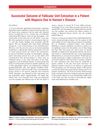
 Follicular unit extraction successfully restored hair growth in a leprosy patient without disease relapse.
 January 2022 in “Open Access Macedonian Journal of Medical Sciences”
 A 5-year-old boy with alopecia totalis had temporary hair regrowth with treatment but relapsed, highlighting the need for thorough investigation and holistic care.
 March 2020 in “Faculty Opinions – Post-Publication Peer Review of the Biomedical Literature”
 Combining nonablative fractional laser with minoxidil was effective for alopecia areata with only one patient relapsing after a year.
 5 citations
,
June 2015 in “Veterinary dermatology”
5 citations
,
June 2015 in “Veterinary dermatology” A dog with complete hair loss regrew most hair after treatment, with no relapse after stopping treatment.
71 citations
,
December 2013 in “The journal of investigative dermatology. Symposium proceedings/The Journal of investigative dermatology symposium proceedings” There are no FDA-approved treatments for Alopecia Areata, and current options have varying success and relapse rates.
 66 citations
,
December 2018 in “Dermatology”
66 citations
,
December 2018 in “Dermatology” Both ruxolitinib and tofacitinib are effective and safe for treating severe alopecia areata, but relapses are common.
50 citations
,
January 2016 in “Journal of the American Academy of Dermatology” Pulse steroid therapy for alopecia areata shows a 43% complete response rate but has a high relapse rate, especially in children.
41 citations
,
November 2015 in “The journal of investigative dermatology. Symposium proceedings/The Journal of investigative dermatology symposium proceedings” Diphenylcyclopropenone (DPCP) can help regrow hair in many alopecia areata patients but may cause side effects and relapses.
36 citations
,
May 2005 in “BMC dermatology” DPCP is effective for treating severe alopecia areata, but relapse is common.
21 citations
,
February 2024 in “JAMA Dermatology” Alopecia areata severity is influenced by factors like long disease duration, relapses, treatment response, and mental health, leading to the creation of a new severity measurement tool.
 19 citations
,
May 2019 in “Journal of Cosmetic Dermatology”
19 citations
,
May 2019 in “Journal of Cosmetic Dermatology” Platelet-rich plasma is a safe and effective treatment for hair loss, with fewer relapses than steroid treatment.
15 citations
,
January 2014 in “Hair therapy & transplantation” Platelet-Rich Plasma treatment has limited and temporary effects on severe Alopecia Areata and does not prevent relapses.
 11 citations
,
February 2021 in “Journal of Cosmetic Dermatology”
11 citations
,
February 2021 in “Journal of Cosmetic Dermatology” Oral tofacitinib helped regrow hair in over half of the patients with severe alopecia, but relapses and side effects were common.
 3 citations
,
January 2015 in “Turkiye Klinikleri Journal of Medical Sciences”
3 citations
,
January 2015 in “Turkiye Klinikleri Journal of Medical Sciences” Corticosteroids may not effectively control oxidative stress in alopecia areata, possibly leading to relapses.
January 2024 in “Dermatologic Therapy” Tofacitinib effectively reduces hair loss in children with alopecia areata but may cause mild side effects and relapses.
 April 2023 in “The journal of investigative dermatology/Journal of investigative dermatology”
 Intravenous methylprednisolone helped over half of alopecia areata patients regrow hair, but many relapsed.
 January 1953 in “The Lancet”
 Alopecia areata's causes are unclear, treatments exist but relapses are common.
 46 citations
,
November 1995 in “The Journal of Dermatology”
46 citations
,
November 1995 in “The Journal of Dermatology” Alopecia areata was most common in people in their 30s and 40s, with some family history and a higher relapse rate, and larger bald areas responded better to specific immunotherapy.
16 citations
,
December 2015 in “Journal of Investigative Dermatology” Alopecia areata involves persistent gene abnormalities and immune activity, even in regrown hair, suggesting a risk of relapse.
 2 citations
,
January 2017 in “Clinical and medical investigations”
2 citations
,
January 2017 in “Clinical and medical investigations” Herbal lotions are effective for severe hair loss, with a 64.8% success rate, but relapse is common and long-term management requires allergen control and possible corticosteroid use.
 1 citations
,
June 2023 in “Genes”
1 citations
,
June 2023 in “Genes” Hair loss from Alopecia Areata is caused by both genes and environment, with several treatments available but challenges in cost and relapse remain.
 1 citations
,
May 2023 in “Journal of the American Academy of Dermatology”
1 citations
,
May 2023 in “Journal of the American Academy of Dermatology” Younger patients and those with more hair loss are less likely to benefit from oral steroid treatment for hair loss, and low vitamin D may predict relapse.
March 2026 in “Immunological Medicine” Janus kinase inhibitors help some people with severe alopecia areata regrow hair, but not everyone responds, and relapses can happen.
 October 2024 in “The Journal of Dermatology”
 Intravenous corticosteroid therapy is effective for long-term hair regrowth in alopecia areata, and a scoring system helps predict treatment success and relapse.
 117 citations
,
March 2013 in “Journal of the European Academy of Dermatology and Venereology”
117 citations
,
March 2013 in “Journal of the European Academy of Dermatology and Venereology” No effective treatment for frontal fibrosing alopecia was found, but oral 5-alpha-reductase inhibitors had the best response; for lichen planopilaris, topical corticosteroids were commonly used but had a high relapse rate.
 28 citations
,
January 2014 in “Indian Journal of Dermatology, Venereology and Leprology”
28 citations
,
January 2014 in “Indian Journal of Dermatology, Venereology and Leprology” Chinese patients with primary cicatricial alopecia often have folliculitis decalvans, benefit from treatment, but may experience relapse, with dermoscopy being a useful diagnostic tool.
89 citations
,
August 2018 in “JAMA Dermatology” Contact immunotherapy can improve hair regrowth in alopecia areata patients.
15 citations
,
October 2003 in “Annals of Oncology” Hair loss can occur as a side effect of certain breast cancer treatments, but minoxidil can help regrow hair.