July 2026 in “International Journal of Homoeopathic Sciences” Constitutional homeopathy may effectively manage alopecia areata in children.
 December 2025 in “BENTHAM SCIENCE PUBLISHERS eBooks”
 PCOS often causes skin issues like excess hair, acne, hair thinning, and dark patches due to hormone imbalances and insulin resistance.
January 2025 in “International Journal of Pharmaceutics” The treatment showed significant hair regrowth in alopecia areata patients without side effects.
January 2025 in “Indian Journal of Dermatology” High fever from COVID-19 might trigger hair loss.
November 2024 in “Chattagram Maa-O-Shishu Hospital Medical College Journal” Identifying alopecia types early is crucial for better treatment and quality of life.
 November 2024 in “SKIN The Journal of Cutaneous Medicine”
 Visual signs are crucial for accurately diagnosing and treating different types of hair loss in Black patients.
October 2024 in “Journal of Pakistan Association of Dermatologists” Hair regrowth is more likely in discoid lupus erythematosus than in follicular lichen planus.
 August 2024 in “Clinical Cosmetic and Investigational Dermatology”
 Upadacitinib and narrowband UVB effectively treated a child's vitiligo and alopecia areata.
 July 2022 in “Singapore Medical Journal”
 Most children with alopecia areata improved with treatment, but those with more hair loss had worse outcomes.
August 2021 in “Journal of advances in medicine and medical research” Excimer light therapy is more effective than low level laser therapy for treating alopecia areata.
 January 2021 in “International journal of dermatology, venereology and leprosy sciences”
 Trichoscopy shows black dots, yellow dots, and empty follicles are common in Alopecia Areata, with broken and exclamation mark hair as typical patterns.
 November 2020 in “ALEXMED ePosters (Online)”
 People with PCOS often have skin problems like excessive hair growth, hair loss, acne, and dark patches, which are linked to hormonal and metabolic imbalances.
 January 2020 in “Open Journal of Obstetrics and Gynecology”
 All women with Polycystic Ovary Syndrome (PCOS) in a study had at least one skin disorder, with the most common being excessive hair growth, acne, dark skin patches, hair loss, and oily skin.
 December 2019 in “Pediatria i Medycyna Rodzinna”
 Alopecia areata is a hair loss condition that may be linked to stress and genetics, often requires psychological support, and has no set treatment.
 July 2018 in “International journal of research - granthaalayah”
 Croton tiglium application significantly improved hair regrowth in alopecia areata patients.
 June 2018 in “Journal of evolution of medical and dental sciences”
 Skin problems like excessive hair growth, acne, and dark skin patches can be signs of Polycystic Ovarian Disease, which may also be linked to family history and a risk for diabetes.
 May 2017 in “Journal of the American Academy of Dermatology”
 Graves' disease can cause hair loss in children and should be considered when treating pediatric alopecia areata.
April 2017 in “Al-Azhar Medical Journal” PRP is an effective and safe treatment for alopecia areata.
 February 2017 in “International Journal of Research in Dermatology”
 A six-year-old girl unusually had a hair loss condition common in middle-aged women.
 January 2015 in “Przegla̧d dermatologiczny”
 Intralesional triamcinolone is the most effective treatment for alopecia areata, followed by excimer light therapy, and then topical minoxidil. The scalp responds better to treatment than the beard area.
 January 2012 in “Yearbook of Dermatology and Dermatologic Surgery”
 Alopecia areata is a hair loss condition that often starts before age 30 and can affect various body parts, with unpredictable hair regrowth chances.
Topical minoxidil, intralesional steroids, and cryotherapy significantly improve alopecia areata.
August 2009 in “Belarusian State Pedagogical University repository (Belarusian State Pedagogical University)” Alopecia areata in children is often linked to genetics, autoimmune issues, and stress, and is treated with corticoids or PUVA therapy.
14 citations
,
January 2014 in “Indian Journal of Dermatology Venereology and Leprology” Frontal fibrosing alopecia can affect men's beards and leads to permanent hair loss.
 5 citations
,
July 2013 in “Our Dermatology Online”
5 citations
,
July 2013 in “Our Dermatology Online” Lichen planopilaris is the most common type of scarring hair loss observed, with a variety of symptoms and tissue changes.
 September 2021 in “CRC Press eBooks”
 CCCA is a common hair loss condition in African American women, often inherited and influenced by hairstyling, with unique scalp features detectable by special tools.
March 2004 in “Journal of the American Academy of Dermatology” Middle-aged women with cicatricial alopecia/lichen planopilaris responded well to treatments like ketoconazole shampoo and steroids.
 18 citations
,
June 2017 in “Journal of The American Academy of Dermatology”
18 citations
,
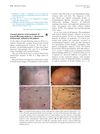
June 2017 in “Journal of The American Academy of Dermatology” Trichoscopy helps diagnose frontal fibrosing alopecia, even with unusual patterns.
November 2023 in “International Journal of Trichology” A rare form of lupus caused hair loss and skin bumps, diagnosed through biopsy, improved partially with treatment.
5 citations
,
October 2019 in “JAAD Case Reports” These hair loss conditions might be part of a spectrum, not separate issues.