4 citations
,
October 2024 in “Journal of Cosmetic Dermatology” Taking natural keratin supplements improved skin, hair, and nails in women.

Some bacteria use arsenic compounds as antibiotics, and others have evolved resistance; a particular arsenic-based compound shows potential as a new antimalarial treatment.
12 citations
,
June 2025 in “Gut Microbes” BroadAMP-GPT effectively creates antimicrobial peptides to fight drug-resistant bacteria.
69 citations
,
January 2021 in “Journal of Biological Chemistry” Plant-derived amino acids can help develop new antimicrobial drugs.
2 citations
,
July 2025 in “Scientific Reports” Acinetobacter strain A1-4-2 can safely clean water pollutants.
January 2013 in “Hunan Agricultural Sciences” Lactobacillus reuteri and Bacillus natto can replace antibiotics to improve piglet health and growth.
1 citations
,
January 1886 3 citations
,
January 2016 Certain beneficial microbes can fight fungi and help plants get nutrients.
4 citations
,
January 1886  May 2020 in “International Journal of Engineering Applied Sciences and Technology”
 Bioactive plant materials like lemon, garlic, and neem effectively fight harmful bacteria.
 44 citations
,
March 2016 in “Frontiers in cellular neuroscience”
44 citations
,
March 2016 in “Frontiers in cellular neuroscience” Some natural compounds can protect fish ear cells from damage by certain antibiotics without affecting the antibiotics' ability to fight infections.
March 2003 in “International Journal of Antimicrobial Agents”  January 2019 in “Research & Reviews: Journal of Pharmaceutics and Nanotechnology”
 Nanotechnology can effectively deliver antimicrobial peptides for treating infections.
15 citations
,
June 2024 in “Frontiers in Pharmacology” Using existing drugs for new purposes can effectively treat infections resistant to multiple antibiotics.
 85 citations
,
July 2025 in “Nature Communications”
85 citations
,
July 2025 in “Nature Communications” Nanozymes greatly improve biocatalysis by being stable, efficient, and versatile.
 March 2026 in “Brazilian Journal of Microbiology”
 Restoring skin bacteria may help reduce hair loss.
 May 2024 in “Physiologia Plantarum”
 Bacillus subtilis helps plants get more phosphorus and grow better roots.
8 citations
,
February 2025 in “Cell Systems” Engineered bacteria can deliver antioxidants to protect skin.
 4 citations
,
October 2022 in “Microbial Cell Factories”
4 citations
,
October 2022 in “Microbial Cell Factories” Certain bacteria from the Citrullus colocynthis plant may be a new source of antibiotics to fight drug-resistant diseases.
 48 citations
,
January 2003
48 citations
,
January 2003 Endophytes from Southeast Asia and Japan can produce useful substances like enzymes and antibiotics.
June 2020 in “Zenodo (CERN European Organization for Nuclear Research)” Controlled microflora in animals delays immune cell maturation and affects immunity.
23 citations
,
November 2021 in “Frontiers in Chemistry” Nanozymes could improve disease treatment and detection.
49 citations
,
April 2017 in “AFRICAN JOURNAL OF BIOTECHNOLOGY” Silver nanoparticles made by fungi are eco-friendly and effective antimicrobials.
 12 citations
,
August 2012 in “ISRN Analytical Chemistry (Print)”
12 citations
,
August 2012 in “ISRN Analytical Chemistry (Print)” Future work on macrolide antibiotic analysis will aim to enhance selectivity, sensitivity, and efficiency using advanced chromatographic methods.
Microorganisms improve plant root growth in acidic soils, boosting productivity.
 February 2026 in “Journal of Microbiology and Biotechnology”
 Abietic acid from pine rosin can effectively fight and reduce harmful skin microbes.
 September 2018 in “Epsilon Archive for Student Projects (University of Southampton)”
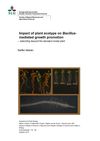
 Bacillus amyloliquefaciens can boost root hair growth in some Arabidopsis plants, potentially improving agriculture.
 March 2026 in “Zenodo (CERN European Organization for Nuclear Research)”
 The N-K GM Series offers highly selective, eco-friendly antimicrobials free for everyone.
9 citations
,
February 2024 in “mBio” Biliverdin IXβ and IXδ help Pseudomonas aeruginosa adapt to chronic infections.