Search
for
Sort by
Research
630-660 / 1000+ resultsresearch 371 THE EFFECTIVENESS OF BIO-REGULATORY MAGNETO-LASER THERAPY OF CHRONIC PELVIC PAIN SYNDROME/CHRONIC PROSTATITIS IMA
research Variation in the Exon 3–4 Region of Ovine KRT85 and Its Effect on Wool Traits
KRT85 gene variations can help improve wool traits in sheep through selective breeding.
research 609 Topical Sandalore®, a specific OR2AT4-stimulating odorant, ameliorates female telogen effluvium: Randomized, double-blinded, placebo-controlled clinical trial
Sandalore®, a synthetic scent, improved hair loss and satisfaction in women with telogen effluvium.

research 1329 CENPV is a novel CYLD-interacting molecule regulating ciliary acetylated tubulin
CENPV, a new partner of CYLD, helps regulate ciliary acetylated tubulin and is overexpressed in certain skin tumors.
research Correction of ornithine transcarbamylase (OTC) deficiency in spf‐ash mice by introduction of rat OTC gene
Introducing the rat OTC gene partially corrected OTC deficiency in mice.

research Comparison of In Vitro Hair Growth Promotion and Anti-Hair Loss Potential of Thai Rice By-Product from Oryza sativa L. cv. Buebang 3 CMU and Sanpatong
Et-BB3-CMU rice bran extract may be a promising natural option for promoting hair growth and preventing hair loss.

research miR-27a Targeting PIK3R3 Regulates the Proliferation and Apoptosis of Sheep Hair Follicle Stem Cells
Blocking miR-27a increases sheep hair follicle stem cell growth and decreases cell death, which could help improve wool quality and treat hair loss.

research Enriched-GF: A Reproducible High-Yield Autologous Blood-Derived Growth Factor Method for Regenerative Medicine
The Enriched-GF method efficiently produces high-yield growth factors for tissue repair.
research Antibody-Capped Mesoporous Nanoscopic Materials: Design of a Probe for the Selective Chromo-Fluorogenic Detection of Finasteride
Probe detects finasteride with high selectivity and low detection limit.

research Improvements in scalp elasticity and hair properties following supplementation with low-molecular-weight porcine placental peptides (Placenderm®): A randomized, double-blind, placebo-controlled clinical trial
Placenderm® improves scalp elasticity and hair quality safely.
research Mrp3, a Mitogen-Regulated Protein/Proliferin Gene Expressed in Wound Healing and in Hair Follicles*
Mrp3 helps in wound healing and hair growth.

research TMPRSS2, required for SARS-CoV-2 entry, is downregulated in lung cells by enzalutamide, a prostate cancer therapeutic
A prostate cancer drug can lower the levels of a protein that the coronavirus uses to enter lung cells.
research Chemistry42: An AI-Driven Platform for Molecular Design and Optimization
Chemistry42 effectively creates and optimizes new molecules for drug discovery.

research A Case Report of Microifusion of Drugs Into the Skin (MMP®) with Minoxidil in Chronic Telogen Effluvium
MMP® with minoxidil may improve hair growth in chronic telogen effluvium.

research A doxycycline- and light-inducible Cre recombinase mouse model for optogenetic genome editing
The DiLiCre mouse model is an effective tool for precise genome editing using light.
research Activation of cAMP Signaling in Response to α-Phellandrene Promotes Vascular Endothelial Growth Factor Levels and Proliferation in Human Dermal Papilla Cells
α-Phellandrene may help prevent hair loss by increasing growth factors and cell growth in hair cells through a specific signaling pathway.
research Saccharomyces cerevisiae BLYAS, a New Bioluminescent Bioreporter for Detection of Androgenic Compounds
The engineered yeast strain BLYAS can quickly and sensitively detect androgenic chemicals.
research Mechanotransduction in Androgenetic Alopecia: An *In Silico* Repositioning Study of PIEZO1 + MLCK Axis Using Cofolding and Pilosebaceous Single-Cell Atlas Constraints
Targeting the PIEZO1 and MLCK axis may offer a new treatment for hair loss.

research The possible implication of the S250C variant of the autoimmune regulator protein in a patient with autoimmunity and immunodeficiency: in silico analysis suggests a molecular pathogenic mechanism for the variant
The S250C variant in a gene may cause autoimmunity and immunodeficiency by impairing protein function.
research Sanhuang Fukang oil alleviates X-ray-induced skin injury by reducing inflammation and apoptosis: an in vivo study
Sanhuang Fukang oil helps heal radiation skin injuries by reducing inflammation and cell death.
research Formulation of pH-responsive PEGylated nanoparticles with high drug loading capacity and programmable drug release for enhanced antibacterial activity
The nanoparticles effectively deliver antibiotics to fight resistant bacteria.
research Comparison of allogeneic stem cell transplant conditioning regimens in AML, MDS and CLL
Busulfan/cyclophosphamide and total bone irradiation are equally effective for AML transplants.
research Modulating metal-organic frameworks by surface engineering of stearic acid modification for follicular drug delivery and enhanced hair growth promotion
Modified frameworks with stearic acid enhance drug delivery and promote hair growth.
research Table 3_Molecular mechanisms underlying cashmere quality differences between Jiangnan cashmere goats and Changthangi pashmina goats.xlsx
Key genes affect cashmere quality differences between Jiangnan and Changthangi goats.
![The Synthesis of (−)-4-Methyl-8-Chloro-Trans-1,2,3,4,4a,5,6,10b-Octahydrobenzo-[f]-Quinolin-3-One-[3-14C] (LY300502-14C) via a Circuitous Route](/images/assets/73bab8dc-bdf0-45e3-8ef7-73d0d4b93cb1/small/21074.jpg)
research The synthesis of (−)-4-methyl-8-chloro-trans-1,2,3,4,4a,5,6,10b-octahydrobenzo-[f]-quinolin-3-one-[3-14C] (LY300502-14C]) via a circuitous route
Scientists made a carbon-14 labeled version of a drug with a 48% yield and over 99% purity.
research Discussion of “A hybrid phase I‐II/III clinical trial design allowing dose re‐optimization in phase III” by Andrew G. Chapple and Peter F. Thall
The new clinical trial design is promising but needs real-world trials to test its effectiveness and possible enhancements.
research Peppermint oil modulating TGF-β1/VEGF pathways to reduce androgenic alopecia in male albino mice

research 8368 Functional Evaluation Of Novel CYP21A2 Variants: Expanding The Genetic Basis Of Non-classic CAH
Certain genetic variants reduce enzyme activity, contributing to non-classic congenital adrenal hyperplasia.
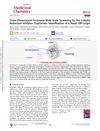
research Three-Dimensional Proteome-Wide Scale Screening for the 5-Alpha Reductase Inhibitor Finasteride: Identification of a Novel Off-Target
Finasteride may affect PNMT, causing side effects.