15 citations
,
August 2022 in “The Application of Clinical Genetics” ABCD1 gene mutations cause adrenomyeloneuropathy, leading to symptoms like limb weakness and spasticity, with management focusing on rehabilitation and spasticity treatment.
January 2024 in “Ankara City Hospital Medical Journal” Rhupus is a complex syndrome that combines rheumatoid arthritis and lupus, making diagnosis challenging.
15 citations
,
August 1991 in “American Journal of Medical Genetics” A special diet can fix hair problems in argininosuccinase deficiency.
 October 2019 in “Journal of Evolution of Medical and Dental Sciences”
 A 56-year-old man was diagnosed with Cronkhite-Canada Syndrome after showing symptoms like diarrhea, weight loss, and skin changes.
 November 2024 in “Malaysian Journal of Microbiology”
 Patients with thyroid disorders show different symptoms and antibody levels.
14 citations
,
March 2018 in “The American journal of case reports” People with the same genetic mutation for Woodhouse-Sakati syndrome can have different symptoms.
 5 citations
,
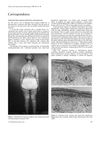
January 1998 in “Clinical and experimental dermatology”
5 citations
,
January 1998 in “Clinical and experimental dermatology” Myotonic dystrophy should be considered in patients with hair thinning, and genetic counseling is important.
11 citations
,
May 2019 in “Journal of Medical Primatology” Alopecia in rhesus macaques is linked to pregnancy, not stress.
January 2024 in “Indian Journal of Paediatric Dermatology” A rare case links early-onset alopecia universalis and nephrotic syndrome, suggesting genetic immune issues.
 March 2026 in “JOURNAL OF CLINICAL AND DIAGNOSTIC RESEARCH”
 Recognizing unusual patterns of hair loss helps dermatologists diagnose and manage Alopecia Areata better.
2 citations
,
June 2009 in “Journal of the American Academy of Dermatology” The treatment didn't work for the woman's hair loss and skin darkening.
56 citations
,
March 2017 in “Journal of the American Academy of Dermatology” Alopecia areata patients often have eczema, thyroid issues, vitamin-D deficiency, and anemia.
 16 citations
,
November 2005 in “Journal of Investigative Dermatology Symposium Proceedings”
16 citations
,
November 2005 in “Journal of Investigative Dermatology Symposium Proceedings” Blocking interferon-gamma helps prevent and treat hair loss in Alopecia Areata.
October 2021 in “Case Reports in Veterinary Medicine” The dog died from myxedema coma linked to severe atherosclerosis and thyroid issues.
1 citations
,
January 2019 in “PubMed” A woman developed a hair disorder after a bone marrow transplant, which improved with treatment.
 August 2024 in “Current Protocols”
 The C3H/HeJ mouse model is useful for studying and testing treatments for alopecia areata.
 February 2026 in “Dove Medical Press (Taylor and Francis Group)”
 Upadacitinib can effectively regrow hair in alopecia areata patients without worsening sarcoidosis.
January 2024 in “Case Reports in Endocrinology” Cortisone tapering may help improve severe myasthenia gravis and alopecia areata after thymectomy.
2 citations
,
January 2010 in “Case Reports in Medicine” Relapsing polychondritis might be linked to alopecia areata due to immune system factors.
54 citations
,
August 1981 in “British Journal of Dermatology” Alopecia areata is linked to reduced T cell function and auto-immunity.
36 citations
,
July 1996 in “The journal of investigative dermatology/Journal of investigative dermatology” Mice with the 'lanceolate hair' mutation have abnormal hair and skin similar to human Netherton's syndrome.
May 2025 in “Preprints.org” Unique microRNA patterns can help diagnose and treat severe alopecia areata.
1 citations
,
November 2016 in “Frontiers in neurology” Steroid treatment improved both gut and nerve symptoms in a man with Cronkhite–Canada syndrome.
9 citations
,
July 2016 in “JAAD case reports” Denosumab treatment for osteoporosis can cause hair loss.
7 citations
,
February 2011 in “Journal of dermatology” The 736T>A mutation in the LIPH gene is common in Japanese people with autosomal recessive woolly hair.
 2 citations
,
November 2011 in “InTech eBooks”
2 citations
,
November 2011 in “InTech eBooks” Most adrenal cortex tumors are benign and non-secreting, but proper diagnosis and treatment are important due to the rare possibility of cancer.
 8 citations
,
July 2014 in “Anais Brasileiros de Dermatologia”
8 citations
,
July 2014 in “Anais Brasileiros de Dermatologia” A man's scalp condition was misidentified as hair loss dots but was actually a common follicular disorder.
August 2025 in “Annals of the Rheumatic Diseases” SLE is likely one disease with various symptoms, not multiple distinct diseases.
Alopecia Areata has no cure, treatments are limited, and the condition often recurs, but new therapies like JAK inhibitors show promise.
44 citations
,
December 2005 in “Journal of Investigative Dermatology” Certain genetic markers, especially the MICA gene, are linked to alopecia areata.