 2 citations
,
December 2017 in “Bangladesh Journal of Pharmacology”
2 citations
,
December 2017 in “Bangladesh Journal of Pharmacology” Black seed oil significantly protects against hair loss from chemotherapy.
 2 citations
,
March 2014 in “Turkderm”
2 citations
,
March 2014 in “Turkderm” Mesotherapy and platelet-rich plasma treatments may help with hair loss, but their safety and effectiveness are still uncertain.
 2 citations
,
February 2014 in “Animal Biotechnology”
2 citations
,
February 2014 in “Animal Biotechnology” The PTGER2 gene is highly active in Cashmere goat skin and its activity changes with the hair growth cycle.
 1 citations
,
August 2023 in “Biomolecules & therapeutics”
1 citations
,
August 2023 in “Biomolecules & therapeutics” HAPLN1 can promote hair growth and may help treat hair loss.
 1 citations
,
December 2022 in “̒Ulūm-i dārūyī”
1 citations
,
December 2022 in “̒Ulūm-i dārūyī” The new wound dressing with minoxidil and dexamethasone could speed up healing and reduce scarring in rats.
 1 citations
,
May 2021 in “Research Square (Research Square)”
1 citations
,
May 2021 in “Research Square (Research Square)” Micro-injury can help regrow hair and repigment vitiligo by activating specific cells.
 1 citations
,
December 2019 in “Journal of medicine and life science”
1 citations
,
December 2019 in “Journal of medicine and life science” Docosahexaenoic acid (DHA) may help hair growth by promoting dermal papilla cell proliferation.
 1 citations
,
January 2019 in “Skin Pharmacology and Physiology”
1 citations
,
January 2019 in “Skin Pharmacology and Physiology” Eplerenone, a mineralocorticoid receptor antagonist, was found to promote hair growth in human hair follicles.
 1 citations
,
January 2018 in “Springer eBooks”
1 citations
,
January 2018 in “Springer eBooks” The document concludes that scalp cooling and treatments like minoxidil can help manage hair loss from cancer therapy.
 1 citations
,
January 2018 in “Springer eBooks”
1 citations
,
January 2018 in “Springer eBooks” Photobiomodulation is an effective and safe treatment for increasing hair growth in people with hair loss.
 1 citations
,
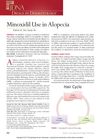
August 2017
1 citations
,
August 2017 Minoxidil helps stimulate hair growth and enlarge small follicles in common hair loss, but doesn't stop it, and its effects can be boosted when combined with finasteride.
 1 citations
,
May 2017 in “InTech eBooks”
1 citations
,
May 2017 in “InTech eBooks” Hair loss in Androgenetic alopecia (AGA) is due to altered cell sensitivity to hormones, not increased hormone levels. Hair growth periods shorten over time, causing hair to become thinner and shorter. This is linked to miscommunication between cell pathways in hair follicles. There's also a change in gene expression related to blood vessels and cell growth in balding hair follicles. The exact molecular causes of AGA are still unclear.
 1 citations
,
January 1987 in “Journal of The American Academy of Dermatology”
1 citations
,
January 1987 in “Journal of The American Academy of Dermatology” The patient's hair loss was likely not caused by beta blockers but possibly by stress or other factors.
 June 2026 in “Revista Brasileira de Saúde”
 Exosomes could help treat hair loss, but more research and standardization are needed.
 June 2026 in “Research Square”
 THBS4 helps hair grow by activating hair follicle stem cells.
 May 2026 in “International Journal of Drug Delivery Technology”
 Herbs like hibiscus, onion, and aloe vera may help hair growth and are good alternatives to conventional treatments.
 May 2026 in “Frontiers in Pharmacology”
 Dendrobium officinale polysaccharide helps hair regrowth in hair loss mice by affecting local steroid metabolism and hair follicle responses.
 March 2026 in “International Journal of Science and Research (IJSR)”
 Melatonin protects skin and supports hair growth.
 March 2026 in “Scientific Reports”
 Ferulic acid may help hair grow by activating certain receptors in cells.
 February 2026 in “Brazilian Journal of Implantology and Health Sciences”
 Chronic stress and high cortisol levels can cause hair loss by disrupting hair growth.
 January 2026 in “Lumbung Farmasi Jurnal Ilmu Kefarmasian”
 The topical formula with sidr leaves and roasted candlenut extracts significantly boosts hair growth for alopecia.
 December 2025 in “Sains Medisina”
 Essential oils from 12 herbal plants can naturally stimulate hair growth.
 December 2025 in “Ciencia Latina Revista Científica Multidisciplinar”
 Nanotechnology shows promise in improving hair loss treatments by enhancing drug delivery and reducing side effects.
 August 2025 in “Journal of the Korean Society of Cosmetology”
 Gymnema sylvestre leaf extract can slow hair growth.

Hair growth is maintained by specific cell signals.
 January 2025 in “bioRxiv (Cold Spring Harbor Laboratory)”
 Rhamnose may help hair growth and pigmentation, making it a potential treatment for hair loss.
 July 2024 in “Frontiers in Pharmacology”
 Pilose antler extracts help hair growth by activating hair follicle stem cells.

A 14-year-old girl with a condition that makes her hair easy to pull out also has a hair-pulling disorder, and treatment helped but she relapsed after a year.
 April 2024 in “Dermatovenerologiâ, kosmetologiâ”
 Telogen effluvium is a common hair loss condition that can be managed with proper treatment and addressing underlying issues.
 March 2024 in “Research Square”
 The model helps understand alopecia areata and suggests ways to improve treatment by targeting immune issues.