 16 citations
,
March 2022 in “Archives of Toxicology”
16 citations
,
March 2022 in “Archives of Toxicology” Botulinum and tetanus neurotoxins are better understood now, with updated information on their effects and treatment.
May 2021 in “ThinkTech (Texas Tech University)” BlastX helps heal uninfected wounds but doesn't improve healing in infected ones.
22 citations
,
October 2007 in “JDDG Journal der Deutschen Dermatologischen Gesellschaft” Combining isotretinoin and dapsone effectively treated a challenging scalp condition.
 105 citations
,
August 2010 in “Pharmacology & therapeutics”
105 citations
,
August 2010 in “Pharmacology & therapeutics” Formyl-peptide receptor agonists could be new anti-inflammatory drugs.
 January 2022 in “Social Science Research Network”
 A special coating was made for artificial hair fibers that can slowly release silver ions for up to 56 days, providing long-term protection against bacteria and inflammation.
January 2022 in “Drugs of Today”  9 citations
,
June 2021 in “International Journal of Pharmaceutics”
9 citations
,
June 2021 in “International Journal of Pharmaceutics” Using polymeric micelles to deliver spironolactone topically could improve wound healing in skin affected by glucocorticoids.
1 citations
,
July 2025 in “Advanced Science” The microneedles effectively kill MRSA and improve wound healing.
29 citations
,
October 2020 in “Environmental health perspectives” Five preservatives may disrupt hormone function and need more health and environmental risk assessment.
 May 2025 in “Insights-Journal of Health and Rehabilitation”
 Aloe vera and lemon extracts can significantly reduce acne, especially when used together.
April 2023 in “Journal of Investigative Dermatology” EGFR helps protect hair follicles from bacterial infections.
 18 citations
,
February 2025 in “Drug Delivery and Translational Research”
18 citations
,
February 2025 in “Drug Delivery and Translational Research” The microneedle patches effectively treat allergic conjunctivitis with controlled, sustained release of medication.
26 citations
,
October 1997 in “Planta Medica” Certain compounds from Stephania cepharantha help hair cell growth.
14 citations
,
March 2014 in “Journal of the Society of Cosmetic Scientists of Korea” Some Korean herb extracts can reduce inflammation and are safe for skin use.
34 citations
,
June 2022 in “Viruses” Certain plant compounds can help prevent and treat a virus in pigs.
68 citations
,
May 2024 in “International Journal of Molecular Sciences” Personalized acne treatments and new therapies show promise for better results.
 22 citations
,
January 2013 in “Journal of The American Academy of Dermatology”
22 citations
,
January 2013 in “Journal of The American Academy of Dermatology” Birth control pills can help manage acne, but dermatologists should know their skin-related side effects, especially when prescribing drugs that can harm unborn babies.
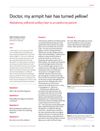
A 15-year-old boy's smelly, yellow armpit hair improved with clindamycin treatment.
194 citations
,
October 2018 in “Microbiome” Acne is linked to complex skin microbe interactions, and new findings suggest microbiome-based treatments could be effective.
September 2025 in “Al-Nahrain Journal of Science” Aloe vera-based zinc oxide nanoparticles can kill bacteria but may harm human cells at high doses.
 July 2024 in “Anti-Infective Agents”
 The herbal shampoo effectively treats dandruff without harmful side effects.
 1 citations
,
May 2022 in “Голова и шея.”
1 citations
,
May 2022 in “Голова и шея.” The collagen sponge with lincomycin heals tooth sockets faster and reduces infection better than iodoform gauze.
50 citations
,
December 2017 in “Nanoscale” Polymeric micelle nanocarriers deliver adapalene more effectively to hair follicles than commercial products.
September 2025 in “International Journal of Molecular Sciences” Hangeshashinto's natural products may help treat stomatitis by reducing inflammation and cytotoxicity.
 May 2026 in “Zenodo (CERN European Organization for Nuclear Research)”
 The herbal shampoo effectively treats dandruff and is a good alternative to synthetic options.
July 2024 in “Journal of Investigative Dermatology” ATR12-351 ointment safely delivers LEKTI protein to the skin, reducing enzyme activity in Netherton syndrome.
9 citations
,
January 2013 in “BioMed research international” The conclusion suggests a new acne treatment that controls bacteria by reducing water in the skin's pores using sugar-like substances.
Monocyclic aromatic compounds are important for developing various drugs and treatments.
6 citations
,
March 2023 in “Frontiers in Cellular and Infection Microbiology” Golvatinib shows promise as a treatment for Omicron in elderly patients.
 January 2026 in “Dermatology and Venerology”
 Complex therapy is more effective for long-term control of scalp abscesses.