 October 2025 in “Dermatologica Sinica”
 A personalized treatment combining traditional and new therapies may improve hair loss outcomes in alopecia areata.
Alopecia Areata is treated with drugs and therapies to reduce inflammation and immune response.
April 2017 in “The journal of investigative dermatology/Journal of investigative dermatology” Researchers found three different ways drugs work to treat hair loss from alopecia areata and identified key factors for personalized treatment.
3 citations
,
June 2025 in “Biomedicines” Gut bacteria may influence hair loss in alopecia areata.
2 citations
,
May 2023 in “The Journal of Immunology” NXC736 significantly reduced hair loss in mice with alopecia areata.
 March 2026 in “Frontiers in Pediatrics”
 COVID-19 may trigger hair loss conditions like alopecia areata.
January 2026 in “Zenodo (CERN European Organization for Nuclear Research)” Herbal remedies might help treat alopecia areata, but more research is needed.
January 2024 in “Updates in clinical dermatology” JAK inhibitors, PRP, and exosomes show promise for hair regrowth in Alopecia Areata.
 March 2022 in “Wound practice & research”
 New treatments for alopecia areata show promise, but standardized guidelines are needed.
 1 citations
,
January 2017 in “Springer eBooks”
1 citations
,
January 2017 in “Springer eBooks” Understanding the immune-related causes of Alopecia Areata has led to potential treatments like JAK inhibitors.
JAK inhibitors effectively regrow hair in alopecia areata but hair loss often returns after stopping treatment.
 9 citations
,
October 2017 in “Archivos Argentinos de Pediatria”
9 citations
,
October 2017 in “Archivos Argentinos de Pediatria” Alopecia areata needs new treatments targeting autoimmune processes due to its emotional impact and variable treatment responses.
 4 citations
,
September 2011 in “Expert Review of Dermatology”
4 citations
,
September 2011 in “Expert Review of Dermatology” Various treatments exist for alopecia areata, but none are completely satisfactory; choice depends on age, disease extent, and preference.
3 citations
,
January 2022 in “JAAD Case Reports” Alopecia areata and myasthenia gravis can occur as rare symptoms of breast cancer.
 3 citations
,
July 2021 in “International journal of environmental research and public health/International journal of environmental research and public health”
3 citations
,
July 2021 in “International journal of environmental research and public health/International journal of environmental research and public health” Two patients developed complete hair loss after Alemtuzumab treatment for MS, with no regrowth after two years.
1 citations
,
August 2025 in “Australasian Journal of Dermatology” Anti-TNF therapy can cause a rare hair loss condition similar to alopecia areata.
November 2025 in “The Bioscan.” Pix Liquida helped a man recover from patchy hair loss.
 February 2025 in “Dermatology and Therapy”
 Alopecia areata incognita causes sudden hair loss but usually improves with topical steroids.
 June 2024 in “Military medicine”
 JAK inhibitors like baricitinib and ritlecitinib are effective new treatments for severe alopecia areata.

Belimumab may cause hair loss in lupus patients.
 July 2023 in “IntechOpen eBooks”
 Some types of hair loss can be reversed, others are permanent, and treatments vary by type.
Gut bacteria may affect hair loss in people with celiac disease.
January 2022 in “Clinical Cases in Dermatology” Hypothyroidism can cause hair loss, which is often reversible with treatment.
 July 2018 in “Elsevier eBooks”
 Discoid Lupus Erythematosus often causes scarring hair loss, is influenced by genetics and environment, and requires early treatment to prevent worsening.
 December 1986 in “Plastic and Reconstructive Surgery”
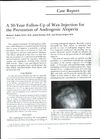
 Wax injection did not stop hair loss and caused changes to the skull.
Alopecia areata often starts around age 23, can be permanent in 30% of cases, and treatments are usually temporary.
66 citations
,
July 2010 in “Journal of Proteome Research” Trichohyalin may trigger the immune response causing alopecia areata.
14 citations
,
September 2015 in “PubMed” Alopecia areata can be managed with various treatments, and severe cases should be referred to dermatologists.
 May 2026 in “Zenodo (CERN European Organization for Nuclear Research)”
 The serum with microneedling device improves hair loss treatment effectively and safely.
 January 2026 in “Journal of Case Reports and Scientific Images”
 Homeopathic treatment may help manage alopecia areata by considering the whole person.