7 citations
,
September 2020 in “Bioscience Biotechnology and Biochemistry” The scalp has more diverse bacteria, while hair has more bacteria and unique types.
Four bacteria from the lab were found to be resistant to selenium.
1 citations
,
April 2019 in “The journal of investigative dermatology/Journal of investigative dermatology” People with Hidradenitis Suppurativa have less diverse skin bacteria and different bacterial metabolism than healthy individuals.
2 citations
,
October 2025 in “ACS Infectious Diseases” The microbiome helps reduce inflammation after infections, but how it does this is not fully understood.
 43 citations
,
October 1955 in “The journal of nutrition/The Journal of nutrition”
43 citations
,
October 1955 in “The journal of nutrition/The Journal of nutrition” Germ-free rats need biotin for growth and have different vitamin metabolism compared to regular rats.
January 2013 in “Hunan Agricultural Sciences” Lactobacillus reuteri and Bacillus natto can replace antibiotics to improve piglet health and growth.
 3 citations
,
January 2022 in “Medical Mycology Journal”
3 citations
,
January 2022 in “Medical Mycology Journal” Malassezia fungi in healthy noses can form a "spaghetti-and-meatballs" structure.
46 citations
,
January 1988 in “PubMed” Hair follicle mites might spread harmful microorganisms.
3 citations
,
January 2023 in “Biodiversitas Journal of Biological Diversity” Bacillus tequilensis from Leea indica leaves is a strong natural antioxidant source.
 April 2018 in “Journal of Investigative Dermatology”
 People with palmoplantar pustulosis, especially with bone issues, have different mouth bacteria compared to healthy people.
April 2023 in “Journal of Investigative Dermatology” Staphylococcus epidermidis affects hair growth and metabolism, suggesting it could help manage hair growth issues.
August 2025 in “Journal of Clinical Medicine” Skin diseases alter the skin's microbiome, and prebiotic treatments might help.
 May 2024 in “Indian Dermatology Online Journal”
 A rare bacterial infection of pubic hair can cause strong genital odor, but trimming hair and using clindamycin can quickly fix it.
 September 2018 in “Epsilon Archive for Student Projects (University of Southampton)”
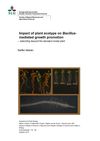
 Bacillus amyloliquefaciens can boost root hair growth in some Arabidopsis plants, potentially improving agriculture.
 January 2026 in “Frontiers in Microbiology”
 Enterococcus faecium broth may slow aging and improve health by boosting immunity and gut bacteria.
 8 citations
,
October 2022 in “Cold Spring Harbor perspectives in biology”
8 citations
,
October 2022 in “Cold Spring Harbor perspectives in biology” The document concludes that better understanding the wound microbiome can improve chronic wound care by preserving helpful bacteria and targeting harmful ones.
June 2024 in “Current Developments in Nutrition” Diet changes can improve skin health by altering the immune response and skin microbiome.
March 2017 in “Zenodo (CERN European Organization for Nuclear Research)” L. plantarum MTCC 1325 may help improve memory and cognitive functions in Alzheimer's.
21 citations
,
November 2019 in “Molecular & Cellular Proteomics” Citrullinated proteins from Porphyromonas gingivalis may contribute to rheumatoid arthritis.

Enterococcus faecalis delays wound healing by disrupting cell functions and creating an anti-inflammatory environment.
 April 2019 in “The journal of investigative dermatology/Journal of investigative dermatology”
 DHT may reduce inflammation caused by certain bacteria in skin cells.
1 citations
,
October 2025 in “EBioMedicine” Women have a higher DHT/testosterone ratio than men, possibly due to gut bacteria activity.
June 2021 in “International Journal of Biosciences (IJB)” Tridax procumbens flower extracts can kill bacteria.
 8 citations
,
April 2015 in “Transboundary and Emerging Diseases”
8 citations
,
April 2015 in “Transboundary and Emerging Diseases” A hospital outbreak of catheter infections in calves was caused by a bacteria from a beef herd, leading to longer hospital stays, more drug use, and calf deaths.
 May 2025 in “Annals of surgical case reports & images.”
 Certain gut bacteria may protect against hair loss, while others may increase the risk.
2 citations
,
December 2007 in “Microbial pathogenesis” Anthrax bacteria can infect and destroy hair follicles in mice, but the immune system eventually clears the infection.
8 citations
,
August 2015 in “Experimental Dermatology” Hidradenitis suppurativa may involve gut and oral bacteria, suggesting targeted treatments could help.
 1 citations
,
April 2023 in “International Journal of Molecular Sciences”
1 citations
,
April 2023 in “International Journal of Molecular Sciences” Botryococcus terribilis Ethanol Extract may reduce inflammation by changing gene expression in cells.
 January 2026 in “Academic Journal of Medicine & Health Sciences”
 Phage therapy could be a safe and effective new treatment for acne.

Some bacteria use arsenic compounds as antibiotics, and others have evolved resistance; a particular arsenic-based compound shows potential as a new antimalarial treatment.