34 citations
,
December 2022 in “Biomedical Technology” Janus membranes could greatly improve medical treatments like wound healing and bone regeneration.
January 2026 in “Advanced Healthcare Materials” A 3D-printed masque helps diabetic wounds heal faster by reducing inflammation and promoting skin regeneration.
49 citations
,
August 2022 in “Materials Today Bio” 3D bioprinting shows promise for creating functional organs and models for urological diseases.
May 2026 in “Drug Delivery” Bubble microneedles deliver drugs quickly and effectively through the skin and mouth.
2 citations
,
April 2024 in “Biotechnology Progress” 3D-printed microwells can effectively form uniform, viable tumor spheroids.
September 2023 in “Membranes” 3D-printed membranes with smart sensors can greatly improve tissue healing and have many medical applications.
61 citations
,
April 2023 in “Bioactive Materials” Microneedles are effective for painless drug delivery and promoting wound healing and tissue regeneration.

Bubble microneedles effectively deliver drugs through skin and mouth, improving hair growth and lowering glucose.
 15 citations
,
December 2015 in “Textile Research Journal”
15 citations
,
December 2015 in “Textile Research Journal” Adding amber particles to polyamide fibers makes them suitable for medical textiles like compression socks.
20 citations
,
November 2012 in “Methods in molecular biology” Superhydrophobic surfaces can prevent fouling and enable self-cleaning in microfluidic devices.
 December 2022 in “Acta Biomaterialia”
 Corrections were made to a previous work on 3D printing a gel-alginate mix for creating hair follicles, but the main finding - that this method can help grow hair - remains the same.
January 2019 in “Dermatologic Surgery” January 2025 in “SSRN Electronic Journal” 17 citations
,
October 2023 in “Polymers” Electrospun nanofibers are promising for medical, sensing, and energy uses, especially with 3D printing.
IVL-DrugFluidic® can mass-produce high-quality, long-acting injectable drug microspheres, improving patient compliance and reducing side effects.
May 2026 in “Skin Appendage Disorders” 3D bioprinting could help treat hair loss, but it needs more work and cost reduction for real-world use.
 March 2025 in “International Journal of Trichology”
 3D printing can greatly improve hair restoration and scalp treatments but faces challenges in clinical use.
 January 2026 in “RSC Advances”
 The hydrogel helps heal wounds without scars by releasing two drugs gradually.
 May 2017 in “Journal of The American Academy of Dermatology”
 Combining microneedling with Q-switched laser treatment for tattoo removal did not improve results and caused more pain.
 18 citations
,
July 2022 in “Chemistry - an Asian journal”
18 citations
,
July 2022 in “Chemistry - an Asian journal” Scientists created a 3D printed skin that includes hair and layers similar to real skin using a special gel.
353 citations
,
May 2016 in “TrAC Trends in Analytical Chemistry” Droplet microfluidics improves efficiency and control in chemistry, biology, and nanotechnology.
1 citations
,
April 2018 in “Dermatologic Surgery”  November 2025 in “IECCMEXICO”
 3D bioprinting advancements are improving skin regeneration for wound healing and personalized reconstruction.
9 citations
,
January 2025 in “Droplet” Precise cell manipulation technologies are advancing but still face challenges in improving accuracy for medical use.
 June 2017 in “Advances in intelligent systems and computing”
 The new device can implant cell mixtures more effectively for hair loss treatment and is easier for operators to use.
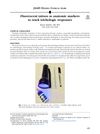 July 2018 in “Journal of The American Academy of Dermatology”
 Fluorescent tattoos are a good way to mark the scalp for hair treatments because they're accurate, invisible in normal light, and have low risk.
26 citations
,
September 2024 in “National Science Review” Janus hydrogels improve medical adhesives by mimicking natural barriers for better tissue integration.
December 2013 in “Pump Industry Analyst” The method effectively delivers vaccines through the skin without needles.
 January 2026 in “International Society of Hair Restoration Surgery”
 Tattoo machine-assisted drug delivery may improve hair growth in androgenetic alopecia.
8 citations
,
February 2025 in “Molecules” A bioink with 15% gelatin and 150 mM calcium chloride works best for 3D printing skin models.