117 citations
,
September 2003 in “Molecular & cellular proteomics” The technology can help diagnose and subtype autoimmune diseases by identifying specific autoantibodies.
24 citations
,
October 2024 in “International Journal of Extreme Manufacturing” 3D skin bioprinting has advanced but still faces challenges like safety and the need for better integration with sensors.
40 citations
,
July 2024 in “Bioengineering” 3D bioprinting holds promise for medicine but needs more research and clear regulations.
36 citations
,
November 2005 in “Forensic Science International” BioPlex-11 improves DNA profiling from telogen hair roots in forensic work.
14 citations
,
June 2021 in “British Journal of Dermatology” The BIOMAP glossary standardizes data to improve research on atopic dermatitis and psoriasis.
Machine learning helps find new uses for existing drugs, improving healthcare.
A new method creates valuable compounds for drug discovery by breaking traditional chemical rules.
1 citations
,
June 2023 in “Journal of Visualized Experiments” A new 3D-printed microscope stage makes long-term imaging of live tissue easier and more accessible.
17 citations
,
January 2025 in “Journal of Nanobiotechnology” Bacterial extracellular vesicles could revolutionize regenerative medicine but need safety improvements.
7 citations
,
January 2025 in “Journal of Medicinal Chemistry” New itaconate prodrugs improve its absorption and effectiveness for treating inflammation.
 232 citations
,
January 2016 in “BMC Bioinformatics”
232 citations
,
January 2016 in “BMC Bioinformatics” The method can effectively extract biomedical information without needing expert annotation, performing better than previous models.
 1 citations
,
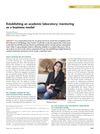
October 2014 in “Molecular Biology of the Cell”
1 citations
,
October 2014 in “Molecular Biology of the Cell” Valentina Greco emphasizes the importance of combining business management with mentoring to run a successful academic lab.
4 citations
,
February 2018 in “EMBO reports” New DNA analysis and machine learning are advancing forensic science, improving accuracy and expanding into non-human applications.
4 citations
,
May 2025 in “The Journal of Immunology” New treatments for atopic dermatitis and alopecia areata have been developed using a targeted approach.
April 2026 in “SSRN Electronic Journal” 1 citations
,
May 2025 in “Biomolecules” Synthetic biology can improve sesquiterpenol production by using innovative microbial strategies.

Gene editing holds promise for skin treatments but needs careful safety and ethical consideration.
 1 citations
,
September 2009 in “Regenerative Medicine”
1 citations
,
September 2009 in “Regenerative Medicine” Bioaesthetic therapies could improve healthcare if they safely regenerate cells, tissues, or organs to restore normal function.
8 citations
,
January 2021 in “Journal of Pharmaceutical Investigation”  July 2008 in “Journal of Intellectual Property Law & Practice”
 The UK Court of Appeal ruled that new dosing regimens for drugs can be patented, aligning with the European Patent Office's approach.
 June 2026 in “Zenodo (CERN European Organization for Nuclear Research)”
 The system aims to extend human lifespan to 130-150 years by improving cellular health and reducing stress.
 June 2026 in “Zenodo (CERN European Organization for Nuclear Research)”
 The system aims to extend human lifespan to 130-150 years by improving cellular health and reducing stress.
 January 2026 in “Microsystems & Nanoengineering”
 Research on silica-based nanobiomaterials for tissue regeneration is rapidly growing, with China leading in volume and the U.S. excelling in impact.
In vitro methods are crucial for developing effective and humane cosmetic ingredients.
1 citations
,
May 2023 in “bioRxiv (Cold Spring Harbor Laboratory)” A new tool allows easier long-term imaging of live skin cells, helping study diseases like skin cancer.
 January 2026 in “Frontiers in Pharmacology”
 Personalized medicine and new technologies offer promising strategies for better skin disease treatments.
 September 2025 in “Institutional Repositories DataBase (IRDB)”
 Lactic acid bacteria fermentation can turn waste into valuable skincare ingredients.
The research developed new fortilin protein constructs for potential heart disease treatments.
156 citations
,
March 2022 in “Exploration” Bioactive inorganic particles-based biomaterials show promise for improving skin wound healing.