 2 citations
,
April 2021 in “International Journal of Molecular Sciences”
2 citations
,
April 2021 in “International Journal of Molecular Sciences” The study concluded that changing the culture conditions can cause sika deer skin cells to switch from a flat to a 3D pattern, which is important for creating hair follicles.
42 citations
,
August 2012 in “Psychoneuroendocrinology” Finasteride reduces certain behaviors caused by D1-like receptor agonists but not by D2-like receptor agonists in mice.
20 citations
,
December 2020 in “Frontiers in Immunology” The immune processes causing VKH and vitiligo are similar in dogs and humans.
7 citations
,
August 2020 in “Genes” Different genes are active in dogs' hair growth and skin, similar to humans, which helps understand dog skin and hair diseases and can relate to human conditions.
19 citations
,
December 2021 in “Stem Cell Research & Therapy” Muse cells from human bone marrow help reduce symptoms of atopic dermatitis in mice.
4 citations
,
November 2018 in “Journal of comparative pathology” The three adipokines—leptin, adiponectin, and resistin—are present in various cells of normal dog skin.
12 citations
,
September 2015 in “Drug Design Development and Therapy” AD198 is more effective than doxorubicin in stopping certain dog cancer cells.
 September 2019 in “Journal of Investigative Dermatology”
 Four botanical extracts were found to quickly attract neutrophils to wounded skin in zebrafish.
 2 citations
,
May 2023 in “Frontiers in Bioengineering and Biotechnology”
2 citations
,
May 2023 in “Frontiers in Bioengineering and Biotechnology” The document concludes that more research is needed on making and understanding biomaterial scaffolds for wound healing.
2 citations
,
June 2025 in “Cosmetics” Rosehip oil reduces wrinkles and UV spots and may have antimicrobial benefits.
 42 citations
,
October 2011 in “Seminars in Cell & Developmental Biology”
42 citations
,
October 2011 in “Seminars in Cell & Developmental Biology” Eph/ephrin signaling is important for skin cell behavior and could be targeted to treat skin diseases.
 31 citations
,
April 2018 in “Royal Society open science”
31 citations
,
April 2018 in “Royal Society open science” Sarcoptes scabiei infection causes significant health and behavior changes in wombats.
 1 citations
,
August 2022 in “International journal of biological and chemical sciences”
1 citations
,
August 2022 in “International journal of biological and chemical sciences” Iodine-deficient diets and antithyroid substances affected rat growth and behavior, but most adapted with positive weight gain.
 393 citations
,
November 2000 in “Archives of General Psychiatry”
393 citations
,
November 2000 in “Archives of General Psychiatry” Testosterone is important for men's sexual function, may help some women's sexual desire, while other hormones and neurotransmitters also play complex roles in sexual behavior.
 28 citations
,
March 2016 in “Toxicologic pathology”
28 citations
,
March 2016 in “Toxicologic pathology” Dogs could be good models for studying human hair growth and hair loss.
 18 citations
,
June 2019 in “Twin research and human genetics”
18 citations
,
June 2019 in “Twin research and human genetics” The 25Up study collected extensive data on mental disorders and related factors in Australian twins and siblings to investigate the genetics of psychiatric illnesses.
 53 citations
,
June 1977 in “Lancet”
53 citations
,
June 1977 in “Lancet” Jaw wiring helps with weight loss but long-term habits are needed to keep it off.
 12 citations
,
January 2024 in “Editora In Vivo eBooks”
12 citations
,
January 2024 in “Editora In Vivo eBooks” Environmental enrichment improves lab mice welfare and research outcomes.
 June 2022 in “Veterinary evidence”
 Clomipramine alone does not reduce overgrooming in cats with psychogenic alopecia.
![2-Deoxy-2-[18F]Fluoro-D-Glucose Positron Emission Tomography/Computed Tomography](/images/assets/35fab163-57b7-4db8-b1e0-2929b51b2144/small/60162.jpg) January 2016 in “Electronic Theses of LMU Munich (Ludwig-Maximilians-Universität München)”
January 2016 in “Electronic Theses of LMU Munich (Ludwig-Maximilians-Universität München)” FDG PET/CT can improve cancer treatment plans in dogs.
 January 2024 in “International Journal of Advanced Biochemistry Research”
 Nexgard® effectively treated a dog's skin condition, demodicosis.
 83 citations
,
January 2001 in “American journal of clinical dermatology”
83 citations
,
January 2001 in “American journal of clinical dermatology” Clomipramine may significantly reduce hair-pulling in Trichotillomania, but more research is needed on treatments and early onset cases.
 79 citations
,
January 2015 in “Journal of Materials Chemistry B”
79 citations
,
January 2015 in “Journal of Materials Chemistry B” Smart biomaterials that guide tissue repair are key for future medical treatments.
![Comparative Oncology: Evaluation of 2-Deoxy-2-[18F]Fluoro-D-Glucose (FDG) Positron Emission Tomography/Computed Tomography (PET/CT) for the Staging of Dogs with Malignant Tumors](/images/assets/d55cf8d9-d8ee-4735-9b38-42a266b4059d/small/24322.jpg) 17 citations
,
June 2015 in “PLOS ONE”
17 citations
,
June 2015 in “PLOS ONE” FDG PET/CT scans can change cancer treatment plans for dogs.
 March 2026 in “Buletin Veteriner Udayana”
 The cat's hair loss and skin issues improved with less stress and more owner attention.
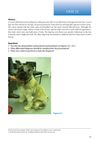 May 2019 in “Small Animal Dermatology”
 The dog had sebaceous adenitis, treated with ciclosporin, leading to some hair regrowth.
 57 citations
,
December 2021 in “Nature Communications”
57 citations
,
December 2021 in “Nature Communications” Non-canonical Wnt signaling helps intestinal stem cells move to injury sites for tissue repair.
 14 citations
,
January 2025 in “AAPS PharmSciTech”
14 citations
,
January 2025 in “AAPS PharmSciTech” Microemulsions and nanoemulsions can effectively deliver drugs through the skin, but more research is needed to understand their differences and mechanisms.
 28 citations
,
May 2015 in “Addiction Biology”
28 citations
,
May 2015 in “Addiction Biology” Prenatal stress changes how male and female rats enjoy rewards differently, linked to sex hormones.
Keratinocytes grew and migrated into hair follicle areas but disappeared after 15-20 days.