 1 citations
,
December 2010 in “The journal of small animal practice/Journal of small animal practice”
1 citations
,
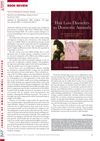
December 2010 in “The journal of small animal practice/Journal of small animal practice” The book helps veterinarians understand and treat hair loss in animals.

Tissue from dog stem cells helped grow hair in mice.
August 2004 in “Veterinary Dermatology” Adult-onset hair loss in Chesapeake Bay retrievers may be linked to abnormal adrenal hormone production.
7 citations
,
August 2020 in “Genes” Different genes are active in dogs' hair growth and skin, similar to humans, which helps understand dog skin and hair diseases and can relate to human conditions.
July 2025 in “Journal of Investigative Dermatology” Discoid lupus erythematosus involves immune activation and fibrosis around hair follicles, with shared pathways across humans, dogs, and mice, suggesting potential treatments for both humans and animals.
34 citations
,
July 2006 in “Clinics in dermatology” Endocrine diseases in dogs often cause skin problems, with hypothyroidism and hyperadrenocorticism being common and leading to hair loss and infections.
 September 2010 in “Companion Animal”
 The guide explains how to diagnose and treat hair loss in dogs, covering causes and treatments, with some conditions lacking treatment options.
 1 citations
,
January 2023 in “Frontiers in veterinary science”
1 citations
,
January 2023 in “Frontiers in veterinary science” Activating autophagy in dogs with certain diseases improves their skin and hair.
 28 citations
,
May 2012 in “Veterinary Dermatology”
28 citations
,
May 2012 in “Veterinary Dermatology” Different types of dog hair loss are linked to problems starting the hair growth phase and early hair cycle ending.
14 citations
,
February 2015 in “Journal of the American Animal Hospital Association” Dogs exposed to their owners' hormone therapy developed hair loss, but symptoms resolved after stopping the therapy.
4 citations
,
May 2015 in “Macedonian Veterinary Review” Canine stem cell aggregates can effectively replace natural dermal papillae for hair research.
 1 citations
,
April 2023 in “Journal of the Hellenic Veterinary Medical Society”
1 citations
,
April 2023 in “Journal of the Hellenic Veterinary Medical Society” Most dogs with paw inflammation had chronic issues, often due to allergies, and certain breeds were more affected.
1 citations
,
December 2021 Cats likely have a reactive skin condition, while dogs may have a more complex, possibly cancerous one.
 January 2024 in “Brazilian journal of veterinary pathology”
 The dog likely has a condition similar to Canine alopecia X.
 January 2024 in “International journal of advanced biochemistry research”
 The dog fully recovered from demodicosis after treatment with Bravecto and supportive care.
 January 2023 in “International Journal of Zoology and Animal Biology”
 Canine hypothyroidism can be linked to diabetes, requiring thorough testing for proper diagnosis.
 January 2015 in “Scientific Works. Series C, Veterinary Medicine”
 Canine demodicosis diagnosis is complex due to varied symptoms and atypical presentations.
 June 2018 in “Acta Scientiae Veterinariae”
 Tailored treatment plans are crucial for managing canine dermatomyositis-like disease.
13 citations
,
March 2000 in “Veterinary Dermatology” Dogs have a skin condition like human pseudopelade, causing hair loss that doesn't improve with treatment.
1 citations
,
May 2011 in “DOAJ (DOAJ: Directory of Open Access Journals)” The study found genetic diversity in coat color dilution among Czech pointers in Slovakia.
 January 2026 in “International Journal of Veterinary Sciences and Animal Husbandry”
 Ivermectin with supportive therapies effectively treats canine demodicosis.
 January 2021 in “Acta Scientiae Veterinariae”
 Levothyroxine effectively treated a dog's skin and hair problems caused by hypothyroidism.
 August 2019 in “International journal of current microbiology and applied sciences”
 Young dogs in Odisha with dermatitis are most often infected by Microsporum fungus, and Miconazole is the most effective treatment.
 9 citations
,
January 2008 in “Medical mycology”
9 citations
,
January 2008 in “Medical mycology” A dog's skin infection caused by the fungus Chaetomium globosum was effectively treated with ketoconazole.
1 citations
,
March 2017 in “Semina Ciências Agrárias” Hunting wild boar can cause fungal infections in dogs.
 January 2024 in “International Journal of Advanced Biochemistry Research”
 Staphylococcus in dogs with skin infections is most sensitive to Linezolid.
 June 2023 in “jurnal veteriner”
 The combination of Typhonium flagelliforme extract and natural interferons effectively reduces tumor growth in mice.
 September 2016 in “Elsevier eBooks”
 Different types of hair loss in dogs and cats have various causes and treatments, with outcomes ranging from good to uncertain.
 1 citations
,
September 2019 in “BMC veterinary research”
1 citations
,
September 2019 in “BMC veterinary research” Malarone® caused pancreatitis and hair loss in a dog for the first time.
 1 citations
,
January 2008 in “Elsevier eBooks”
1 citations
,
January 2008 in “Elsevier eBooks” The document concludes that various disorders can cause hair loss in dogs, each requiring different treatments, and some may heal on their own.