 10 citations
,
November 2018 in “Nature Biotechnology”
10 citations
,
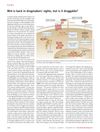
November 2018 in “Nature Biotechnology” Drugmakers are optimistic about targeting the Wnt pathway for new treatments despite past challenges.
 3 citations
,
January 2021 in “Skin appendage disorders”
3 citations
,
January 2021 in “Skin appendage disorders” Hair loss due to scalp metastasis from breast cancer, known as Neoplastic Alopecia, has a better survival rate than other scalp metastases and requires a biopsy for diagnosis.
 2 citations
,
November 2015 in “Actas Dermo-Sifiliográficas”
2 citations
,
November 2015 in “Actas Dermo-Sifiliográficas” The document suggests a possible link between mast cells and scarring alopecia, recommending more research for potential treatments.
 2 citations
,
March 2015 in “Expert opinion on orphan drugs”
2 citations
,
March 2015 in “Expert opinion on orphan drugs” New treatments for hair loss show promise but need more research to confirm safety and effectiveness.
Live imaging helps us understand skin immune responses and develop treatments.
 January 2016 in “Springer eBooks”
 Alopecia Areata is an unpredictable autoimmune hair loss condition with limited and variable treatment effectiveness.
 85 citations
,
July 2025 in “Nature Communications”
85 citations
,
July 2025 in “Nature Communications” Nanozymes greatly improve biocatalysis by being stable, efficient, and versatile.
 67 citations
,
January 2022 in “Theranostics”
67 citations
,
January 2022 in “Theranostics” Advanced nanocarrier and microneedle drug delivery methods are more effective, safer, and less invasive for treating skin diseases.
 57 citations
,
June 2021 in “Polymers”
57 citations
,
June 2021 in “Polymers” Photothermal hydrogels are promising for infection control and tissue repair, and combining them with other treatments could improve results and lower costs.
 51 citations
,
January 2024 in “Nanoscale”
51 citations
,
January 2024 in “Nanoscale” Nano-PROTACs could improve drug targeting and delivery by using nanotechnology.
 5 citations
,
October 2025 in “International Journal of Nanomedicine”
5 citations
,
October 2025 in “International Journal of Nanomedicine” Traditional Chinese Medicine and biomaterials help heal chronic wounds by targeting multiple pathways.
 2 citations
,
September 2022 in “Cellular and molecular biology”
2 citations
,
September 2022 in “Cellular and molecular biology” Agaricus bisporus derived β-Glucan could be an effective cervical cancer treatment with antimicrobial and antioxidant properties.
 1 citations
,
January 2026 in “Frontiers in Bioengineering and Biotechnology”
1 citations
,
January 2026 in “Frontiers in Bioengineering and Biotechnology” Ionizable lipid nanoparticles are the best for delivering gene-editing therapies.
 May 2026 in “Organoid Research”
 Hydrogel-based methods improve skin organoid development for medical and research applications.
 January 2026 in “Frontiers in Bioscience-Landmark”
 Araliadiol protects skin cells from damage by boosting antioxidant defenses.
 January 2026 in “Frontiers in Materials”
 Metal-organic frameworks help heal wounds by effectively delivering medicine.
 January 2026 in “Materials Horizons”
  September 2025 in “Nano Biomedicine and Engineering”
 Nanomedicines could offer better, longer-lasting psoriasis treatments with fewer side effects.
 March 2025 in “Dental Journal (Majalah Kedokteran Gigi)”
 The sponge effectively controls bleeding and prevents infection after tooth extraction.

Polarized microscopy helps identify hair irregularities in genetic disorders.
 June 2023 in “jurnal veteriner”
 The combination of Typhonium flagelliforme extract and natural interferons effectively reduces tumor growth in mice.
 January 2016 in “Journal of Materials Chemistry B”
 Advancements in biomaterials and nanotechnology are improving medical applications like hair growth, bone regeneration, and cancer treatment.
 1 citations
,
April 2026 in “Cancer Nanotechnology”
1 citations
,
April 2026 in “Cancer Nanotechnology” Nanozymes could improve cancer diagnosis and treatment by mimicking enzymes and enhancing delivery to tumors.
 May 2026 in “International Journal of Nanomedicine”
 Nanozymes help heal burn wounds by fighting bacteria, reducing inflammation, and promoting blood vessel growth.
 January 2026 in “Frontiers in Pharmacology”
 Personalized medicine and new technologies offer promising strategies for better skin disease treatments.
 January 2026 in “RSC Advances”
 The hydrogel speeds up diabetic wound healing and reduces scarring.
 November 2025 in “Nanoscale Advances”
 Inorganic nanoparticle-based scaffolds can improve wound healing by fighting bacteria and helping tissue grow.

Combining nanotechnology with herbal medicine may improve PCOS treatment.
 264 citations
,
January 2008 in “Journal of biomedical optics”
264 citations
,
January 2008 in “Journal of biomedical optics” Zinc oxide nanoparticles in sunscreen do not penetrate deep into the skin.
 211 citations
,
June 2012
211 citations
,
June 2012 The skin is a complex barrier for drug penetration, but understanding its structure and interactions can improve drug delivery methods.