 January 2018 in “Journal of The American Academy of Dermatology”
 A manual blood cell counter was effectively used to count hair follicles during surgery, being user-friendly and cost-effective but limited by a three-digit display.
 December 2022 in “BMC women's health”
 The CNC® prosthetic system improved body image in breast cancer patients with hair loss from chemotherapy but did not significantly change their psychological wellbeing.
1 citations
,
July 2023 in “Clinical Cosmetic and Investigational Dermatology” Familial dyskeratotic comedones are a rare, benign skin disorder that is hard to treat.
9 citations
,
March 2017 in “Journal of Visualized Experiments” The assay effectively identifies compounds that affect immune cell activation.
11 citations
,
September 2024 in “Journal of Advanced Research” 3D-bioprinting models of pancreatic cancer could help personalize treatments but need more testing.
 April 2026 in “Laboratory Animal Research”
 The new Hairless R/J mice model improves imaging for tumor monitoring and cancer therapy evaluation.
 4 citations
,
April 2016 in “Journal of The American Academy of Dermatology”
4 citations
,
April 2016 in “Journal of The American Academy of Dermatology” A patient with advanced kidney cancer and no hepatitis C developed skin inflammation due to a drug called interferon alpha-2a.
 June 2023 in “British Journal of Dermatology”
 Coinheritance of BRCA2 and CYLD genes may lead to new treatment options for certain cancers.
 1 citations
,
July 2023 in “Cancers”
1 citations
,
July 2023 in “Cancers” Skin side effects from CDK4/6 inhibitors in breast cancer patients are generally mild and treatable, allowing most patients to continue treatment.
 20 citations
,
May 2016 in “Journal of Cutaneous Pathology”
20 citations
,
May 2016 in “Journal of Cutaneous Pathology” Using CD123 to detect certain immune cells helps diagnose a type of hair loss condition.
3 citations
,
June 2018 in “Internal Medicine” Recombinant thrombomodulin can effectively treat severe complications in Cronkhite-Canada syndrome.
2 citations
,
November 2025 in “Pharmaceutics” Cell-mediated drug delivery systems improve skin disease treatment by using living cells for precise, prolonged, and less toxic therapy.
 27 citations
,
May 2007 in “Archives of dermatological research”
27 citations
,
May 2007 in “Archives of dermatological research” Diphencyprone treatment increases CD8 lymphocytes in the scalp, which is associated with hair regrowth in alopecia areata patients.
July 2024 in “Journal of Investigative Dermatology” Targeting TCR-Vβ2 in cutaneous T cell lymphoma shows promise for safer, more specific treatment.
2 citations
,
July 2024 in “International Journal of Molecular Sciences” Csdc2 helps hair growth in cashmere goats by regulating specific genes.
 14 citations
,
May 2019 in “Human gene therapy”
14 citations
,
May 2019 in “Human gene therapy” MC-DNA vector-based gene therapy can temporarily treat CBS deficiency in mice.
 April 2018 in “The journal of investigative dermatology/Journal of investigative dermatology”
 Li2CO3 improved skin disease in a mouse model of Focal Dermal Hypoplasia without toxicity.
 March 2025 in “OncoTargets and Therapy”
 A specific genetic trait in tumor cells is linked to longer survival without disease in certain lymphoma patients.
 January 2025 in “Iraqi Journal of Science”
 PDCD4 protein levels, affected by genetics and breastfeeding, may predict breast cancer treatment response.
 June 2010 in “Melanoma research”
 LDE225 is a promising skin-applied treatment for basal cell carcinoma with good skin penetration and effectiveness.
CDPDFM can improve acne symptoms in rabbit ears.
 35 citations
,
May 2008 in “Journal of Clinical Oncology”
35 citations
,
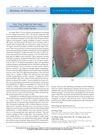
May 2008 in “Journal of Clinical Oncology” A cancer patient died from a severe skin reaction after taking the drug cetuximab.
 518 citations
,
November 2014 in “Science”
518 citations
,
November 2014 in “Science” Skin grafting and wound treatment have improved, but we need more research to better understand wound healing and create more effective treatments.
86 citations
,
November 2015 in “Journal of Gastroenterology” The NUDT15 R139C variant causes thiopurine-induced leukocytopenia through a different mechanism than previously thought in Japanese patients with inflammatory bowel disease.
14 citations
,
June 2014 in “World Journal of Urology” The herbal combination of saw palmetto and stinging nettle reduces nighttime urination in men with urinary issues.
12 citations
,
April 1987 in “PubMed” Low-dose spironolactone is safe and effective for treating hirsutism.
11 citations
,
August 1988 in “PubMed” Interferon therapy is a promising and safe treatment for hepatitis B in Southeast Asia.
10 citations
,
March 2013 in “Bundesgesundheitsblatt - Gesundheitsforschung - Gesundheitsschutz” Obesity in children can worsen skin issues and increase infection risk.
 9 citations
,
April 2011 in “PubMed”
9 citations
,
April 2011 in “PubMed” Spironolactone is used in dermatology to treat skin conditions related to hormones, but is not safe for pregnant women or men.
7 citations
,
July 2021 in “PubMed” Vitamins A, B, C, and D are important for skin health and are being explored for new uses, but more research is needed to confirm their effectiveness.