 February 2026 in “Journal of Integrative Neuroscience”
 NGF-modified hair follicle stem cells may help treat Alzheimer's by improving brain function and reducing harmful proteins.
46 citations
,
October 2018 in “Neuroscience Bulletin” 10 citations
,
August 2024 in “Neuroscience & Biobehavioral Reviews” Neurosteroids may help treat disorders with too much dopamine activity.

A new microneedle patch helps repair spinal cord injuries by reducing scarring and promoting nerve growth.
 4 citations
,
January 2025 in “Translational Psychiatry”
4 citations
,
January 2025 in “Translational Psychiatry” Remote photobiomodulation improves brain injury outcomes and behavior in rats.
21 citations
,
March 2021 in “Frontiers in Neurology” The posterior cerebellum helps maintain balance by adapting to sensory inputs and self-motion.
7 citations
,
January 2017 in “Stem Cells International” Neural organoids show promise for future CNS disease treatments.
August 2021 in “The Journal of Physiology” NKCC1 transporters help control neuron excitability and inhibition.
 September 2013 in “Science”
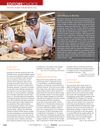
 Human stem cells can aid stroke recovery, research experiences boost students' career aspirations, minoxidil may reduce cancer spread, a molecule can slow tumor growth, a protein affects water flow in cells, magnesium behaves differently at tiny scales, and a new method detects slow-moving objects.
The data suggests that dosing differences can help manage spasticity in patients with upper motor neuron dysfunction.
 11 citations
,
September 2011 in “Biochemical journal”
11 citations
,
September 2011 in “Biochemical journal” Neurotrophin-4 increases calcium current in specific mouse neurons through the PI3K pathway.
July 2024 in “Journal of Investigative Dermatology” Certain substances can help skin cells become anti-inflammatory, aiding in tissue repair.
4 citations
,
February 2023 in “Frontiers in Oncology” Nano-Pulse Stimulation™ Therapy is more effective and less damaging than cryoablation for treating melanoma tumors in mice.
 201 citations
,
November 1964 in “Journal of neurophysiology”
201 citations
,
November 1964 in “Journal of neurophysiology” The cuneate nucleus has two main neuron types: relay neurons and interneurons.

Mechanical surface cues can control macrophage behavior for better immunotherapy and tissue healing.
3 citations
,
December 2023 in “Pain Medicine” Peripheral nerve stimulation greatly reduced pain and improved skin symptoms in a CRPS patient.
February 2026 in “Advanced Science” TTNPB helps turn stem cells into neural stem cells, improving depression-like behaviors in rats.
 April 2016 in “Plastic and reconstructive surgery. Global open”
 Surgery may help infants with sagittal craniosynostosis develop more typical language processing.
2 citations
,
July 2020 in “bioRxiv (Cold Spring Harbor Laboratory)” Neural stem cells use local feedback to maintain balance in the adult brain.
June 2026 in “The Egyptian Journal of Neurology Psychiatry and Neurosurgery” Mesenchymal stem cells show promise for treating Parkinson's disease by protecting and repairing brain cells.
 January 2024 in “Wiadomości Lekarskie”
 Shifting attention can reduce physical pain.
36 citations
,
September 2009 in “Molecular Neurobiology” 10 citations
,
September 2024 in “Neural Regeneration Research” Stem cells improve nerve repair by enhancing blood vessel growth.
 December 2025 in “Frontiers in Immunology”
 Restoring nerve-macrophage communication may help treat autoimmune diseases.
 October 2021 in “Journal of Investigative Dermatology”
 The study concluded that the developed models are effective for studying hair growth mechanisms and testing new treatments.
33 citations
,
January 2008 in “Journal of Molecular Neuroscience”  May 2026 in “The Journal of Headache and Pain”
 Inhibiting certain brain neurons may reduce pain and anxiety in trigeminal neuralgia.
February 2026 in “Advanced Sensor Research” Advanced technologies can improve understanding and monitoring of skin-brain interactions.
 1 citations
,
October 2022 in “Sci”
1 citations
,
October 2022 in “Sci” Helmets used in acupuncture and light therapy can affect brain blood flow, hair growth, and may improve brain diseases and cognitive functions.
 5 citations
,
December 2022 in “Toxins”
5 citations
,
December 2022 in “Toxins” Neurotoxins can affect neurotransmitter release and have potential in treating muscle, pain, and cancer conditions, but more research is needed on how they work.