 5 citations
,
December 2022 in “Toxins”
5 citations
,
December 2022 in “Toxins” Neurotoxins can affect neurotransmitter release and have potential in treating muscle, pain, and cancer conditions, but more research is needed on how they work.
July 2026 in “Bioactive Materials” A new method using tiny needles can help regrow hair in a controlled way.
 2 citations
,
January 1992 in “Neurologia medico-chirurgica”
2 citations
,
January 1992 in “Neurologia medico-chirurgica” The new therapy effectively targets brain tumors while minimizing damage to healthy tissue.
 November 2023 in “ACS Nano”
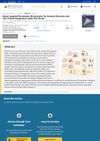
 The device helps restore sensation and grow new hair follicles after skin burns.
May 2024 in “International journal of medicine and psychology.” Transcranial electrical stimulation may help reduce certain immune markers in COVID-19 patients.
1 citations
,
February 2023 in “Ibrain” Black cumin and its nanoformulations show promise in treating neurodegenerative diseases.
44 citations
,
October 2016 in “Epilepsia” 2-DG reduces seizures by enhancing brain inhibition through specific receptor activation.
2 citations
,
December 2024 in “Neural Regeneration Research” Exosome therapy could revolutionize stroke treatment, but more research is needed for human use.
 May 2026 in “Nature Communications”
 Targeting catecholaminergic signaling may help treat keloid scars.
Bioactive compounds in neurocosmetics can improve skin health and emotional well-being.
 40 citations
,
December 2019 in “Neurobiology of Stress”
40 citations
,
December 2019 in “Neurobiology of Stress” Neuroactive steroids show promise for treating mental and neurological disorders by targeting GABA_A receptors.
miR-214-3p helps nerve repair and recovery.
 3 citations
,
May 2011 in “Medical Hypotheses”
3 citations
,
May 2011 in “Medical Hypotheses” Transnasal cooling could reveal new insights into various physiological conditions and may be a natural way to transfer heat from the brain.
 101 citations
,
January 1997 in “Journal of Investigative Dermatology Symposium Proceedings”
101 citations
,
January 1997 in “Journal of Investigative Dermatology Symposium Proceedings” Nerves and chemicals in the body can affect hair growth and loss.
July 2013 in “Neurosurgery” Spinal fMRI can help understand brainstem and spinal cord function, especially in spinal cord injury patients.
 2 citations
,
January 2023 in “BioMed Research International”
2 citations
,
January 2023 in “BioMed Research International” The secretome from mesenchymal stromal cells shows promise for improving facial nerve injury treatment.
18 citations
,
September 2021 in “Journal of Neuroendocrinology” Neurosteroids can influence behavior by modulating brain inhibition, with potential for treating psychiatric disorders.
19 citations
,
September 2006 in “Journal of Neurophysiology” Neurosteroids help balance brain signals when certain inhibitions are reduced.
Reducing nerve growth can help skin regenerate after birth.
 3 citations
,
January 2023 in “PloS one”
3 citations
,
January 2023 in “PloS one” Implanting hair-follicle stem cells in mice brains helped repair brain bleeding and reduced brain inflammation.
12 citations
,
May 2006 in “Journal of Neurology Neurosurgery & Psychiatry” Neuromyotonia and morphoea can occur together in the same body areas.
miR-214-3p helps nerve repair and recovery.
87 citations
,
June 2010 in “Stem Cell Research & Therapy” Stem cells can move to brain injury sites and be tracked, showing promise for treating brain diseases.
 January 2024 in “Wiadomości Lekarskie”
 New methods are being developed to improve drug delivery to the brain.
 December 2020 in “Innovation in aging”
 Rapamycin treatment helps reduce brain inflammation and symptoms of mitochondrial disease by blocking specific pathways in mice.
January 2009 in “IRIS UNIMORE (University of Modena and Reggio Emilia)” Neurosteroids from glia cells help control seizure development in epilepsy.
July 2025 in “Nano Research” Nanotechnology can improve tissue healing by controlling immune responses.
11 citations
,
April 2021 in “Cancers” Activating GLI1 signaling without primary cilia could be a promising treatment for neuroblastoma.
 2 citations
,
June 2025 in “International Journal of Nanomedicine”
2 citations
,
June 2025 in “International Journal of Nanomedicine” New biomaterials can improve wound healing by promoting nerve and tissue regeneration.
 6 citations
,
February 2022 in “The journal of neuroscience/The Journal of neuroscience”
6 citations
,
February 2022 in “The journal of neuroscience/The Journal of neuroscience” Deleting the PTEN gene in mice causes nerve cells to grow larger and heal better after injury, but may cause overgrowth and hair loss in older mice.