2 citations
,
January 2012 HSA nanoparticles can improve tamoxifen delivery for breast cancer treatment, reducing side effects.
December 2019 in “RIUnB Institutional Repository (University of Brasília)” NP-AH-CDM-4 nanoparticles show promise for effective topical acne treatment.
 20 citations
,
January 2022 in “Polymers”
20 citations
,
January 2022 in “Polymers” Nanoparticles added to natural materials like cellulose and collagen can improve cell growth and wound healing, but more testing is needed to ensure they're safe and effective.
 12 citations
,
March 2020 in “Journal of Bioactive and Compatible Polymers”
12 citations
,
March 2020 in “Journal of Bioactive and Compatible Polymers” Nanoparticles show potential for controlled release of hair loss drugs, improving treatment effectiveness.
 March 2025 in “BioNanoScience”
 The new minoxidil hydrogel improves delivery and is safe for treating hair loss.
April 2023 in “Advances in Natural Sciences: Nanoscience and Nanotechnology” The new formulation with minoxidil, chitosan, and Aloe vera improves hair growth and reduces side effects.
 32 citations
,
June 2017 in “Journal of Pharmaceutical Sciences”
32 citations
,
June 2017 in “Journal of Pharmaceutical Sciences” Chitosan-coated nanoparticles improve skin delivery of hair loss treatments with fewer side effects.
April 2011 in “HAL (Le Centre pour la Communication Scientifique Directe)” Chitosan-decorated nanoparticles improve skin delivery of finasteride, with PS404-b-PAA63 being most effective.
 47 citations
,
April 2017 in “European Journal of Pharmaceutics and Biopharmaceutics”
47 citations
,
April 2017 in “European Journal of Pharmaceutics and Biopharmaceutics” The new dutasteride formula can be applied to the skin, may promote hair growth, and has fewer side effects.
17 citations
,
August 2024 in “International Journal of Biological Macromolecules” The hydrogel dressings speed up healing and reduce scarring.
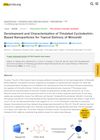
Thiolated cyclodextrin-based nanoparticles effectively deliver Minoxidil for scalp treatment without causing skin irritation.
January 2014 in “SciDok (Saarland University and State Library)” Nanoparticles can effectively enter hair follicles and stimulate immune responses, supporting potential transfollicular vaccination.

The research found that nanoparticles coated with chitosan improved the skin penetration of the drug finasteride.
 4 citations
,
October 2022 in “Cell Reports Physical Science”
4 citations
,
October 2022 in “Cell Reports Physical Science” New wound healing method using nanoparticles in a gel speeds up healing and reduces infection and inflammation.
 47 citations
,
September 2015 in “Journal of Drug Delivery Science and Technology”
47 citations
,
September 2015 in “Journal of Drug Delivery Science and Technology” Nanoparticulate systems improve drug delivery by controlling release, protecting drugs, changing absorption and distribution, and concentrating drugs in targeted areas.
 17 citations
,
June 2021 in “Molecules”
17 citations
,
June 2021 in “Molecules” Melatonin-loaded nanocarriers improve melatonin delivery and effectiveness for various medical treatments.
5 citations
,
December 2024 in “Pharmaceutics” Nanomaterials could improve PCOS treatment by delivering drugs more effectively with fewer side effects.
 April 2025 in “International Journal For Multidisciplinary Research”
 The nano-herbal hair spray effectively strengthens hair and reduces dandruff naturally.
December 2025 in “Sensors” Microneedles in wearables can deliver drugs over time but face challenges in manufacturing and safety.
 May 2023 in “Materials research foundations”
 Nanomaterials like silver and gold can improve wound healing but need more research for safety.
 355 citations
,
August 2013 in “Acta Biomaterialia”
355 citations
,
August 2013 in “Acta Biomaterialia” The nanofibers with two growth factors improved wound healing by supporting structure, preventing infection, and aiding tissue growth.
 1 citations
,
May 2024 in “Advanced Functional Materials”
1 citations
,
May 2024 in “Advanced Functional Materials” The artificial skin promotes better wound healing and skin regeneration.
 April 2026 in “Journal of Pharmaceutical Innovation”
 Curcumin nanocrystal gel improves skin absorption and is safe and effective for topical use.
49 citations
,
January 2017 in “Journal of Materials Chemistry B” The hydrogel helps heal skin injuries by promoting blood vessel and hair growth.
 1 citations
,
February 2023 in “International Journal of Molecular Sciences”
1 citations
,
February 2023 in “International Journal of Molecular Sciences” The fascial layer is a promising new target for wound healing treatments using biomaterials.
Nanoparticles with caffeine can be used for slow, continuous hair growth stimulation.
3 citations
,
March 2024 in “Journal of Biomedical Materials Research Part A” The nanogel helps wounds heal without scars.
 8 citations
,
October 2020 in “Pharmaceutics”
8 citations
,
October 2020 in “Pharmaceutics” Dutasteride-loaded nanoparticles coated with Lauric Acid-Chitosan show promise for treating hair loss due to their controlled release, low toxicity, and potential to stimulate hair growth.
December 2025 in “Regenerative Biomaterials” The hydrogel effectively heals diabetic wounds by reducing inflammation, providing oxygen, and preventing infection.
 1 citations
,
January 2024 in “Journal of molecular structure”
1 citations
,
January 2024 in “Journal of molecular structure” The new finasteride delivery system using chitosan-based nanoniosomes shows promise for prostate cancer prevention.