4 citations
,
November 2020 in “Acta Dermato Venereologica” Tofacitinib effectively improved severe skin symptoms in a patient with Hypohidrotic Ectodermal Dysplasia.
The study concludes that Twenty-nail dystrophy is more common in boys among children and in women among adults, with varying response to treatment.
8 citations
,
June 2016 in “Journal of Investigative Dermatology” A rare genetic deletion in the KRT1 gene causes unique skin symptoms in a family.
 5 citations
,
April 2019 in “Phytochemical Analysis”
5 citations
,
April 2019 in “Phytochemical Analysis” The new ELISA method is reliable and eco-friendly for checking the quality of Pueraria candollei.
The scant hair in snthr-1Bao mice is likely caused by a deletion affecting the Plcd1 gene.
April 2026 in “ENLIGHTEN (Jurnal Bimbingan dan Konseling Islam)” November 2005 in “PubMed” The hairless gene in Kunming mice is important for hair and skin, and shows genetic variations.
8 citations
,
September 2011 in “Scanning” Multiphoton microscopy effectively images mouse skin layers and structures.
1 citations
,
February 2025 in “Journal of the Neurological Sciences” Beta-trace protein may help diagnose and predict treatment response in certain nerve disorders.
 January 2016 in “Human & Experimental Toxicology”
 A specific DNA sequence caused hair loss in male mice by activating immune cells and increasing a certain immune signal.
67 citations
,
February 2022 in “International Journal of Molecular Sciences” The nanofiber membranes effectively promote wound healing and have strong antibacterial properties.
 19 citations
,
August 2012 in “Cell death and differentiation”
19 citations
,
August 2012 in “Cell death and differentiation” Intu gene is crucial for hair follicle formation by helping keratinocytes differentiate through primary cilia.
 8 citations
,
February 2005 in “British Journal of Haematology”
8 citations
,
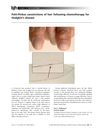
February 2005 in “British Journal of Haematology” Chemotherapy caused the patient's hair to have alternating thick and thin segments.
2 citations
,
October 2025 in “Cells” PKM2 is a promising target for heart repair and regeneration.
November 2017 in “DOAJ (DOAJ: Directory of Open Access Journals)” Certain medications and smaller pupil size increase the risk of intraoperative floppy iris syndrome during eye surgery.
January 2026 in “Animal Genetics” A genetic variant in the GJB6 gene likely caused the Labrador's paw pad condition.
5 citations
,
December 2014 in “Molecular cytogenetics” A specific genetic change is linked to mental disorders, intellectual disability, and possibly autoimmune disease in a family.
 11 citations
,
April 2020 in “Life sciences”
11 citations
,
April 2020 in “Life sciences” Pantothenic acid helps mink hair follicles grow by affecting certain cell signals.
Different androgen concentrations affect wool-related gene expression differently in Hetian and Karakul sheep breeds.
17 citations
,
April 1997 in “American Journal of Dermatopathology” PC-associated alopecia has unique microscopic features.
40 citations
,
July 2008 in “PROTEOMICS” A new model helps study acne and test treatments.
 October 2004 in “European Neuropsychopharmacology”
 Impulsiveness is common across various psychiatric disorders and linked to many psychological symptoms.
 October 2019 in “Research Square (Research Square)”
 The junction of the inner and outer prepuce with good blood flow is best for vascular pedicle flaps.
July 2026 in “Research Square” July 2026 in “International Journal of Molecular Medicine” Cepharanthine can help treat tick-borne encephalitis virus by reducing stress and inflammation.
 15 citations
,
January 2010 in “Experimental Dermatology”
15 citations
,
January 2010 in “Experimental Dermatology” Hair loss in certain young mice is linked to a specific gene and can be caused by lack of iron.
December 2012 in “http://isrctn.org/>”  February 2026 in “Trials”
 The Exfoliate-Dissolve-Repair skincare approach may effectively treat keratosis pilaris and reduce the need for corticosteroids.
 January 2022 in “JPK Jurnal Proteksi Kesehatan”
 Mangkokan leaf extract is more effective against Staphylococcus aureus than Escherichia coli.