6 citations
,
February 1997 in “International Journal of Dermatology” Kaposi's sarcoma lesions might originate from benign tissue changes.
November 2025 in “Advanced Science” The treatment using a special hydrogel shows promise for promoting hair growth.
323 citations
,
November 1984 in “Journal of Investigative Dermatology”  December 2021 in “Molecular genetics and genomics”
 Cats with abnormal hair had DSG4 gene changes causing hair problems.
24 citations
,
February 2011 in “The American journal of pathology” AIRE protein, defective in APECED patients, is found in skin and hair cells and interacts with cytokeratin 17.
4 citations
,
February 2022 in “Journal of Cosmetic Dermatology” Dermatoscopy can quickly help distinguish between alopecia areata and tinea capitis in children.
December 2024 in “Dermatology”  March 2012 in “Hair transplant forum international”
 The document's conclusion cannot be summarized because the content is not accessible.
 April 2017 in “Journal of Investigative Dermatology”
 Certain mutations in the KLHL24 gene cause a skin disorder by breaking down an important skin protein.
3 citations
,
January 2002 in “Pediatric Drugs” Tinea capitis is a common scalp infection in children, treated with antifungal medications like griseofulvin, terbinafine, and fluconazole.
August 2023 in “Journal of the American Academy of Dermatology” CCCA affects Black men too, with a genetic link found in the PADI3 gene.
 July 2018 in “Hair transplant forum international”
 The document's content couldn't be processed.
January 2005 in “日本機械学會論文集. C編” Minoxidil sulfate and pinacidil promote hair growth likely by increasing blood flow, not by activating K channels.
1 citations
,
July 2025 in “Methods and Protocols” The CAM is a useful model for studying burn wounds and testing treatments.
 December 2023 in “The journal of investigative dermatology/Journal of investigative dermatology”
 MCPIP1 in myeloid cells is important for skin cancer development and healthy hair growth.
 16 citations
,
August 2019 in “Cell Proliferation”
16 citations
,
August 2019 in “Cell Proliferation” Keratinocytes help keep hair follicle cells and skin cells separate in 3D cultures, which is important for hair growth research.
114 citations
,
May 2001 in “Development” Overexpression of Hoxc13 in hair cells causes hair loss and skin issues.
2 citations
,
June 2025 in “ACS Biomaterials Science & Engineering” Encapsulating cell-free fat extract in GelMA hydrogel improves skin flap survival in mice.
 20 citations
,
February 1991 in “The Journal of Dermatologic Surgery and Oncology”
20 citations
,
February 1991 in “The Journal of Dermatologic Surgery and Oncology” Scalp flaps are used for reconstruction, considering factors like inelasticity, hair growth, and blood supply, with techniques adapting to age-related changes in vascularity.
 March 2026 in “International Journal of Molecular Sciences”
 A temporary capillary cell type helps skin repair after radiation by promoting blood vessel growth.
5 citations
,
August 2023 in “G3 Genes Genomes Genetics” The improved genome of the African spiny mouse will help understand its tissue regeneration abilities.
 2 citations
,
May 1999 in “Hair transplant forum international”
2 citations
,
May 1999 in “Hair transplant forum international” The document's conclusion cannot be provided because the document is not accessible or understandable.
 2 citations
,
March 2023 in “BMC ecology and evolution”
2 citations
,
March 2023 in “BMC ecology and evolution” Some hair protein genes evolved early and were adapted for use in hair follicles.
 1 citations
,
January 2016 in “Journal of cosmetology & trichology”
1 citations
,
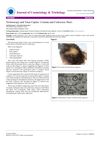
January 2016 in “Journal of cosmetology & trichology” Trichoscopy helped diagnose and treat a child's fungal scalp infection by spotting specific hair shapes.
14 citations
,
January 2005 in “Cell Stress and Chaperones” February 2019 in “Dermatologic Surgery” September 2019 in “The journal of investigative dermatology/Journal of investigative dermatology” PPARγ signaling modulation can protect hair follicle stem cells from chemotherapy-induced damage.
4 citations
,
January 1989  June 2022 in “Authorea (Authorea)”
 Efficient delivery systems are needed for the clinical use of CRISPR-Cas9 gene editing.
6 citations
,
May 2000 in “Pediatric Dermatology” KID syndrome should be reclassified as an ectodermal dysplasia.