50 citations
,
May 2020 in “FEBS Letters” New techniques improve understanding of cell cycle dynamics at the single-cell level.
A new method using stamps improves symmetry in hair restoration surgery.
November 2025 in “International Journal of Biological Macromolecules” This eco-friendly hair dye method improves hair health and color durability.
5 citations
,
January 2011 in “International Journal of Cosmetic Science” 1,2,3,4-tetrahydroquinoline compounds are great for stable, pure blue hair dye.
 April 2005 in “AORN Journal”
 The book is a detailed guide on dermatologic surgery techniques, recommended for both new and experienced doctors.
 3 citations
,
June 2023 in “ACS sustainable chemistry & engineering”
3 citations
,
June 2023 in “ACS sustainable chemistry & engineering” The study found a green method for strengthening hair works on all hair colors and is eco-friendly.
 January 2025 in “Journal of Pharmacognosy and Phytochemistry”
 Plant-based pigments in shampoo offer vibrant colors and scalp benefits, meeting quality standards and providing a natural alternative to synthetic dyes.
 May 2026 in “Zenodo (CERN European Organization for Nuclear Research)”
 Natural hair dyes are safer but have limited shades and may fade with washing.
 4 citations
,
June 2020 in “JAAD case reports”
4 citations
,
June 2020 in “JAAD case reports” Permanent hair dye may cause total hair loss.
July 2023 in “European Journal of Medical and Health Research” Using bond-protecting additives with low-volume oxidants can safely lighten fine hair with less damage.
 January 2025 in “International Journal of Advanced Research in Science Communication and Technology”
 Polyherbal hair dyes are safer and more eco-friendly than chemical dyes.

Hair and scalp camouflage techniques help people with hair loss feel more confident by making hair look denser.
1 citations
,
September 2003 in “Annals of Epidemiology” 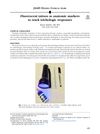 July 2018 in “Journal of The American Academy of Dermatology”
 Fluorescent tattoos are a good way to mark the scalp for hair treatments because they're accurate, invisible in normal light, and have low risk.

Plant-based dyes are a safe, effective, and eco-friendly alternative to synthetic dyes.
2 citations
,
March 1942 in “JAMA” March 2026 in “Dyes and Pigments” Riboflavin and blue light speed up genipin hair dye, making it fast, glossy, stable, and eco-friendly.
 June 2026 in “Zenodo (CERN European Organization for Nuclear Research)”
 Henna is a safer alternative to synthetic hair dyes but has limited color options.
 March 2015 in “Journal of Visualized Experiments”
 A new method measures mouse hair loss using shades of gray.
 September 2025 in “The American Journal of Medical Sciences and Pharmaceutical Research”
 Thinning and micro-graduation techniques can effectively and reversibly correct women's hairlines.
January 2021 in “Hair therapy & transplantation”  143 citations
,
April 2018 in “Electronic physician”
143 citations
,
April 2018 in “Electronic physician” More research is needed to confirm safflower's traditional medicinal uses.
 43 citations
,
October 2008 in “Indian Journal of Plastic Surgery”
43 citations
,
October 2008 in “Indian Journal of Plastic Surgery” Ancient India used herbal cosmetics for beauty, health, and well-being, with diverse natural formulations.
 34 citations
,
January 2012 in “Journal of Dermatological Science”
34 citations
,
January 2012 in “Journal of Dermatological Science” Hydrogen peroxide and monoethanolamine in hair dye can cause dermatitis and hair loss.
 33 citations
,
August 2018 in “Facial Plastic Surgery Clinics of North America”
33 citations
,
August 2018 in “Facial Plastic Surgery Clinics of North America” The document explains hair biology, the causes of hair loss, and reviews various hair loss treatments.
 28 citations
,
December 2019 in “Skin appendage disorders”
28 citations
,
December 2019 in “Skin appendage disorders” Some medications might reverse gray hair, especially those that reduce inflammation or stimulate pigment production, and vitamin B might help.
 24 citations
,
January 2015 in “Evidence-based Complementary and Alternative Medicine”
24 citations
,
January 2015 in “Evidence-based Complementary and Alternative Medicine” Polygonum multiflorum can promote hair growth when taken orally or applied topically.
 23 citations
,
January 2003 in “Journal of Pediatric Endocrinology and Metabolism”
23 citations
,
January 2003 in “Journal of Pediatric Endocrinology and Metabolism” About 15% of US Army personnel use hair products containing hormone or placenta, with higher usage among non-whites, females, and enlisted personnel.
 16 citations
,
December 2016 in “Skin appendage disorders”
16 citations
,
December 2016 in “Skin appendage disorders” Nickel, cobalt, balsam of Peru, fragrance mix, carba mix, and propylene glycol are common allergens causing scalp contact dermatitis.
 12 citations
,
December 2017 in “Food and chemical toxicology”
12 citations
,
December 2017 in “Food and chemical toxicology” Permanent hair dye mixtures can irritate and damage the skin.