 1 citations
,
October 2024 in “Cureus”
1 citations
,
October 2024 in “Cureus” Women with PCOS have higher irisin levels, which may affect their metabolism and hormones.
 1 citations
,
June 2022 in “International Journal of Health Sciences”
1 citations
,
June 2022 in “International Journal of Health Sciences” Lower BDNF levels link to worse depression in alopecia areata patients.
 1 citations
,
December 2017 in “Journal of The European Academy of Dermatology and Venereology”
1 citations
,
December 2017 in “Journal of The European Academy of Dermatology and Venereology” Vertex baldness has higher DHT levels than frontal baldness, but testosterone and PSA levels are similar.
 1 citations
,
November 2011 in “Dermatologica Sinica”
1 citations
,
November 2011 in “Dermatologica Sinica” Women using hair relaxers with alopecia had lower zinc levels, suggesting zinc deficiency might contribute to hair loss.
 January 2026 in “International Journal of Pharmaceutical Quality Assurance”
 Alopecia Areata patients have low zinc and high copper levels.
 January 2025 in “International Journal of Pharmacognosy and Clinical Research”
 The herbal scalp serum may help hair growth by reducing DHT levels.
December 2024 in “International Journal of Scientific Reports” The plant-based hair serum is a promising and safe alternative to minoxidil for hair regrowth.
 December 2024 in “Asian Journal of Medical Sciences”
 Low iron levels may be linked to hair loss in women with chronic telogen effluvium.
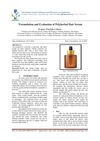 June 2024 in “International Journal of Pharmaceutical Research and Applications”
 Polyherbal hair serum can hydrate the scalp and promote hair growth safely.
 December 2023 in “International journal of drug delivery technology”
 The polyherbal hair serum helped prevent hair loss and improved hair growth better than the usual treatment.
 January 2023 in “Pakistan Armed Forces Medical Journal”
 Vitamin D levels are not linked to Alopecia Areata.
 January 2023 in “Pakistan Armed Forces Medical Journal”
 People with vitiligo tend to have lower vitamin D levels.
 July 2022 in “Research Square (Research Square)”
 Lower PPARγ levels and specific gene variations are linked to more severe Frontal Fibrosing Alopecia.
 July 2022 in “International Journal of Health Sciences (IJHS) (En línea)”
 Men with Type 2 Diabetes have lower DHT levels, which may affect fertility and lipid profiles.
 January 2022 in “International Journal of Medicine in Developing Countries”
 Many patients with hair loss had low iron and vitamin D levels, but thyroid issues were not common.
 December 2021 in “Dermatology research”
 Low levels of vitamin B12, ferritin, and calcium are linked to premature graying of hair.
 January 2021 in “Benha Journal of Applied Sciences”
 Prolactin levels and gene polymorphism are not linked to vitiligo severity but are related to BMI.
 February 2020 in “Benha Journal of Applied Sciences”
 Insulin resistance and nesfatin-1 are linked to acne severity.
 June 2019 in “Journal of Akhtar Saeed Medical & Dental College”
 Prolactin levels are higher in women with hirsutism but don't relate to its severity.
 September 2018 in “International Journal of Dermatology”
 People with alopecia areata often have lower levels of zinc and vitamin D.
 July 2018 in “Journal of College of Medical Sciences-nepal”
 Women with certain types of hair loss may have low iron levels.
 March 2014 in “CRC Press eBooks”
 Some nutrients and antioxidants may improve skin and hair health, but more research is needed to confirm these benefits.
 April 2013 in “The Journal of Urology”
 Higher CRP levels suggest chronic inflammation is linked to bladder-related urinary symptoms in men with enlarged prostates.
 48 citations
,
October 2011 in “Sports Medicine”
48 citations
,
October 2011 in “Sports Medicine” Ice-skating athletes often have skin problems due to cold, infections, and inflammation, needing careful treatment and prevention.
 17 citations
,
August 2007 in “Bioorganic & Medicinal Chemistry Letters”
17 citations
,
August 2007 in “Bioorganic & Medicinal Chemistry Letters” A compound made by Pfizer can potentially stimulate hair growth and reduce oil production, making it a good candidate for topical use.
 14 citations
,
August 2007 in “Bioorganic & Medicinal Chemistry Letters”
14 citations
,
August 2007 in “Bioorganic & Medicinal Chemistry Letters” The compound (1R,2S)-4-(2-Cyano-cyclohexyl-oxy)-2-trifluoromethyl-benzonitrile can stimulate hair growth and reduce oil production when applied topically.
 11 citations
,
May 2010 in “Journal of Medicinal Chemistry”
11 citations
,
May 2010 in “Journal of Medicinal Chemistry” A new compound was created in 2010 that can control oil production when applied to the skin, and its effects are completely reversible after two weeks.
 5 citations
,
September 2011 in “Bioorganic & Medicinal Chemistry Letters”
5 citations
,
September 2011 in “Bioorganic & Medicinal Chemistry Letters” Pfizer found that pantolactam-based compounds can reduce sebum (skin oil) production when applied topically.
 April 2026 in “Clinical Cosmetic and Investigational Dermatology”
 Renal transplant recipients often have skin issues, especially infections, and need regular skin check-ups.
 December 2025 in “International Journal of Innovative Technologies in Social Science”
 Transgender individuals face unique skin issues, often due to hormone therapy, requiring specialized and stigma-free dermatologic care.